MANILA: The Rohingya crisis was discussed at the ASEAN Summit, Philippine Department of Foreign Affairs spokesman Rob Bolivar said, despite questions about the bloc’s apparent silence on the issue at the summit, which ended on Tuesday.
“Myanmar briefed the summit on the initiatives that they are undertaking to resolve the matter, Bolivar told Arab News. “The other leaders of ASEAN and dialogue partners expressed appreciation for Myanmar’s efforts and offered any humanitarian support that Myanmar may deem appropriate,” he said.
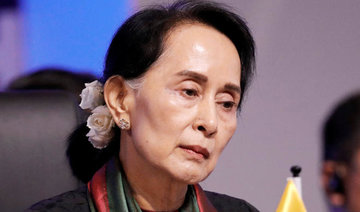
Philippine President Rodrigo Duterte’s spokesman, Harry Roque, also said that the Rohingya issue was specifically raised by two member states. He said Myanmar’s State Counsellor Aung San Suu Kyi assured her fellow leaders that steps were being taken to address the plight of the Rohingya people.
Roque said Suu Kyi told ASEAN that Rohingyas who had fled to Bangladesh could return to Myanmar after the two countries signed a memorandum of understanding. “Myanmar agreed that they welcome humanitarian assistance but there was no specific mention about which country will provide this,” he said.
At the 9th ASEAN-UN Summit in Manila, UN Secretary-General António Guterres had voiced concern over the displacement of hundreds of thousands of refugees from Myanmar to Bangladesh, saying that it was a “worrying escalation in a protracted tragedy,” a potential source of instability as well as radicalization in the region.
“Addressing the underlying issues by implementing the recommendations of the Advisory Commission on Rakhine will also be critical to reverse this tragedy,” he said, highlighting that sustainable and inclusive development was the best way to prevent conflict and violent extremism.
A joint US-Philippines statement after the bilateral meeting between Trump and Duterte said that the two leaders discussed the continuing humanitarian and security crisis in Rakhine State, Myanmar.
“Both leaders called for the expeditious delivery of humanitarian assistance to affected communities, and welcomed the Myanmar government’s commitment to end the violence, restore media access, ensure the safe return of displaced persons and implement all of the recommendations of the Advisory Commission on Rakhine State, and urged all parties to support these government commitments,” the statement said.
The theme for this year’s ASEAN summit was “Partnering for Change, Engaging the World.” Topics included terrorism, countering radicalization and violent extremism, anti-trafficking, coastal and marine environment, tensions in the Korean peninsula, poverty alleviation, food security and the pursuit of innovation for ASEAN economies.
Political analyst Ramon Casiple told Arab News that “from the ASEAN point of view (the summit) was a success.”
“ASEAN has arrived as an Asian group. Duterte proved his capacity in regional politics,” he said.
US President Donald Trump also praised the Philippine leader for what he described as a “very successful hosting” of the summit.
Duterte cited the productive exchanges among the world leaders on issues of regional and global importance, which he hoped would translate into concrete actions that would benefit the region.
This year’s summit was capped by ASEAN leaders signing the “Consensus on the Protection and Promotion of the Rights of Migrant Workers”, which strengthens ASEAN cooperation in preventing abuses, exploitation and violence toward migrant workers.
Another highlight of the summit was the announcement of the start of formal negotiations on the Code of Conduct in the South China Sea. The issue of terrorism was also discussed with ASEAN leaders and their dialogue partners. “We vowed to work closely. We discussed it in confidential meetings,” Duterte said.
The rising tension in the Korean Peninsula was another important topic, particularly in discussions involving China and the US, the president said, adding that the region could not afford a disastrous war.
Leaders also had meetings with the ASEAN Business Advisory Council and the East Asia Business Council.
Department of Interior and Local Government (DILG) Officer-in-Charge Catalino Cuy, head of the ASEAN 2017 committee on security, said: “Our hosting of the 31st ASEAN Summit was successful.” He said that the summit was generally peaceful, with no disturbances recorded throughout the two-day convention.


![]()

World leaders ‘did discuss Rohingya crisis’ at ASEAN Summit
World leaders ‘did discuss Rohingya crisis’ at ASEAN Summit


Latest updates


© 2026 SAUDI RESEARCH & PUBLISHING COMPANY, All Rights Reserved And subject to Terms of Use Agreement.