NEW YORK: The Saudi-led military coalition fighting in Yemen will reopen some of the country’s ports and airports within hours, though a key aid route will stay shut until Riyadh clamps down on weapons smuggling, a Saudi envoy said on Monday afternoon in New York.
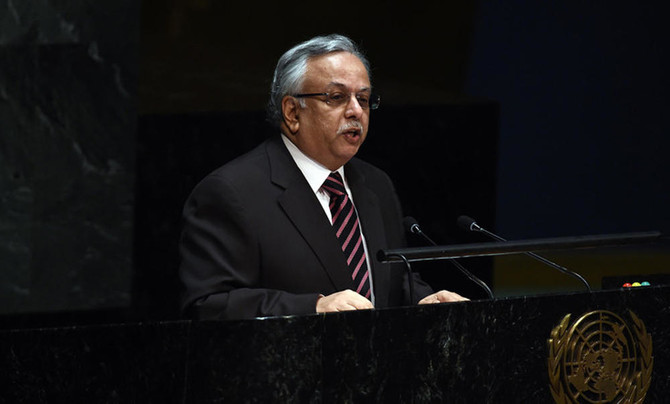
Riyadh’s ambassador to the UN, Abdallah Al-Mouallimi, told reporters that the government-held ports in Aden, Mukala and Al-Mokha, as well as airports in Aden, Seiyun and Socotra, would be opened “within the next 24 hours.”
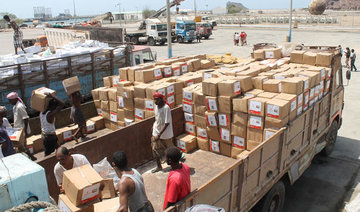
“We would like to confirm that steps are being taken by the coalition… to start the process of reopening airports and sea ports in Yemen to allow for the safe transfer of humanitarian actors and humanitarian and commercial shipments,” said Al-Mouallimi.
Other ports, including Houthi-controlled Hodeidah — where some 80 percent of Yemen’s food supplies transit — will remain shut until a UN verification regime is reviewed to ensure no arms reach the Houthis, the ambassador added.
He called on UN Secretary-General Antonio Guterres to send a delegation to Riyadh to “review current procedures to enhance and deliver a more robust verification and inspection mechanism aimed at facilitating the flow of humanitarian and commercial shipments while preventing the smuggling of weapons, ammunition, missile parts and cash.”
The Saudi-led coalition closed all air, sea and land access to Yemen last week following the interception of a missile fired toward the Saudi capital, saying it had to stem the flow of arms to Yemen’s Houthi rebel group from Iran.
Saudi Arabia has accused arch-foe Tehran of supplying the ballistic missile which was shot down near Riyadh airport without causing any casualties. Iran has denied the accusation. Al-Mouallimi pointed to the Iran-backed Hezbollah militia.
“Hezbollah is active in Yemen on the ground, and... they are active in supporting the Houthis in operating, preparing, reassembling such missiles and launching them — including the one that was launched into Saudi Arabia,” Al-Mouallimi said.
The UN and international aid groups have repeatedly critiqued the coalition in the past for blocking aid access, especially to northern Yemen, which is held by the Iran-aligned Houthis battling the Saudi-led coalition.
On Monday, UN spokesman Stephane Dujarric warned that two thirds of Yemen’s population — more than 17 million people — rely on food handouts and said that unless the blockade is wholly lifted the “situation will deteriorate further.”
The UN’s World Food Programme will run out of rice in 111 days, while wheat stocks will end in 97 days, he said. “Unless the Red Sea ports in Hodeidah and Salif are open immediately, the UN will not be able to feed 7 million people every month,” Dujarric added.
More than 10,000 people have been killed in the war, which pits the internationally recognized government, backed by Saudi Arabia and its allies, against the Houthis and forces loyal to former President Ali Abdullah Saleh.
The Saudi-led coalition has been targeting the Houthis since they seized parts of Yemen in 2015, including the capital Sanaa, forcing President Abed Rabbo Mansour Hadi to flee and seek help from neighboring Saudi Arabia.


![]()
![]()

Yemen ports to open ‘within 24 hours’: Saudi envoy
Yemen ports to open ‘within 24 hours’: Saudi envoy
Related

Latest updates


© 2026 SAUDI RESEARCH & PUBLISHING COMPANY, All Rights Reserved And subject to Terms of Use Agreement.