JAKARTA: Indonesia has sent five special counterterrorism agents to the Philippines on Tuesday to investigate the two Indonesians arrested last week in connection with the siege of Marawi by the Daesh-backed Maute group.
Indonesian National Police spokesman Inspector General Setyo Wasisto said the five-member delegation from Densus 88, the counterterrorism squad, will coordinate with its Philippine counterparts to seek access to Muhammad Ilham Syahputra, the Indonesian militant who fought alongside the Maute group in Marawi and was arrested on Nov. 1, and Minhati Madrais, the wife of slain Maute group leader Omarkhayam Maute who was arrested on Sunday in Iligan city, northern Mindanao.
“We want to gain more information from them regarding their roles, especially Ilham Syahputra. He was reported dead in May but now, apparently, he is still alive,” Wasisto told Arab News.
Lalu Muhammad Iqbal, the director for protection of Indonesian nationals abroad, said representatives from the Indonesian Embassy in Manila had been granted access to Syahputra and were verifying his nationality using a biometric facial recognition system.
“It’s going to take a while to verify. We can’t identify him using his fingerprints as the skin on his fingertips is damaged,” Iqbal told Arab News.
He said that Jakarta received information from Manila earlier this year that a passport bearing Syahputra’s identity was found next to a militant’s body which led to the belief that he was dead.
“According to the Philippines authority, he entered the Philippines in January but never left. So it is unlikely that he would have a new identity or a new passport, otherwise he would have been recorded to have applied for a new one in our embassy,” Iqbal said.
He added that embassy officials had also been granted access to Madrais and were checking if she had applied for Philippines citizenship since her Indonesian passport expired in January.
The siege of Marawi ended when leaders Isnilon Hapilon and Omarkhayam Maute were shot dead as troops launched an assault to rescue hostages.
Wasisto said the police, Indonesia’s National Counterterrorism Agency (BNPT) and the immigration office were continuing to monitor the possible returns of Indonesians who fought alongside Daesh in Iraq and Syria, and with the Maute group in the Philippines.
He said the authorities maintained a watchlist of individuals who went to Syria or the Philippines and were suspected to have fought as foreign militants there.
“The problem is that we can’t prosecute them with our counterterrorism law, since it lacks the provisions to criminalize those who act and support terrorism acitivities abroad. Maybe, though, we can still prosecute them under other laws,” Wasisto said.
Lawmakers are in the process of amending the law and a proposed provision has been debated which would strip those who commit terror acts abroad of their Indonesian citizenship.
Irfan Idris, a senior official in charge of the deradicalization program at BNPT, told Arab News that those returnees would be ”enrolled in a socialization program.”
In September, the BNPT released a 12-minute video featuring testimonies of eight Indonesians, out of 18, who returned from Syria after escaping Daesh in June. In the video, the returnees recount their horror and disappointment during their stay in Raqqa for two years, which they said was a stark contrast to the promises they had been made.
“We continue to receive information from various channels about the movement of Indonesian nationals in Syria,” Iqbal said. “We have not had new returnees from Turkey for some time and we haven’t received information of an outflux of Indonesians from Raqqa lately.”


![]()
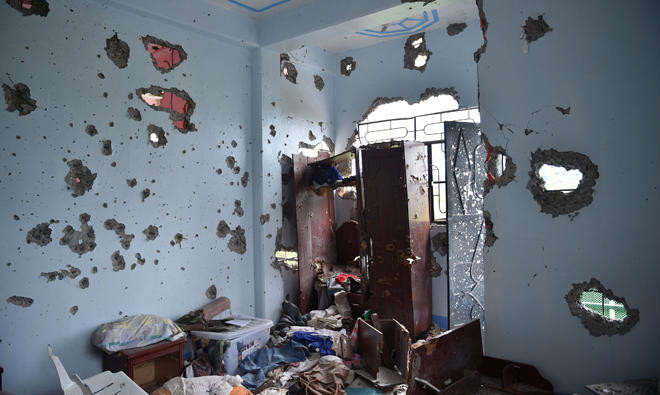
Indonesian counterterrorism agents to investigate Marawi siege suspects
Indonesian counterterrorism agents to investigate Marawi siege suspects


Latest updates


Recommended


© 2026 SAUDI RESEARCH & PUBLISHING COMPANY, All Rights Reserved And subject to Terms of Use Agreement.