We know her mostly for her trademark hats, because she rarely talks about herself. She is the only person allowed to drive in the UK without a license. She loves horse riding and football, and has a sense of humor. During a low-key trip in Scotland, American tourists asked her where she lived. She said she had a house nearby, and when they asked if she had ever met the queen, she pointed at her policeman and said: “No, but he has.”
Queen Elizabeth II, the world’s longest-reigning monarch, is the subject of historical drama “The Crown,” which takes place from 1947 until 1955. Based on meticulous factual research, this book is primarily meant to entertain. Robert Lacey enlivens the narrative with tangy details that pique our interest and raise our adrenaline. The story focuses on Elizabeth Windsor and Philip Mountbatten, their marriage and their life together until 1955.
Despite his title, Philip Prince of Greece had no Greek blood. “I’m part Danish, part German and part Russian. I can go to practically any country in Europe, and there’s a relation there I stay with,” he told his close friend Mike Parker, who became his private secretary.
His aristocratic genes gave him a self-assurance that Princess Elizabeth noticed during their first meeting in 1939 at the Royal Naval College in Dartmouth. She was only 13-years-old at the time, but according to Sir John Wheeler-Bennet, who wrote the official biography of King George VI, Princess Elizabeth had been in love with her cousin from the first time she saw him.
He mother was not sure she was making the right choice, but nothing could stop her. Prince Philip proposed in the summer of 1946 and was accepted. The marriage was planned for the following year at Westminster Abbey. A day before the wedding, King George VI conferred the title “duke of Edinburgh” upon his future son-in-law and authorized the use of the prefix “his royal highness.”
The wedding was a moment of joy shared by the whole nation, as was the birth of Prince Charles a year later. But as the king’s health worsened, it became clear that she would have to replace her parents on the long royal tour to Kenya, Ceylon, Australia and New Zealand.
Princess Elizabeth and her husband arrived in February 1952 at the legendary Treetops Hotel in Aberdare National Park in Kenya. She was writing a letter to her father when her husband informed her of his death.
According to Martin Charteris, her private secretary: “She was sitting erect, fully accepting her destiny.” He was struck by the composure of the new queen, who insisted on personally drafting the telegrams of apology to those expecting her on the now-canceled tour.
When she met with her accession council in St. James Palace, she declared: “I shall always work, as my father did throughout his reign, to uphold the constitutional government and to advance the happiness and prosperity of my peoples.”
Within a few months, the duke of Edinburgh would also lose three of the things that gave him so much pleasure: His naval career, his family home and his family name. Upon his wife’s accession to the throne, they had to leave the cosy Clarence House and live in Buckingham Palace. But what hurt Prince Philip most was the loss of his family name. He complained that he was “the only man in the country not allowed to give his name to his children.”
Theresa May is the 13th prime minister to serve Queen Elizabeth. When she was asked which prime minister she enjoyed meeting the most, she answered: “Winston (Churchill), of course, because it was always such fun.” Churchill first met the queen when she was two-and-a-half-years-old. At that time, he declared: “She is a character. She has an air of authority and reflectiveness astonishing in an infant.”
More than 20 years later, in 1953, he gave some advice to the queen, who was preparing to tour the Commonwealth: “Never let them see the real Elizabeth Windsor… The camera, the television. Never let them see that carrying the crown is often a burden. Let them look at you, but let them see only the eternal.”
Mission accomplished. “I am aware that I am surrounded by people who feel they could do the job better, strong people with powerful characters, more natural leaders,” she said. “But for better or for worse, the crown has landed on my head.”


![]()
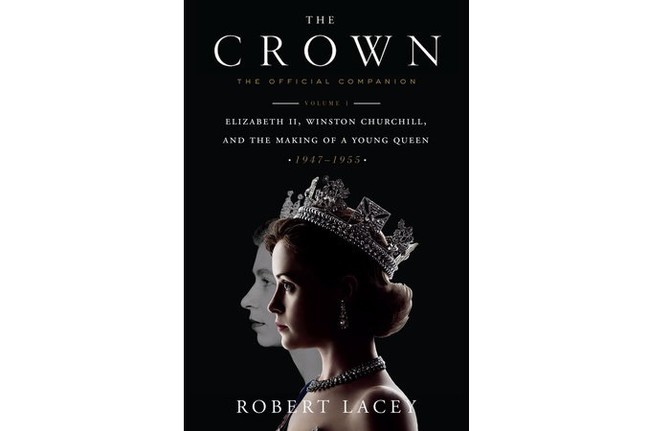
Book Review: A look at the woman behind the crown
Book Review: A look at the woman behind the crown



Latest updates


Recommended


© 2026 SAUDI RESEARCH & PUBLISHING COMPANY, All Rights Reserved And subject to Terms of Use Agreement.