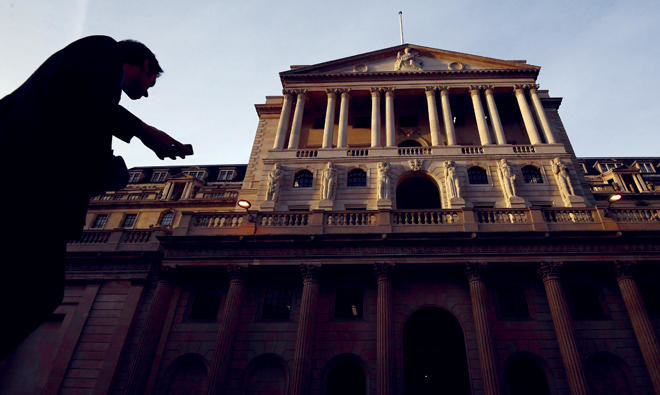
LONDON: Middle Eastern investors won’t be deterred from investing in the UK after the Bank of England raised interest rates to 0.5 percent on Thursday, the first increase for 10 years, according to Savills, the upmarket British property agency.
And there has been more interest in UK property, not less, since Brexit, as sterling’s depreciation has made the UK increasingly attractive to overseas capital, especially Middle Eastern investors who tend to invest in dollars, said Savills.
Speaking to Arab News, Rasheed Hassan, head of the Savills cross border investment business, said the other side of the coin was that “an increase in rates indicates confidence that the UK is strong enough to cope with higher borrowing terms; it’s in a better position than just after the referendum when rates were raised following uncertainty after the No vote on Europe,” he said.
There was a “push factor as well as a pull factor” when it came to Middle Eastern investment in Britain with investors looking for yield after the collapse of the oil price in 2014, added Hassan.
He said yields in commercial property were higher outside London and Savills had just closed on a retail warehouse deal in Scotland, with a Middle Eastern buyer.
It is “not a move out of London as such, but a focus on yields and they (Middle Eastern investors) have to look beyond London to get it,” said Hassan.
Also on Thursday, Savills published a report stating buyers originating from more than 26 different countries were active in central London’s office investment market and have pushed transaction volumes up to approximately £13.4 billion ($17.5 billion) in 2017 year-to-date, 23 percent above the volume reached at the same point in 2016 and 35 percent ahead of the 10-year average.
It noted a resurgence in demand in 2017 from German and UK investors who have deployed £2.05 billion and £2.4 billion into central London commercial real estate respectively. By comparison German investors spent less than £250 million on Central London offices throughout 2016, while UK buyers accounted for only £1.2 billion.
Savills said: “The surge in activity from UK and German buyers, alongside a broad spectrum of global capital targeting the city’s commercial real estate, adds to the ongoing record levels of investment from Hong Kong buyers (£4.5 billion invested in central London in 2017 year-to-date) and those from mainland China (£1.07 billion).
Commenting on the UK interest rate rise, Andrew Sentance, senior economic adviser at PwC, said the Monetary Policy Committee (MPC) was right to raise interest rates, even though economic growth had been relatively disappointing so far this year.
“Other economic data — in particular high inflation driven by the weakness of the pound and the low level of unemployment — are much more supportive of a rise in interest rates,” he said.
“In addition, the MPC faces a long-term challenge of raising interest rates back to some sort of normal level after an exceptional and unprecedented decade of low rates since the financial crisis.
“MPC’s decision is an important signal to the public that the era of very low interest rates is coming to an end.
“Further interest rate increases should be slow and gradual, but this is the first step along that road,” he added.
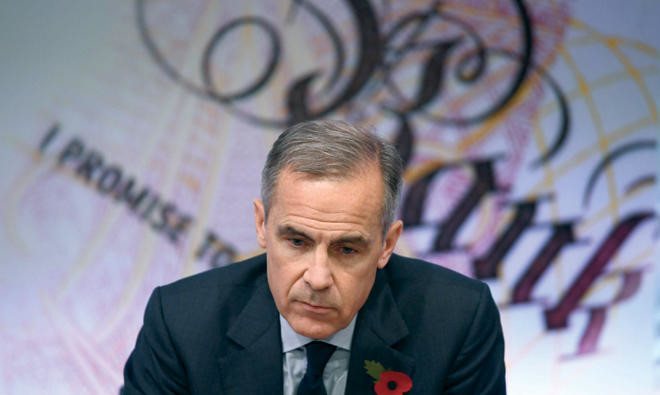
The Governor of the Bank of England Mark Carney said: “With unemployment at a 42 year low, inflation running above target and growth just above its now lower speed limit, the time has come to ease our foot off the accelerator.”
“Future increases in the bank rate would be at a gradual pace and to a limited extent,” he added.


![]()
![]()
UK rate ‘hike won’t deter Middle Eastern investors’
UK rate ‘hike won’t deter Middle Eastern investors’

Latest updates


© 2026 SAUDI RESEARCH & PUBLISHING COMPANY, All Rights Reserved And subject to Terms of Use Agreement.