REYKJAVIK: A tool for rehabilitating criminals or simply a way of granting special favors? In Iceland, a law that allows a murderer to become a lawyer or a paedophile a judge recently led to the government’s downfall.
Known as “restored honor,” the legal procedure dating back to 1940 does not erase a convict’s criminal record, nor is it a pardon.
It is intended to restore a convict’s civil rights and help them reintegrate into the community.
But for most Icelanders, the law is obsolete, unjust, and an example of the cronyism that has for too long poisoned politics on the small North Atlantic island of 335,000 people.
Opposition to the law began to emerge after Robert Arni Hreidarsson, a former lawyer who was sentenced to three years in prison in 2007 for having sexually assaulted at least four teenage girls, had his “honor restored” in September 2016.
One of his victims was the daughter of Bergur Thor Ingolfsson, a 48-year-old actor-director who has become a spokesman for the law’s opponents.
“I’m really really proud of what we have done, to put a mirror in the face of the system and say ‘Look at it, this is crazy’,” he told AFP.
Over the past two decades, 86 convicts have applied to have their “honor restored,” according to the Justice Ministry. Thirty-two of them were approved.
“The spirit, the idea of the law was a pretty good thing. But we should put up more fences for people applying for high positions in society,” insisted Bergur Thor Ingolfsson.
“Child abusers should not automatically get high positions like police chief, lawyer or member of Parliament,” he said.
Icelandic prison sentences longer than four months bar convicts from standing for election, taking a seat on the board of a state-owned company, and practicing law, among other things.
Atli Gudjon Helgason is an international footballer-turned-lawyer who was sentenced to 16 years in prison for brutally murdering his business associate in 2001. His civil rights were later restored and he was able to recover his license to practice law.
Another convict who benefitted from “restored honor” told AFP, on condition of anonymity, that he had mixed feelings about the practice.
“For me it was completely necessary because of my education and to have a chance to make a living. I basically had no choice,” he said.
But “my redemption for what I did comes from within myself,” he added.
“I don’t need a document from the government to stipulate that I’m now a good citizen. I broke the law, and I take full responsibility for what I did.
“I was sentenced to prison and finished my sentence. Then I completely turned my life around. This ‘restored honor’ certificate therefore means nothing to me,” he stressed.
A request for “restored honor,” which is granted by the president, must be accompanied by two letters of recommendation signed by upstanding members of the community.
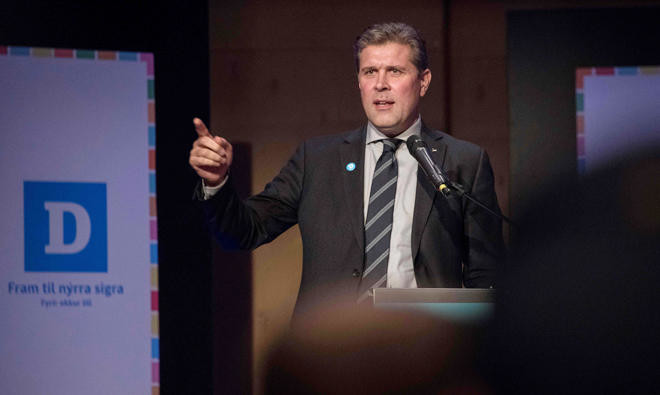
The father of Prime Minister Bjarni Benediktsson, Benedikt Sveinsson, one of Iceland’s wealthiest and most influential businessmen, signed such a letter for another paedophile convicted in 2004 of having raped his stepdaughter almost daily for 12 years.
The name of the signatory had been kept from the media and the public (only his son and the justice minister were informed), until a parliamentary commission ordered it be revealed.
Accused of having misled lawmakers and the public, and after a junior coalition member quit the government in protest, the prime minister resigned in September and called a snap election to be held on Saturday.
Icelanders’ opposition to the law has focused primarily on child molesters being granted “restored honor,” and less so on other types of criminals.
In a bid to address the concerns, Parliament voted on Sept. 27 to temporarily repeal a section of the law dealing with those sentenced to more than one year in prison, pending a full review by the future government.
But Arnar Thor Jonsson, a lawyer and former Reykjavik judge, lamented that some convicts are now no longer able to benefit from rehabilitation.
“The debate has been focused too narrowly on paedophiles,” he said.

Iceland’s controversial law that lets murderers become judges
Scores killed in militant attacks in northwest Nigeria
- The attacks came days after the state hosted the UNESCO-listed Argungu fishing festival
- The Lakurawa group has been blamed for many of the attacks on communities
LAGOS: Militant fighters have killed scores of people and destroyed seven villages in raids in northwestern Nigeria’s Kebbi state, the police said Thursday.
Members of the Lakurawa group attacked villages in the Bui district of Arewa northern region at around 1:15 p.m. (1215 GMT) Wednesday, said Kebbi state police spokesman Bashir Usman.
A security report seen by AFP said the militants had killed “more than 30 villagers.”
Usman said: “Scores of people were killed as residents from Mamunu, Awasaka, Tungan Tsoho, Makangara, Kanzo, Gorun Naidal, and Dan Mai Ago mobilized to resist the attackers.”
The attackers had also rustled “some cattle” in the raids, he added. Police, soldiers and local militia were immediately sent to the area.
The attacks came days after the state hosted the UNESCO-listed Argungu fishing festival, about 60 kilometers (38 miles) from the Arewa region, where the attacks took place.
The Lakurawa group has been blamed for many of the attacks on communities in the northern part of the state and in neighboring Sokoto state.
Its members stage deadly attacks from their forest base, rustling livestock and imposing “taxes” on locals.
The Nigerian government said the Christmas day air strikes by the US military in Sokoto had targeted members of the group and “bandit” gangs.
Some researchers have linked the group to the Islamic State Sahel Province, which is active mainly in neighboring Niger and Mali, though others remain doubtful.
The activities of the group have compounded Nigeria’s insecurity.
The West African nation is grappling with a more than 16-year militant insurgency in the northeast, as well as a farmer-herder conflict in the north central region.
They also have to contend with a violent secessionist agitation in the southeast, and kidnappings for ransom plague the northwest.
Nigeria is now looking to the United States for technical and training support for its troops fighting the militants after a resurgence of violence strained relationships between the two countries.
The US Africa Command said 200 troops were expected to join the deployment overall.
US President Donald Trump has said the violence there amounts to the “persecution” of Christians — a framing long used by the US religious and political right wing.
Nigeria’s government and many independent experts say Christians and Muslims alike are the victims of the country’s security crises.
Members of the Lakurawa group attacked villages in the Bui district of Arewa northern region at around 1:15 p.m. (1215 GMT) Wednesday, said Kebbi state police spokesman Bashir Usman.
A security report seen by AFP said the militants had killed “more than 30 villagers.”
Usman said: “Scores of people were killed as residents from Mamunu, Awasaka, Tungan Tsoho, Makangara, Kanzo, Gorun Naidal, and Dan Mai Ago mobilized to resist the attackers.”
The attackers had also rustled “some cattle” in the raids, he added. Police, soldiers and local militia were immediately sent to the area.
The attacks came days after the state hosted the UNESCO-listed Argungu fishing festival, about 60 kilometers (38 miles) from the Arewa region, where the attacks took place.
The Lakurawa group has been blamed for many of the attacks on communities in the northern part of the state and in neighboring Sokoto state.
Its members stage deadly attacks from their forest base, rustling livestock and imposing “taxes” on locals.
The Nigerian government said the Christmas day air strikes by the US military in Sokoto had targeted members of the group and “bandit” gangs.
Some researchers have linked the group to the Islamic State Sahel Province, which is active mainly in neighboring Niger and Mali, though others remain doubtful.
The activities of the group have compounded Nigeria’s insecurity.
The West African nation is grappling with a more than 16-year militant insurgency in the northeast, as well as a farmer-herder conflict in the north central region.
They also have to contend with a violent secessionist agitation in the southeast, and kidnappings for ransom plague the northwest.
Nigeria is now looking to the United States for technical and training support for its troops fighting the militants after a resurgence of violence strained relationships between the two countries.
The US Africa Command said 200 troops were expected to join the deployment overall.
US President Donald Trump has said the violence there amounts to the “persecution” of Christians — a framing long used by the US religious and political right wing.
Nigeria’s government and many independent experts say Christians and Muslims alike are the victims of the country’s security crises.
© 2026 SAUDI RESEARCH & PUBLISHING COMPANY, All Rights Reserved And subject to Terms of Use Agreement.