Iraq seeks clarification from Rosneft about energy deal with Kurdistan region

Rosneft has agreed to take control of Iraqi Kurdistan’s main oil pipeline, boosting its investment in the autonomous region to $3.5 billion. (Reuters)
Updated 21 October 2017
Follow

Iraq seeks clarification from Rosneft about energy deal with Kurdistan region

BAGHDAD: Iraqi oil minister Jabar Al-Luaibi said he had sought clarifications from Russia’s biggest oil company Rosneft about contracts it signed with the semi-autonomous Kurdistan region.
Rosneft “assured that the contracts are preliminary and not ready for implementation,” the minister told reporters in Baghdad, giving no further details.
Rosneft agreed on Thursday to take control of Iraqi Kurdistan’s main oil pipeline, boosting its investment in the autonomous region to $3.5 billion.
The Iraqi government has warned companies against signing deals with the Kurdistan region and Baghdad’s forces this week wrested control of the oil-rich Kirkuk from Kurdish forces.
Rosneft agreed on Thursday to take control of Iraqi Kurdistan’s main oil pipeline, boosting its investment in the autonomous region to $3.5 billion.
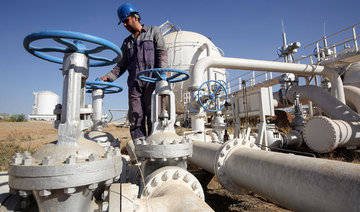
Rosneft will be investing in expanding the pipeline hoping to boost its capacity by a third to 950,000 barrels per day. That is the equivalent of about 1 percent of global supply.
The pipeline usually carries 600,000 bpd but volumes dropped to just over 200,000 bpd this week after Iraqi forces took over the region of Kirkuk. The pipeline carries crude from Kirkuk and other fields in northern Iraqi to the Turkish Mediterranean port of Ceyhan.


Qatar residential property sales jump 44% in 2025 as prices ease: Knight Frank 

Updated 7 sec ago
Follow

Qatar residential property sales jump 44% in 2025 as prices ease: Knight Frank 

RIYADH: Qatar’s residential property sales surged 43.5 percent in 2025 to 26.6 billion Qatari riyals ($7.30 billion), driven by rising transaction volumes even as home prices softened, according to Knight Frank. 

The number of residential deals climbed 50 percent in 2025 from a year earlier to 6,831 transactions, signaling sustained liquidity in the market despite a more competitive pricing environment, the property consultancy said in its Qatar Real Estate Market Review. 

In line with broader trends across the Gulf Cooperation Council, Qatar is seeking to strengthen its real estate sector as part of its economic diversification efforts. 

Faisal Durrani, head of research at Knight Frank for the Middle East and North Africa region, said: “Although residential prices are softening, strong growth in transaction volumes highlights continued liquidity and demand in Qatar’s core residential markets and indicating stabilization, rather than a market in retreat.”  

In the fourth quarter of 2025, residential sales activity remained concentrated in key locations, led by Doha, which recorded 564 transactions with a combined value of 2.4 billion riyals. Al Wakrah followed with 387 transactions worth 895 million riyals. 

“Average villa prices fell by 1 percent during the 12 months to the fourth quarter of 2025, reflecting a more competitive pricing environment as supply expands and buyers become increasingly value-led. Despite this moderation, prime locations remain resilient, supported by steady demand for premium schemes,” said Durrani. 

Rental rates also eased, with average villa rents down 2.4 percent year on year in the fourth quarter to 12,985 riyals per month. Prime locations continued to outperform, with West Bay Lagoon averaging 18,656 riyals a month for three-bedroom villas and up to 25,696 riyals for five-bedroom units. Overall villa rents declined 3 percent in 2025. 

“Qatar’s residential rental market continues to be shaped by tenant demand for well-located, lifestyle-led communities, with pricing remaining strong for larger villas in established neighborhoods,” said Knight Frank’s Adam Stewart.

Qatar’s office market showed similar trends, with grade-A rents falling 1.4 percent year on year to 90 riyals per sq. meter per month. Demand remained focused on prime districts, led by West Bay and the Marina District, as occupiers shifted away from older buildings. 

“Economic diversification in line with Qatar’s National Vision 2030 is supporting job growth and office demand, especially in the tech, green energy, and services sectors,” said Stewart. 

He added: “These occupiers are increasingly seeking high-specification, modern buildings with advanced facilities, and we are seeing a clear shift toward prime locations in Doha and Lusail, pulling tenants away from older stock.”