SVETI STEFAN, Montenegro: British QC Cherie Blair, in an exclusive interview with Arab News, has said the removal of the Saudi women’s driving ban is “superb news.”
Blair, a prominent human-rights lawyer and founder of the Cherie Blair Foundation for Women, said she believes the lifting of the ban will unleash new potential for women, but that “there is more to be done.”
In a rare interview with the press, the wife of former British Prime Minister Tony Blair said, “While it is a positive step, it’s not really just a question of driving — it needs to be about women being able to engage in every level of society.”
Speaking from the islet of Sveti Stefan, Montenegro, where she hosted a talk at The Global Citizen Forum, Blair said that “small changes lead to big changes.”
She added: “When it comes to change, most people are pragmatists — men and women alike.
“Even with men, if you can illustrate that women driving will somehow make their lives better or easier, they think ‘oh, this is good’ and then eventually they even become proud of their wife’s new achievements.
“I’ve seen it happen in other countries. This is how small changes lead to big changes. Step by step.”
Blair added that “leadership is lacking in the world.”
“A diverse range of leadership is very important because the problems we see in the world are just people repeating the same mistakes; people are very frightened about taking a chance,” she said.
The QC and philanthropist bemoaned the fact that just 10 percent of the world’s leaders are female. “It matters because it gives people an image of what a leader looks like,” she said. “When women see other women leading, then we start seeing visible changes and we allow that vision to manifest in women.”
Speaking at the same event, Patrick Basham, head of the Washington-based Democracy Institute think tank told Arab News, “The Saudi economy will benefit from literally empowering women in a physical sense because women will be more mobile in all kinds of ways.
“The rest of world sees this as a small step, a tangible one, but it’s a good example of how you don’t have to change the whole of society overnight. If it’s perceived, particularly by Saudi men, as not having brought the roof down they will be relieved and then it’s a question of ‘what’s the next step?”
Basham said one of the first “small steps” would be allowing women to have more of a voice so that their participation “if not encouraged, is at least accepted, so that the repression of Saudi women will be viewed as something from yesterday but not necessarily of tomorrow.”
A host of thinkers, experts, professionals, and world leaders are gathering for a two-day forum at Sveti Stefan on Oct. 19 and 20 to discuss “Global Citizenship in the Age of Uncertainty.”
The forum was established by businessman and philanthropist Armand Arton in 2012 to advocate for a better understanding of global citizenship, to promote discussion around issues of global significance, and to drive philanthropic activities.


![]()
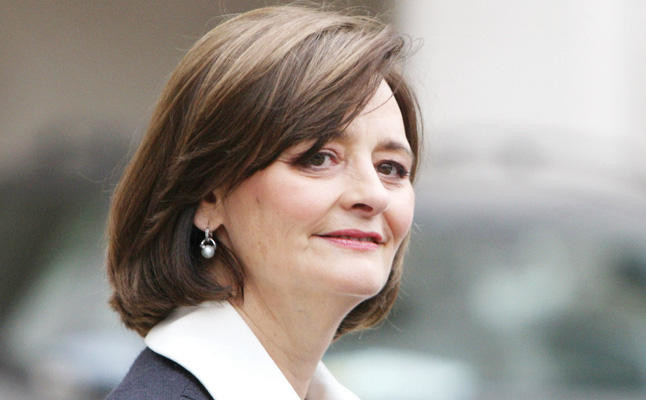
Cherie Blair: Lifting of Saudi ban on women driving ‘superb — but more to be done’
Cherie Blair: Lifting of Saudi ban on women driving ‘superb — but more to be done’
Latest updates


© 2026 SAUDI RESEARCH & PUBLISHING COMPANY, All Rights Reserved And subject to Terms of Use Agreement.