TOKYO: Crisis-hit Kobe Steel said on Friday its steel division has also falsely labelled products, the latest in a string of revelations confirming widespread cheating at the firm that has engulfed its global customers.
The bombshell admissions by Japan’s third-largest steel maker sent its shares plummeting again, with the scale of the misconduct dealing a body blow to the nation’s reputation as a high-quality manufacturing destination.
Investors, worried about the financial impact and legal fallout, have wiped out about $1.8 billion (SR6.75 billion) off Kobe Steel’s market value this week after the firm said about 200 companies were affected by its cheating.
On Friday, the company said it found data tampering in its steel wire products. Customers have said there are no problems with the safety or function of the products, the spokesman said.
Chief Executive Hiroya Kawasaki will brief media as the crisis ripples through supply chains across the world after the firm admitted at the weekend it had falsified data about the quality of aluminum and copper products used in cars, aircraft, space rockets and defense equipment.
Boeing has some of the falsely certified products, a source with knowledge of the matter told Reuters, but stressed that the world’s biggest maker of passenger jets does not as yet consider the issue a safety problem.
More than 30 non-Japanese customers including Daimler and Airbus had been affected by the firm’s data fabrication, the Nikkei newspaper reported on Friday.
A Kobe Steel spokesman said the companies received its products but would not confirm they had any of the falsely certified components.
Nuclear power plant parts are the latest to join the list of affected equipment as Fukushima nuclear operator Tokyo Electric Power (Tepco) said on Friday it had taken delivery of pipes from Kobe Steel that were not checked properly.
The pipes were delivered to its Fukushima Daini station, located near the destroyed Fukushima Daiichi plant, but have not been used, Tepco said, adding it was checking all its facilities.
Faulty parts have also been found in Japan’s famous bullet trains that run at speeds as high as around 300 kilometers per hour and a space rocket that was launched in Japan earlier this week. One bullet train operator has already said it will seek compensation from Kobe Steel.
The government has ordered Kobe Steel to address safety concerns within about two weeks and report on how the misconduct occurred in a month.
No safety issues have yet been identified in the unfolding imbroglio.
Kobe Steel shares fell nearly 9 percent on Friday and have fallen more than 40 percent since the scandal broke.
The steel maker faces a range of legal risks, including compensation sought by clients or their customers, penalties for violating unfair competition laws for false representation, shareholder lawsuits for the fall in the company’s stock price and class lawsuits from overseas customers seeking punitive damages, a lawyer said.
“It is hard to predict the extent of legal costs,” said Motokazu Endo, a lawyer at Tokyo Kasumigaseki law office.
“We cannot rule out the possibility that this will shake Kobe Steel to its foundation.”


![]()
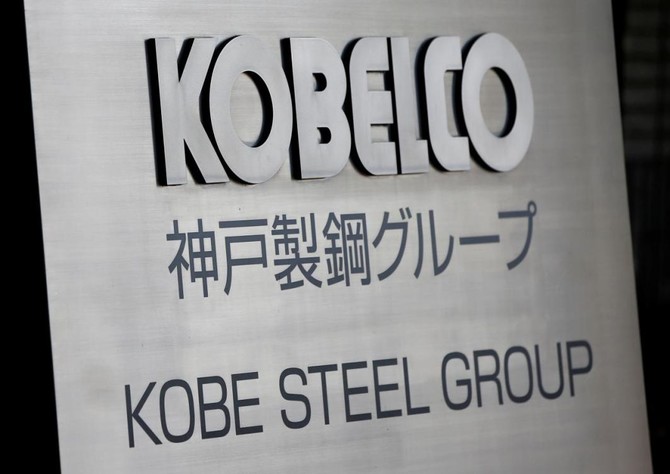
Japan’s Kobe Steel cheating scandal widens
Japan’s Kobe Steel cheating scandal widens


Latest updates


© 2026 SAUDI RESEARCH & PUBLISHING COMPANY, All Rights Reserved And subject to Terms of Use Agreement.