BELGRADE/ANKARA: Turkey will boycott meetings with the US ambassador to Ankara as it no longer recognizes the envoy as the US representative in the country, President Recep Tayyip Erdogan said Tuesday, stepping up a diplomatic row.
“We have not agreed and are not agreeing to this ambassador making farewell visits with ministers, the Parliament speaker and myself,” Erdogan said of US Ambassador John Bass, who is shortly to leave Turkey after being nominated the US envoy to Afghanistan.
“We do not see him as the representative of the US in Turkey,” he said at a news conference with President Aleksandar Vucic in Belgrade.
It is traditional for outgoing envoys in Turkey to make valedictory visits to bid farewell to top officials before leaving their posts.
Although Bass is expected to leave Turkey in the coming days, it is unprecedented in the history of Turkish-US relations for Ankara to say it no longer recognizes Washington’s ambassador.
The dispute erupted last week when Turkey arrested a Turkish employee of the American consulate on suspicion of links to the group blamed for last year’s failed coup. In response, the US stopped issuing non-immigrant visas from its missions in Turkey, prompting Turkish missions in the US to hit back with a tit-for-tat step of their own.
Erdogan said the arrest, based on evidence found by the police, shows “something is going on at the Istanbul consulate.”
“The US should evaluate one thing: How did those agents leak into the consulate?” Erdogan asked.
“If they did not (put them there), then who put them there? No state would allow such agents to pose such a threat.”
The US Embassy has dismissed the allegations against the consulate staffer as “baseless.”
Meanwhile, Turkish Prime Minister Binali Yildirim called on the US to move quickly to end the dispute.
The US decision to suspend visa services in Turkey has punished citizens of both countries, he said, accusing Washington of taking an emotional and inappropriate step against an ally.
In a blunt speech to ruling AK Party parliamentarians, Yildirim also defended Turkey’s arrest of the US consulate employee. “Turkey is not a tribal state, we will retaliate against what has been done in kind,” he said.
“Who are you punishing?” Yildirim said. “You are making your citizens and ours pay the price.”
“... We call on the United States to be more reasonable. The issue must, of course, be resolved as soon as possible,” he said, describing US behavior as “unbecoming” of an ally.
Relations between the countries have been plagued by disputes over US support for Kurdish fighters in Syria and Turkey’s calls for US-based Muslim scholar Fethullah Gulen’s extradition. Ankara accuses Gulen of orchestrating a failed military coup against Erdogan in which more than 240 people were killed.
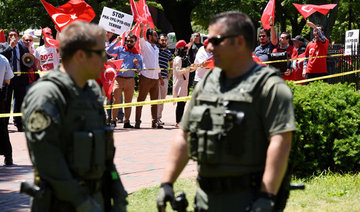
US courts have also indicted a Turkish banker and a former minister for conspiring to violate US sanctions on Iran, as well as 15 of Erdogan’s security guards for attacking peaceful protesters during his visit to Washington in May.
“Did you ask permission from us when you dragged a general manager from our national bank into jail?” Yildirim said. “Why are you harboring Gulen? Does this fit our alliance or friendship?”
Yildirim said if the US wanted to continue its alliance with Turkey it should stop support for YPG fighters battling Daesh in Syria. Turkey says the YPG is an extension of the outlawed PKK which has fought a three-decade insurgency in southeast Turkey.
“Siding with our enemies is not fitting our alliances,” he said.


![]()

Turkish officials to boycott US envoy: Erdogan
Turkish officials to boycott US envoy: Erdogan

Latest updates


© 2026 SAUDI RESEARCH & PUBLISHING COMPANY, All Rights Reserved And subject to Terms of Use Agreement.