HONG KONG: Citigroup is considering setting up an onshore cash equities business in China and expanding research coverage of Chinese stocks, to boost its share of the business in Asia, said the head of its regional equities unit.
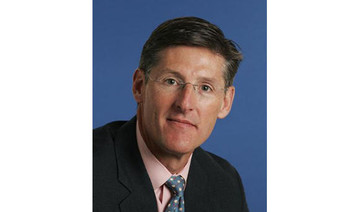
The US-headquartered bank is also looking to add at least 10 people to the unit, including bankers and technology staff, mainly at its Hong Kong and Singapore hubs, Richard Heyes told Reuters.
Citi’s sharpened focus on its Asia equities business, which includes stock trading and research, is part of its global effort to bolster trading technology, hire senior bankers and boost financing to hedge funds.
“It’s an interesting opportunity, one we are looking very closely at,” Heyes said, referring to setting up an onshore cash equities business in China, which he said was in its early stages. He declined to give details.
“At the moment we don’t feel we have a competitive disadvantage doing it from Hong Kong in the way the majority of people do. But over time, do I think we should strongly think about on-ground presence? Yes.”
Analysts said China-listed shares’ inclusion in the US index publisher MSCI’s emerging-markets benchmark this year, a milestone for global investing, would lead to a jump in demand for brokerage and research services.
That came on top of the introduction of programs allowing two-way trading between stock markets in Hong Kong and Shanghai and Shenzhen, as part of Beijing’s efforts to open up capital markets.
China’s brokerage revenue pool touched $41 billion in 2015, showed a report last year by Quinlan & Associates.
Assuming institutional broking revenue is 10 to 15 percent of the total, a 1 percent market share would bring $40 million to $60 million in annual revenue to an equities house in the world’s second-largest economy, the consultancy said.
To tap into an expected demand surge, Citi, which provides research on 175 China-listed firms, plans to increase coverage to 200 by year-end and 250 in the longer term, Heyes said.
“We have seen very clearly, as one of the biggest players in (the Hong Kong stock) connect, a very significant ramp up in the opening of accounts. It’s very clear that many people are getting prepared for future activity in the China market.”
Citi is also looking to bolster financing support for hedge funds, to help win more trading business and boost its Asia equities market share.
“We have had very meaningful success with some very important, large global hedge funds in the US We are now expecting or have commitments from many of them to on-board us in Asia either by end of this year or early next year.”

Citigroup considering onshore cash equities business in China

First EU–Saudi roundtable on critical raw materials reflects shared policy commitment
RIYADH: The EU–Saudi Arabia Business and Investment Dialogue on Advancing Critical Raw Materials Value Chains, held in Riyadh as part of the Future Minerals Forum, brought together senior policymakers, industry leaders, and investors to advance strategic cooperation across critical raw materials value chains.
Organized under a Team Europe approach by the EU–GCC Cooperation on Green Transition Project, in coordination with the EU Delegation to Saudi Arabia, the European Chamber of Commerce in the Kingdom and in close cooperation with FMF, the dialogue provided a high-level platform to explore European actions under the EU Critical Raw Materials Act and ResourceEU alongside the Kingdom’s aspirations for minerals, industrial, and investment priorities.
This is in line with Saudi Vision 2030 and broader regional ambitions across the GCC, MENA, and Africa.
ResourceEU is the EU’s new strategic action plan, launched in late 2025, to secure a reliable supply of critical raw materials like lithium, rare earths, and cobalt, reducing dependency on single suppliers, such as China, by boosting domestic extraction, processing, recycling, stockpiling, and strategic partnerships with resource-rich nations.
The first ever EU–Saudi roundtable on critical raw materials was opened by the bloc’s Ambassador to the Kingdom, Christophe Farnaud, together with Saudi Deputy Minister for Mining Development Turki Al-Babtain, turning policy alignment into concrete cooperation.
Farnaud underlined the central role of international cooperation in the implementation of the EU’s critical raw materials policy framework.
“As the European Union advances the implementation of its Critical Raw Materials policy, international cooperation is indispensable to building secure, diversified, and sustainable value chains. Saudi Arabia is a key partner in this effort. This dialogue reflects our shared commitment to translate policy alignment into concrete business and investment cooperation that supports the green and digital transitions,” said the ambassador.
Discussions focused on strengthening resilient, diversified, and responsible CRM supply chains that are essential to the green and digital transitions.
Participants explored concrete opportunities for EU–Saudi cooperation across the full value chain, including exploration, mining, and processing and refining, as well as recycling, downstream manufacturing, and the mobilization of private investment and sustainable finance, underpinned by high environmental, social, and governance standards.
From the Saudi side, the dialogue was framed as a key contribution to the Kingdom’s industrial transformation and long-term economic diversification agenda under Vision 2030, with a strong focus on responsible resource development and global market integration.
“Developing globally competitive mineral hubs and sustainable value chains is a central pillar of Saudi Vision 2030 and the Kingdom’s industrial transformation. Our engagement with the European Union through this dialogue to strengthen upstream and downstream integration, attract high-quality investment, and advance responsible mining and processing. Enhanced cooperation with the EU, capitalizing on the demand dynamics of the EU Critical Raw Materials Act, will be key to delivering long-term value for both sides,” said Al-Babtain.
Valere Moutarlier, deputy director-general for European industry decarbonization, and directorate-general for the internal market, industry, entrepreneurship and SMEs at European Commission, said the EU Critical Raw Materials Act and ResourceEU provided a clear framework to strengthen Europe’s resilience while deepening its cooperation with international partners.
“Cooperation with Saudi Arabia is essential to advancing secure, sustainable, and diversified critical raw materials value chains. Dialogues such as this play a key role in translating policy ambitions into concrete industrial and investment cooperation,” she added.