LAS VEGAS: The high-stakes gambler and retired accountant who opened fire on country music concertgoers, killing 59 of them, had transferred $100,000 to the Philippines in the days before the attack, a US official said.
In addition, Stephen Paddock reported at least a dozen gambling transactions of $10,000 or more in the past several weeks before Sunday’s shooting outside the Mandalay Bay hotel casino in Las Vegas, a US official briefed by law enforcement told The Associated Press.
The rampage by Paddock also injured more than 500 people. Paddock, 64, killed himself as authorities closed in on him in his hotel room.
More about the deadliest mass shooting in modern US history:
THE INVESTIGATION
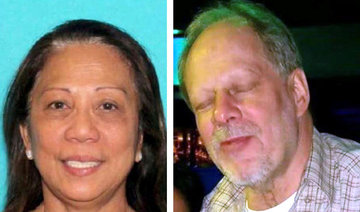
Investigators want to interview Paddock’s girlfriend, who was out of the country at the time of the shooting.
On Tuesday, they called Marilou Danley “a person of interest” and said the FBI was bringing her back to the US on Wednesday for questioning. On Tuesday, the 62-year-old was in the Philippines.
Authorities also say Paddock placed a camera in a food service cart outside his 32nd-floor hotel room and set up cameras inside his room. Sheriff Joe Lombardo said authorities believe Paddock put them in place so he could see if law enforcement was coming to try to take him into custody.
THE VICTIMS
Those killed included a man celebrating his 23rd wedding anniversary, a one-time high school cheerleader and a Pennsylvania wrestling coach.
Sunrise Hospital and Medical Center said an additional victim died Tuesday afternoon. The additional fatality kept the death toll at 59 after Clark County Coroner John Fudenberg revised his earlier count of victims downward by one.
More than 500 people were injured in the attacks. Forty-eight of them, including a 16-year-old boy and a 17-year-old girl, remained in critical condition Tuesday evening, hospital officials said.
THE GUNMAN
So far, law enforcement and family members haven’t been able to explain what motivated a multimillionaire with no evidence of criminal history to inflict so much carnage.
Retired FBI profiler Jim Clemente speculated that there was “some sort of major trigger in (Paddock’s) life — a great loss, a breakup, or maybe he just found out he has a terminal disease.”
He said there could also be a genetic component to the slaying: Paddock’s father was a bank robber who was on the FBI’s most-wanted list in the 1960s and was diagnosed as a psychopath.
Paddock’s brother, Eric, said Paddock did show a confrontational side at times: He apparently hated cigarette smoke so much that he carried around a cigar and blew smoke in the faces of people who lit up around him.
REMEMBRANCES
A vigil was held in Orlando on Tuesday evening for the victims of the Las Vegas attacks, which surpassed the Pulse nightclub shooting as the deadliest mass shooting in modern US history.
A nearby church rang its bell 59 times, once for each of the people killed in Sunday’s shooting.
Pulse nightclub owner Barbara Poma said the Vegas shooting takes them all back to June 12, 2016, when a gunman killed 49 people and wounded 58 in her club in what was then the nation’s deadliest mass shooting.
“We will not and cannot let hate win,” Poma said. “We will never get over it. We can move forward. It’s our turn to pay it forward. We must continue to fight for love. It is love that must win.”
PRESIDENT SPEAKS OUT
President Donald Trump is planning to visit Las Vegas on Wednesday to meet with survivors and law enforcement officials.
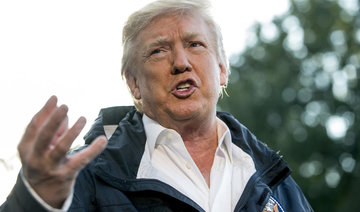
Trump spoke to reporters Tuesday as he departed for a trip to hurricane-ravaged Puerto Rico. He called the gunman “demented” and a “very, very sick individual.”
Trump said the shooting was “such a tragedy” and “unnecessary.”
Asked about gun laws, the president said, “We’ll be talking about gun laws as time goes by.”