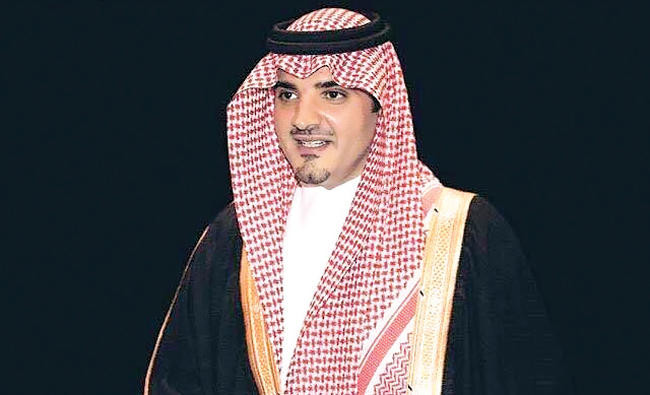
JEDDAH: Saudi Arabia’s lifting of a ban on women drivers will reduce the number of car crashes, said the Kingdom’s interior minister.
Prince Abdulaziz bin Saud bin Naif, the interior minister who took over in June, said security forces were ready to apply traffic laws to men and women.
“Women driving cars will transform traffic safety to educational practice which will reduce human and economic losses caused by accidents,” he was quoted as saying on the ministry’s official Twitter feed.
Meanwhile, a government spokesman said Saudi women will be allowed to drive from the age of 18.
Asked on Al Arabiya TV about the minimum age for Saudi women, Interior Ministry spokesman Maj. Gen. Mansour Al-Turki said: “Eighteen years is the age at which a person can obtain a driver’s license and drive a car in the Kingdom.”
In a royal decree issued on Tuesday, King Salman ordered an end by next year of the ban on women drivers.
The decree stipulated that the move must “apply and adhere to the necessary Shariah standards.”
The king ordered a ministerial committee to report within 30 days on how to implement the new policy by June 24, 2018.
UN human rights experts praised the ban’s removal as a major step toward women’s autonomy and independence.
While Saudi women have welcomed the lifting of the driving ban, some men have expressed concern it would increase the number of cars on already crowded roads.
A typical middle- to upper-class Saudi family has two vehicles, one driven by the man of the house and a second car in which a full-time chauffeur transports his family.

Women drivers will reduce crashes, says interior minister
Rare sighting of critically endangered leatherback turtle in Red Sea
- Turtles travel thousands of kilometers to Red Sea
- Nesting 6,500km away in India’s Andaman Islands
RIYADH: Saudi Arabia’s National Center for Wildlife has documented a rare sighting of a leatherback sea turtle in the Red Sea, marking a significant biological record for one of the planet’s most critically endangered marine species.
The sighting occurred approximately 30 km off the coast of Al-Qunfudhah within the Blue Holes Protected Area, a newly established marine reserve, according to a recent report from the Saudi Press Agency.
The NCW said the presence of a leatherback in these waters was an exceptional event.
Recognized as the largest turtle species on Earth, the leatherback can weigh up to 900 kilograms. It has a unique leathery, black carapace — distinguished by five longitudinal ridges rather than a hard bony shell — and able to dive to depths exceeding 1,000 meters.
Noting the species’ migratory nature, the center explained that leatherbacks travel thousands of kilometers foraging for jellyfish. The specimen likely navigated through the Bab Al-Mandeb Strait in search of food.
This is considered a remarkable journey, the NCW said, noting that the nearest known populations reside in the Indian Ocean, spanning waters from South Africa to Sri Lanka (roughly 7,000 to 8,000 km away).
The closest known nesting grounds are located in India’s Andaman Islands, approximately 6,500 kilometers away. No nesting activity has been recorded in the Red Sea.
According to the Red List of the International Union for Conservation of Nature, the leatherback is Critically Endangered in the Indian Ocean.
While data for the Red Sea and Arabian Gulf is scarce, recent isolated sightings include a juvenile recorded in Jordan in December 2025 and another off Djibouti in 2019.
The NCW emphasized that these rare appearances highlight the ecological importance of the Kingdom's marine conservation efforts in the Red Sea.
The center pointed to the Farasan Islands Marine Protected Area, along with the new Blue Holes and Ras Hatiba reserves, as critical sanctuaries that could support the expansion in range of such endangered species.