CAIRO: The Egyptian air force said on Thursday it destroyed a convoy of 10 all-terrain vehicles in the country’s western desert suspected of smuggling weapons from Libya.
The raid was carried out on Wednesday on the basis of information that “criminal elements were preparing to infiltrate” Egypt, said army spokesman Col. Tamer El-Refai in a statement.
The officer said that the vehicles were attacked once they entered Egyptian territory, but he did not specify the fate of those in the convoy.
Egypt, which has struck terrorist targets inside Libya, regularly warns of a spillover of instability from its lawless western neighbor, a haven of arms and people trafficking.
The country has been battling an insurgency of its own since the military’s ouster in 2013 of former President Mohammed Mursi.
Terrorists have killed hundreds of members of Egypt’s security forces, while more than 100 Copts have died in church bombings since December.
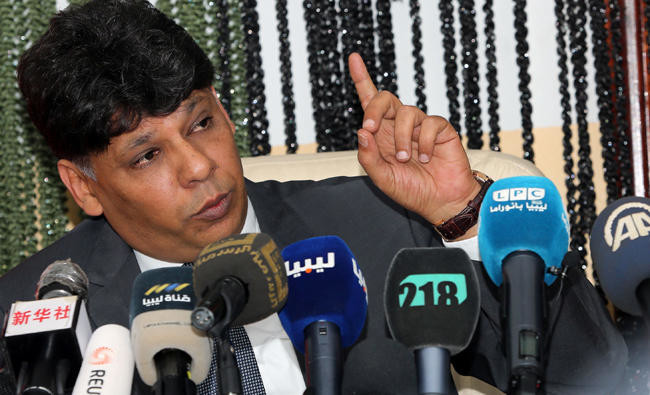
In a separate development, Libyan authorities have arrested a suspected Daesh militant they believe was involved in the execution of 21 Egyptian Coptic Christians in Libya in 2015.
Chief Prosecutor Al-Sadiq Al-Sour said that the executions took place behind a seaside hotel in the coastal city of Sirte.
He said authorities had also identified the site where the bodies were buried.
The killings, documented in a grisly video released online by the extremists, shocked Egypt and led it to launch punitive airstrikes.
Al-Sour said Daesh militants have been using Sudan, the country’s southern neighbor, to get into Libya.
Hundreds of Daesh militants are believed to have fled Sirte into the Libyan interior after their defeat last year by militias loyal to a UN-backed government in Tripoli.

Egyptian airstrike targets arms convoy from Libya
Lebanon’s government approves a deal to transfer Syrian prisoners back to Syria
- Lebanon and Syria have a complicated history with grievances on both sides
- A key obstacle to warming relations has been the fate of about 2,000 Syrians in Lebanese prisons
BEIRUT: Lebanon’s Cabinet on Friday approved an agreement to transfer Syrian prisoners serving their sentences in Lebanon back to their home country.
The issue of prisoners has been a sore point as the neighboring countries seek to recalibrate their relations following the ouster of former Syrian President Bashar Assad in a lightning offensive by Islamist-led insurgents in December 2024. Former insurgent leader Ahmad Al-Sharaa is now Syria’s interim president.
Lebanon and Syria have a complicated history with grievances on both sides. Many Lebanese resent the decades-long occupation of their country by Syrian forces that ended in 2005. Many Syrians resent the role played by the Lebanese militant group Hezbollah when it entered Syria’s civil war in defense of Assad’s government.
A key obstacle to warming relations has been the fate of about 2,000 Syrians in Lebanese prisons, including some 800 held over attacks and shootings, many without trial. Damascus had asked Beirut to hand them over to continue their prison terms in Syria, but Lebanese judicial officials said Beirut would not release any attackers and that each must be studied and resolved separately.
The deal approved Friday appeared to resolve that tension. Lebanese Information Minister Paul Morcos said other issues remain to be resolved between the two countries, including the fate of Lebanese believed to have been disappeared into Syrian prisons during Assad’s rule and the demarcation of the border between the two countries.
Lebanon’s Deputy Prime Minister Tarek Mitri told reporters after the Cabinet meeting that about 300 prisoners would be transferred as a result of the agreement.
Protesters gathered in a square below the government palace in downtown Beirut ahead of the Cabinet vote to call for amnesty for Lebanese prisoners, including some who joined militant groups fighting against Assad in Syria. Some of the protesters called for the release of Sunni cleric Ahmad Al-Assir, imprisoned for his role in 2013 clashes that killed 18 Lebanese army soldiers.
“The state found solutions for the Syrian youth who are heroes and belong to the Syrian revolution who have been imprisoned for 12 years,” said protester Khaled Al- Bobbo. “But in the same files there are also Lebanese detainees. ... We demand that just as they found solutions for the Syrians, they must also find solutions for the people of this country.”