Yemen official: 55% of health facilities bombed, looted by rebels

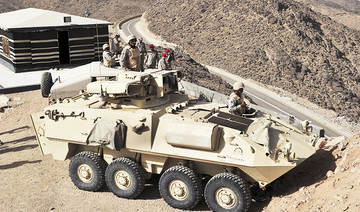
Pro-government troops parade to mark the 55th anniversary of the September 1962 revolution in the southwestern Yemeni city of Taiz on Tuesday. (Reuters)
Updated 27 September 2017
Follow

Yemen official: 55% of health facilities bombed, looted by rebels

GENEVA: Houthi militias and forces loyal to former President Ali Abdullah Saleh have destroyed and looted more than 55 percent of health facilities in Yemen since September 2014, a Yemeni official said on Tuesday.
Health sector losses in Aden amounted to $7 million, Health Ministry Undersecretary Dr. Ali Al-Walidi said at a symposium on Yemen organized by the British Arab Center for Strategic Studies and Development in Geneva.
Al-Thawrah Hospital and the Swedish Children’s Hospital in the city of Taiz have been repeatedly attacked, he added.
Rebels “targeted the dialysis department and the cholera treatment center at the Republican Hospital in Taiz,” he said.
“The power and drainage network was stopped, and the hospital’s dialysis machines were destroyed.”
Emergency vehicles and primary health care programs in the ministry’s general office have been looted, Al-Walidi said.
“The legitimate Yemeni government has made great efforts to reduce the spread of epidemics, with the generous support of the brothers in the Arab alliance, particularly Saudi Arabia, the UAE and Kuwait,” he added.
Saudi Arabia has allocated $74.8 million to fight cholera, and 55 tons of medicines and medical supplies have been sent by the King Salman Humanitarian Aid and Relief Center (KSRelief), whose medical aid to Yemen is ongoing.
“KSRelief has repaired 16 hospitals and health facilities in Aden. It has equipped operation rooms and oncology centers with medical supplies and medicines for chronic and infectious diseases,” Al-Walidi said.
The UAE Red Crescent delivered $12 million to the World Health Organization (WHO) in Yemen to rehabilitate 24 hospitals in nine governorates, restore Khalifa Hospital in Socotra, and send medical equipment and supplies to Taiz, Marib, Hadramout and other governorates.


First responders enter devastated Aleppo neighborhood after days of deadly fighting

Updated 12 January 2026
Follow

First responders enter devastated Aleppo neighborhood after days of deadly fighting

  • The US-backed SDF, which have played a key role in combating the Daesh group in large swaths of eastern Syria, are the largest force yet to be absorbed into Syria’s national army

ALEPPO, Syria: First responders on Sunday entered a contested neighborhood in Syria’ s northern city of Aleppo after days of deadly clashes between government forces and Kurdish-led forces. Syrian state media said the military was deployed in large numbers.
The clashes broke out Tuesday in the predominantly Kurdish neighborhoods of Sheikh Maqsoud, Achrafieh and Bani Zaid after the government and the Syrian Democratic Forces, the main Kurdish-led force in the country, failed to make progress on how to merge the SDF into the national army. Security forces captured Achrafieh and Bani Zaid.
The fighting between the two sides was the most intense since the fall of then-President Bashar Assad to insurgents in December 2024. At least 23 people were killed in five days of clashes and more than 140,000 were displaced amid shelling and drone strikes.
The US-backed SDF, which have played a key role in combating the Daesh group in large swaths of eastern Syria, are the largest force yet to be absorbed into Syria’s national army. Some of the factions that make up the army, however, were previously Turkish-backed insurgent groups that have a long history of clashing with Kurdish forces.
The Kurdish fighters have now evacuated from the Sheikh Maqsoud neighborhood to northeastern Syria, which is under the control of the SDF. However, they said in a statement they will continue to fight now that the wounded and civilians have been evacuated, in what they called a “partial ceasefire.”
The neighborhood appeared calm Sunday. The United Nations said it was trying to dispatch more convoys to the neighborhoods with food, fuel, blankets and other urgent supplies.
Government security forces brought journalists to tour the devastated area, showing them the damaged Khalid Al-Fajer Hospital and a military position belonging to the SDF’s security forces that government forces had targeted.
The SDF statement accused the government of targeting the hospital “dozens of times” before patients were evacuated. Damascus accused the Kurdish-led group of using the hospital and other civilian facilities as military positions.
On one street, Syrian Red Crescent first responders spoke to a resident surrounded by charred cars and badly damaged residential buildings.
Some residents told The Associated Press that SDF forces did not allow their cars through checkpoints to leave.
“We lived a night of horror. I still cannot believe that I am right here standing on my own two feet,” said Ahmad Shaikho. “So far the situation has been calm. There hasn’t been any gunfire.”
Syrian Civil Defense first responders have been disarming improvised mines that they say were left by the Kurdish forces as booby traps.
Residents who fled are not being allowed back into the neighborhood until all the mines are cleared. Some were reminded of the displacement during Syria’s long civil war.
“I want to go back to my home, I beg you,” said Hoda Alnasiri.