LONDON: Brexit negotiator David Davis on Sunday dismissed a report that Britain was prepared to pay a £40 billion ($54 billion) divorce bill on leaving the EU.
The Times quoted a “Brussels source” in their story on Saturday, but Davis told BBC television that “they sort of made that up.”
“I’m not going to do an actual number on air, it would be ridiculous to do that, but we have a fairly clear idea where we’re going on this,” he said.
He called EU claims for Britain to contribute to the bloc’s future pension pot as “debatable to say the least.”
“The last time we went through line by line and challenged quite a lot of the legal basis of these things and we’ll continue to do that.”
British Prime Minister Theresa May on Friday revealed plans for a transition period of around two years after the country officially leaves in 2019, during which time Britain would still largely be under current EU rules.
Davis stressed that Britain “would not under any circumstances” accept the supremacy of the European Court of Justice after the transition period, a key issue for Brexit hard-liners.
He added that it was “quite likely” that a joint system of EU-UK courts will be agreed in order to resolve disputes.
May’s Cabinet is divided over certain key issues of Brexit, particularly on what terms Britain wishes to access the EU’s single market after it has left.
The pro-EU faction of her government, led by finance minister Philip Hammond, want close ties with the bloc, while Brexit campaigner and Foreign Minister Boris Johnson is pushing for a cleaner break.
Johnson heightened tensions last week with a newspaper article spelling out his vision, and the latest edition of the Sunday Telegraph reported he had set down further demands.
He said Britain should not adopt any new EU rules made during the transition period and wants London to be able to sign trade deals with countries outside the EU during the two-year period, according to the paper.
Davis denied Johnson’s article had changed the content of May’s speech, saying the “policy in the prime minister’s speech had been coming for a long time.
“I don’t think there’s been any change of policy in the last few weeks.”
Davis will head to Brussels on Monday to relaunch Brexit negotiations with the EU.
A new book “Fall Out: A Year of Political Mayhem,” serialized in the Sunday Times, revealed that Davis, Johnson and Hammond were involved in discussions about possibly replacing May as leader following her disastrous election campaign, which saw her lose her parliamentary majority.
According to the book, Hammond texted Johnson as the results came through in the June snap vote, suggesting that he was prepared to back the foreign secretary if he ran for the leadership.
The plan was apparently shelved after May made it clear she was not going to stand down and Davis indicated he would not defer to Johnson in Brexit negotiations.
— AFP


![]()
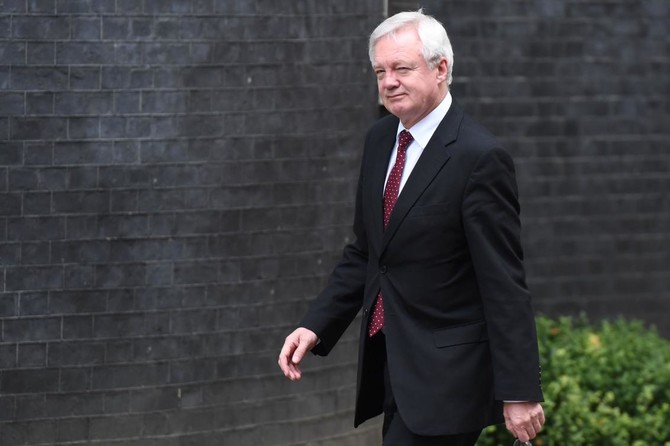
UK negotiator dismisses reports of $54bn Brexit bill
UK negotiator dismisses reports of $54bn Brexit bill
Latest updates


Recommended


© 2026 SAUDI RESEARCH & PUBLISHING COMPANY, All Rights Reserved And subject to Terms of Use Agreement.