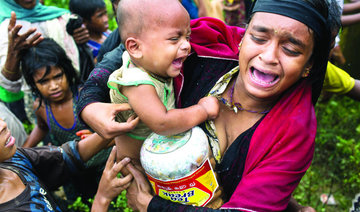
COX’S BAZAR, Bangladesh: The flood of Rohingya refugees into Bangladesh has come to a virtual halt, Dhaka officials said Saturday, almost a month after violence erupted in Myanmar’s Rakhine State and sent nearly 430,000 people fleeing across the border.
Officials gave no reason for the dramatically reduced numbers. But Rohingya Muslim leaders said it could be because villages located near the border in Myanmar’s Rakhine state were now empty.
Bangladesh Border Guard commanders said hardly any refugees are now seen crossing on boats coming from Myanmar or trying to get over the land border.
In the past two weeks there have been up to 20,000 people a day entering Bangladesh.
The UN says 429,000 Rohingya have sought refuge in Bangladesh since attacks by Ronhingya militants in Rakhine on August 25 sparked a major Myanmar military crackdown.
Many gave up money and jewelry to get places on boats crossing the Naf river, which marks part of the Bangladesh-Myanmar border.
“Our guards have not seen any Rohingya coming in the past few days. The wave is over,” Bangladesh Border Guard commander S.M. Ariful Islam told AFP.
The United Nations also said “the influx has dropped.” It said it will now release updates on the numbers of refugees entering Bangladesh once a week, rather than daily.
Rohingya community leaders said most of the Rakhine villages near the Bangladesh border are now deserted.
“Almost all the people I know have arrived in Bangladesh,” Yusuf Majihi, a Rohingya leader at a camp at Balukhali, near Cox’s Bazar, told AFP.
“Village after village has become empty due to the attacks by Myanmar soldiers and torching of the houses by Moghs (Buddhists),” he added.
“Those who are left in Rakhine live far off the border,” he said.
Farid Alam, another Rohingya leader, said “I have not heard of any Rohingya crossing the border in the past five days. All I could see is people concentrating near the main camps.”
Myanmar’s de facto leader Aung San Suu Kyi said this week that troops had ceased “clearance operations” targeting Rohingya militants in Myanmar’s border area.
The United Nations previously said the military crackdown could amount to “ethnic cleansing.”
But despite the calm on the border, there were new signs of unrest in Myanmar.
While the army chief blamed Rohinyga militants for an explosion outside a mosque in Rakhine, Amnesty International accused the military of starting fires in the region to prevent refugees from returning.
Myanmar commander-in-chief Min Aung Hlaing issued a statement saying Rohingya militants planted a “home-made mine” that exploded in between a mosque and madrasa in Buthidaung township on Friday.
The army chief accused militants of trying to drive out around 700 remaining villagers. Analysts highlighted however that the militants’ influence depends on the networks they have built across Rohingya communities.
Amnesty said new videos and satellite imagery indicated fires were still raging through Rohingya villages, scores of which have already been burned to the ground.
According to government figures, nearly 40 percent of Rohingya villages in northern Rakhine have been abandoned over the past month.
Human Rights Watch on Saturday also echoed allegations from Bangladeshi officials that Myanmar security forces were laying land mines along the border.
A number of Rohingya, including children, have been killed by mines at the border.
Bangladesh authorities are meanwhile stepping up efforts to bring order to the chaotic aid distribution for refugees.
Soldiers have been deployed around a 70 sqq. km area where Rohingya have built camps on hills or in open spaces near existing UN run camps.
“We are in the process of taking over the whole relief distribution,” said an army spokesman.
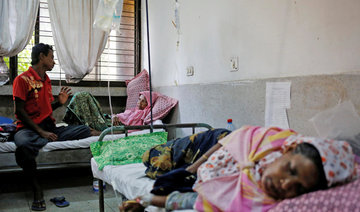
He said the troops would dig hundreds of latrines for refugees after doctors warned that the camps were on the brink of a health disaster.
Even before the latest exodus, the camps were home to some 300,000 Rohingya who had fled previous violence in Rakhine.


![]()

Bangladesh says Rohingya influx grinds to a halt
Bangladesh says Rohingya influx grinds to a halt

Latest updates


© 2026 SAUDI RESEARCH & PUBLISHING COMPANY, All Rights Reserved And subject to Terms of Use Agreement.