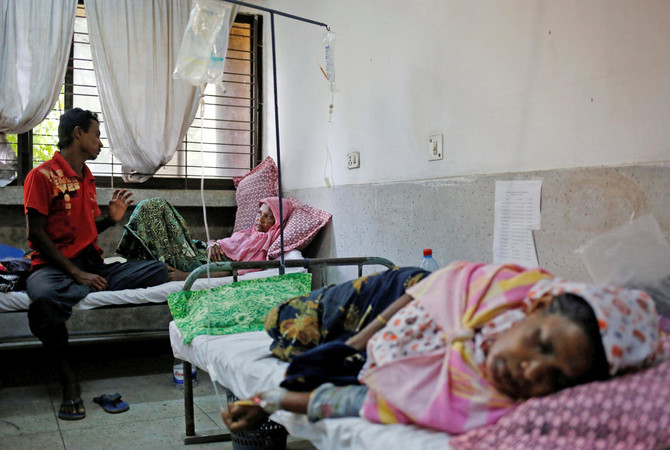
COX’S BAZAR, Bangladesh: Some 379,000 Rohingya Muslims have fled Myanmar’s troubled Rakhine state for Bangladesh since new violence erupted last month, the United Nations said Wednesday.
The figure has risen by 9,000 in 24 hours, the UN refugee agency spokesman Joseph Tripura told AFP.
Bangladesh authorities are now registering new arrivals and building a massive new camp near the border with Myanmar to accommodate the influx.
“We’ve already started shifting thousands of people to this camp where we’re building sheds for them,” Ali Hossain, government administrator for Cox’s Bazar district, told AFP.
Attacks by Rohingya militants on Myanmar security forces in Rakhine on August 25 sparked a harsh military crackdown on the minority Muslim community and the exodus started almost straight away.
Rohingya people have long been subjected to discrimination in Buddhist-dominated Myanmar, which denies them citizenship.
There were more than 300,000 Rohinya in refugee camps and makeshift settlements in Bangladesh even before the latest unrest.
These are now completely overwhelmed and tens of thousands of new arrivals have no shelter.
Most walked for days to reach Bangladesh and aid workers say many are sick and in desperate need of food.

Rohingya exodus from Myanmar hits 379,000


Police target Ukrainians and Russian in ransomware probe
- As part of a coordinated operation between Germany, the Netherlands, Switzerland, Ukraine and Britain, police searched the homes of two Ukrainian suspects
BERLIN: Police have carried out raids against two members of a ransomware group known as “Black Basta” in Ukraine, and issued an arrest warrant for its Russian head, German prosecutors said Thursday.
The group is accused of using malware to encrypt systems and then demanding money to restore them.
Between March 2022 and February 2025, its members extorted hundreds of millions of euros from around 600 companies and public institutions around the world, the prosecutors said in a statement.
The victims were mainly “companies in Western industrialized nations” but also included hospitals and other public institutions.
As part of a coordinated operation between Germany, the Netherlands, Switzerland, Ukraine and Britain, police searched the homes of two Ukrainian suspects and seized evidence, the prosecutors said.
Investigators have also identified and issued an arrest warrant for a Russian citizen accused of being the founder and head of the group, they said.
German police named the suspect as Oleg Evgenievich Nefedov, 35.
Nefedov “decided on targets, recruited employees, assigned them tasks, participated in ransom negotiations, managed the proceeds and used them to pay the members of the group,” the police said.
The searches in Ivano-Frankivsk and Lviv were directed against suspected members of the group accused of so-called hash cracking, a method of guessing passwords.
Ukrainian officials also searched the home of another member of the group near Kharkiv in August, whose job was allegedly to help ensure the malware was not detected by antivirus programs.
Black Basta extorted some 20 million euros ($23 million) from around 100 companies and institutions in Germany alone, the prosecutors said.