Moscow: For Russians who fear that someone may be eavesdropping on their phone conversations, leading IT entrepreneur Natalya Kaspersky says she has a solution.
At a business forum in Moscow on Friday she presented “TaigaPhone,” a brand new smartphone created by InfoWatch Group, her software development company, costing around 15,000 rubles ($260).
The TaigaPhone is entirely green to represent the Russian northern forest after which it is named and has a five-inch touch screen.
“We have created it for the corporate market,” said Kaspersky, president of InfoWatch Group and co-founder of Kaspersky Lab, Russia’s leading antivirus software development company which some believe may have links to Russian intelligence.
Kaspersky Lab has over the past months been at the center of controversy in the United States.
In July, the US government removed Kaspersky from its list of approved vendors, weeks after top US intelligence agency and law enforcement officials expressed concerns about the safety of its software.
But no evidence has been presented to back up vague assertions that it might be a tool of Moscow, offering Russian spies back-door entry into computers worldwide.
The company has repeatedly denied working with any government agency.
The TaigaPhone is not the first Russian-made smartphone. YotaPhone, which first appeared on the market in 2013, is back this year with a new device: the YotaPhone 3.
InfoWatch wants to sell TaigaPhone to Russian companies at a cost of between 12,000 and 15,000 rubles, almost five times cheaper than the cost of an iPhone in Russia.
“Half of all data loss in Russia happens on mobile devices, we intend to fix that problem with the TaigaPhone,” company representative Grigoriy Vasilyev told investors at the forum.
InfoWatch says the device can guarantee the confidentiality of all TaigaPhone users, track the location of each device and prevent information leakage.


![]()
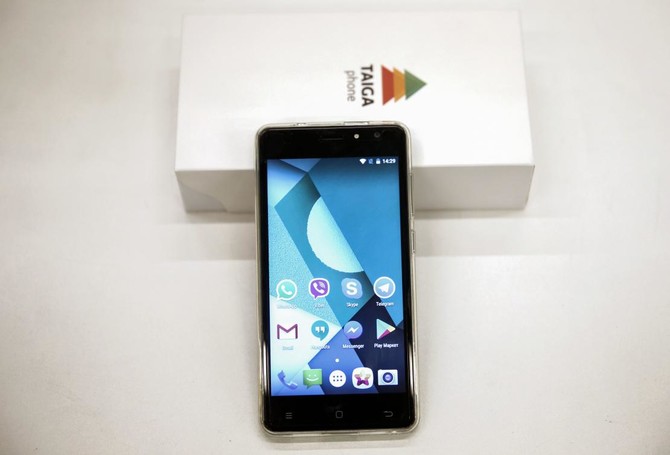
Russia firm unveils ‘surveillance-proof’ smartphone
Russia firm unveils ‘surveillance-proof’ smartphone
Latest updates


© 2026 SAUDI RESEARCH & PUBLISHING COMPANY, All Rights Reserved And subject to Terms of Use Agreement.