TOKYO: Japan’s Toshiba Corp. is locked in last minute discussions over “key issues” with the would-be buyers of its $18 billion (SR67.5 billion) memory chip business led by US private equity firm Bain, potentially delaying a formal agreement on the sale.
Toshiba said on Wednesday it had agreed to sell the prized unit to the Bain consortium, and had been expected to formalize the sale on Thursday.
Instead, South Korea’s SK Hynix, part of the winning consortium, said talks were still ongoing. Sources familiar with the matter confirmed consortium members were still wrangling over details of their agreement and said commitment letters from all participants were still needed before the sale could be signed formally.
“There are some key issues still to be agreed upon in the content approved by Toshiba’s board,” the South Korean chipmaker said in a statement, adding that it would continue talks.
Toshiba and Bain did not immediately reply to a request for comment.
Adding to uncertainty, jilted suitor and Toshiba joint venture partner Western Digital took fresh legal action overnight, filing new arbitration requests to stop Toshiba investing in a new flash memory production line without its help.
Shares in Toshiba reflected the concerns, falling more than 2 percent in late afternoon trade.
Struggling to plug a yawning balance sheet hole after a cost blowout at its now-bankrupt US nuclear business, Toshiba has been trying to sell its chip business since late January.
Agreeing the sale of the world’s second-largest producer of NAND flash memory chips brings the group closer to the end of a tangled and fraught process.
As late as Tuesday night, sources said Toshiba was leaning toward selling the business to Western Digital.
Bain has partnered with SK Hynix and brought in deep-pocketed US buyers of Toshiba chips such as Apple and Dell to bolster its bid.
But there are major unknowns, including the outcome of antitrust investigations and the battle with Western Digital.
It is unclear how long that process could last, and what impact it would have on the completion of the sale.
Industry watchers also said SK Hynix’s participation could prolong antitrust reviews, particularly in China, as Beijing is trying to grow domestic players. The South Korean chipmaker plans to limit its role to financing, but it’s unclear if it hopes to gain a stake in the future.
“It’s clear to everyone that this Bain deal will have difficulty succeeding,” said Akira Minamikawa, principal analyst at IHS Markit.
The NAND flash memory chips business faces fierce price competition with Samsung Electronics, he said, and China was likely to join the race.
“To survive, Toshiba needs to shift its focus to (flash memory-backed) storage systems for servers rather than selling memory chips alone. And strong players there are Samsung and Western Digital, not (new partner) SK Hynix.”


![]()
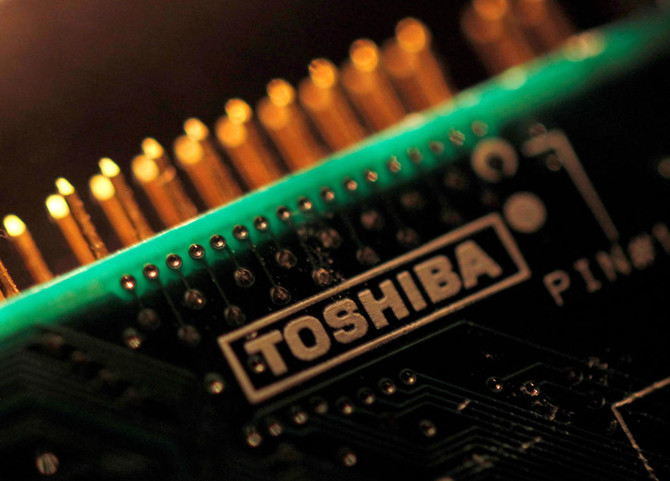
Toshiba, keen to seal $18 billion chips sale, wrestles with last-minute delays
Toshiba, keen to seal $18 billion chips sale, wrestles with last-minute delays
Latest updates


© 2026 SAUDI RESEARCH & PUBLISHING COMPANY, All Rights Reserved And subject to Terms of Use Agreement.