YANGON: Rohingya militants, whose raids in western Myanmar provoked an army crackdown that spurred a humanitarian crisis, denied any links to global terror groups on Thursday, days after Al-Qaeda urged Muslims to rally to their cause.
The Arakan Rohingya Salvation Army (ARSA) said it was trying to defend the minority group from a long campaign of persecution in Myanmar, where the Rohingya are denied citizenship.
But its actions have plunged a region, already a crucible of religious and ethnic tension, deeper into crisis.
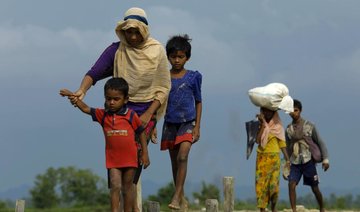
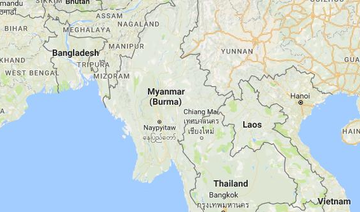
Around 380,000 Rohingya have sought sanctuary in Bangladesh since the outbreak of violence three weeks ago, fleeing burning villages and alleged army atrocities, joining what has become one of the world’s largest refugee camps in Cox’s Bazar.
Nearly 30,000 Buddhists and Hindus have also been displaced inside Rakhine.
Rights group say Myanmar’s army has used the ARSA’s attacks as cover to try to push out the estimated 1.1 million Rohingya population.
Myanmar’s government, led by Aung San Suu Kyi, has denied the allegations.
It labels the militants as “extremist terrorists.” They have also previously described the group as harboring fighters who have trained with the Pakistani Taliban, ideas that have become the currency of arguments among the mainly Buddhist public for why the crackdown is justified.
Al-Qaeda on Tuesday urged Muslims around the world to support the Rohingya cause and “make the necessary preparations — training and the like — to resist this oppression” in a statement on Telegram.
ARSA has repeatedly distanced itself from the agenda of international jihad, instead insisting its claims are local and in defense of major state repression.
“ARSA feels that it is necessary to make it clear that it has no links with Al-Qaeda, ISIS (Daesh), Lashkar-e-Taiba or any transnational terrorist group,” the group said in a statement posted on its Twitter account.
“We do not welcome the involvement of these groups in the Arakan (Rakhine) conflict. ARSA calls on states in the region to intercept and prevent terrorists from entering Arakan and making a bad situation worse.”
Analysts warn the treatment of the Rohingya — and the huge number of new angry and dispossessed refugees in Bangladesh — is rich pickings for militant recruiters.
The refugee camps in Bangladesh are bursting at the seams, with aid groups and authorities scrambling to erect new shelters and provide food and medical support to an endless tide of hungry and traumatized arrivals.
More than 100 Rohingya have died while making the perilous boat crossing over to Bangladesh, with two more bodies, including a one-month old baby, washing up on shore on Thursday.
Two thirds of the Rohingya refugees are children, according to the UN, hundreds of whom have arrived in Bangladesh alone after being split from their families in the swirl of violence.
In London, meanwhile, US Secretary of State Rex Tillerson has condemned violence against Rohingya Muslims in Myanmar as “unacceptable.”
“We need to support Aung San Suu Kyi and her leadership but also be very clear and unequivocal to the military power sharing in that government that this is unacceptable,” Tillerson said.
“This violence must stop. This persecution must stop. It has been characterised by many as ethnic cleansing. That must stop,” he said during a visit to London, speaking alongside British counterpart Boris Johnson.
“I think it is a defining moment in many ways for this new emerging democracy,” Tillerson said, acknowledging that Suu Kyi found herself in a “difficult and complex situation.”
Johnson also called on Myanmar’s de facto leader to use her “moral capital” to highlight the plight of the Rohingyas.
“I think nobody wants to see a return to military rule in Burma, nobody wants to see a return of the generals,” he said.
“It is vital for her now to make clear that this is an abomination and that those people will be allowed back” in the country, he added.


![]()

Rohingya militants say they have ‘no links’ with global terror
Rohingya militants say they have ‘no links’ with global terror
Latest updates


Recommended


© 2026 SAUDI RESEARCH & PUBLISHING COMPANY, All Rights Reserved And subject to Terms of Use Agreement.