BRUSSELS: The EU is determined to go on preventing migrants setting off from the coast of Libya, interior ministers said on Thursday, despite criticism from rights advocates who say the strategy is aggravating human suffering.
After more than two years struggling to stem the flow of refugees and migrants from the Middle East and Africa, the EU is cautiously hopeful it is finally in control.
A 2016 deal with Turkey effectively closed one major migratory route and this year Italy has led the EU’s efforts to curb sea crossings from Libya, supplying money, equipment and training for Libya’s border and coast guard and striking deals with local groups in control on the ground in a country still largely lawless after the 2011 death of Muammar Qaddafi.
Mediterranean crossings have dropped from nearly 28,000 people in June to below 10,000 in August, according to UN data. Sources told Reuters late last month a new armed group on Libya’s coast was stopping migrant boats from leaving.
Human rights groups decry the EU’s support for Libya’s Prime Minister Fayez Seraj and allied militias who run migrant detention centers they have compared to concentration camps.
The top UN human rights official said the EU strategy was “very thin on the protection of the human rights of migrants inside Libya and on the boats, and silent on the urgent need for alternatives to the arbitrary detention of vulnerable people.”
To offset that, the bloc has stepped up financing for the UN agencies for migration (IOM) and refugees (UNHCR) to have them try to improve conditions for migrants inside Libya. But it is not changing tack on trying to keep them there.
“If we look at the flows of migrants across the Mediterranean a few months ago and now, the decrease in illegal migration has been big in numbers,” Estonia’s Interior Minister Andres Anvelt said ahead of talks in Brussels with his EU peers.
“We’ll have a discussion about how to have this success story going on.”
Germany’s Thomas de Maiziere told reporters: “I’m happy that the number of people sent across the Mediterranean by the smugglers to Italy has really fallen in the last two months ... These developments need to be carried on.”
“We really need to work to ensure that many people simply do not make the trip across the desert to Libya. The neighborhood policy with Africa is very important for a sustainable decline in migrants coming to Italy.”
After struggling to come up with a strategy on Libya, the EU has increasingly let Italy, Libya’s former colonial power, take the lead.
Interior Minister Marco Minniti has led those efforts, curbing the sea operations of non-governmental aid groups and striking deals with Libyan mayors to fight people-trafficking, among other moves.
Rome has also played a central role in training the Libyan coast guard, which has been accused of abuses, including shooting at aid workers trying to rescue migrants.
The EU has denied that any of its funding goes to the militia in the coastal city of Sabratha, which has often prevented migrants from departing for Europe by locking them up.
But a senior EU diplomat said the EU’s strategy was complex.
“It is hard to know exactly what is going on in Libya. We have increasingly entrusted Italy with doing the job there, we give them money. There would never be any proof of EU money going directly to some armed group somewhere,” the person said.
“Some of the methods may seem controversial. But there is also preventing loss of life at the sea and political stability in Italy to consider. We shouldn’t be too judgmental.”


![]()
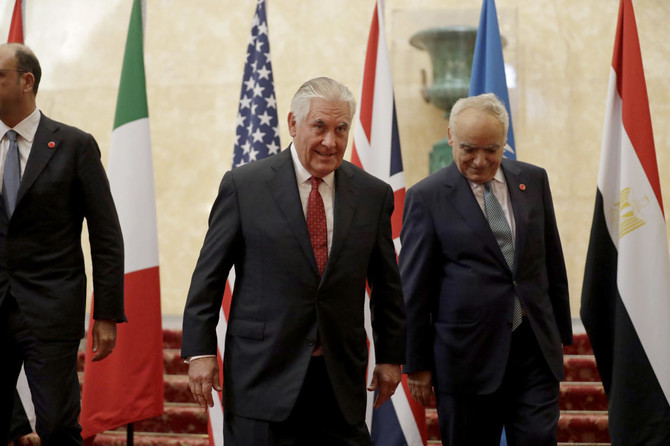
EU sticks to Libya strategy on migrants, despite human rights concerns
EU sticks to Libya strategy on migrants, despite human rights concerns


Latest updates


© 2026 SAUDI RESEARCH & PUBLISHING COMPANY, All Rights Reserved And subject to Terms of Use Agreement.