Dubai Investment Development Agency (Dubai FDI) and Dubai Exports, both agencies of Dubai Economy, are heading to the US on a mission to draw focus on to the development strategies and policy initiatives transforming the emirate into a knowledge economy and innovation hub.
The Emirates Group, Dubai South, Dubai Multi Commodities Center (DMCC), Department of Tourism & Commerce Marketing (DTCM) and Jebel Ali Free Zone Authority (Jafza) are also part of the delegation, which is supported by the UAE diplomatic missions in the US as well as the US-UAE Business Council.
The delegation will meet public and private sector representatives including senior government officials, corporate and business executives in Seattle and Portland during the five-day visit scheduled for Sept. 11-15. For Dubai FDI, this would be the fourth visit to the US in the last three years.
The mission aims to build on the growing bilateral engagement and highlight the Dubai advantage, particularly in connecting businesses to the emerging markets across the Middle East, Africa, Indian Subcontinent and the CIS (Commonwealth of Independent States) region. Dubai as an enabling hub for innovation-driven investments and entrepreneurship will also be a key message.
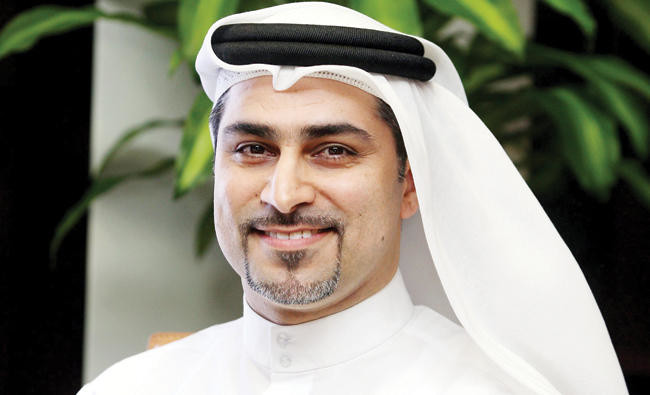
Fahad Al-Gergawi, CEO of Dubai FDI, said the global private sector generally and US investors particularly have responded enthusiastically to the ambitious infrastructure development and policy improvements such as the Public-Private Partnership Law in Dubai.
“Trends captured by our Dubai FDI Monitor over the first quarter of 2017 show that Dubai received 4.77 billion dirhams ($1.2 billion) in foreign direct investments, making it ninth globally in FDI receipts. The US was the topmost source country for both FDI capital and FDI projects to UAE, accounting for a share of 28.7 percent and 25 percent respectively, during the same period,” Al-Gergawi said.
Initiatives like the Dubai Industrial Strategy 2030, aimed to elevate Dubai into a global platform for knowledge-based, sustainable and innovation-focused industries, and infrastructure projects linked to the Expo 2020 would be of substantial interest to US enterprises and investors, added Al-Gergawi.
“Sixty-nine percent of FDI projects attracted to Dubai during the first quarter of 2017 involve high and medium technology and together, they account for 24.3 percent of the total FDI capital into Dubai. It’s indeed a clear indicator of Dubai’s credentials and potentials as a hub to develop and export new technologies,” he said.

Dubai FDI to build on growing investment inflows from US
Schneider Electric launches academy in Saudi Arabia to build future-ready talent
Schneider Electric has announced the launch of the Energy Tech Academy Middle East and Africa in Saudi Arabia, a regional capability platform dedicated to skilling, upskilling, and knowledge sharing.
The launch comes at a critical moment as the Kingdom accelerates energy transition, industrial localization, and human capability development under Vision 2030. The academy reinforces the Kingdom’s leadership role in building future-ready talent while supporting industrial and energy transformation across the wider Middle East and Africa region.
The Energy Tech Academy Middle East and Africa is not a traditional training center; it is a regional platform translating Schneider Electric’s global energy technology expertise into applied capability for Saudi Arabia and the broader region. Anchored in Riyadh, the academy is designed to serve as a benchmark for skills development and enablement across the MEA.
The launch reflects Schneider Electric’s long-term commitment to investing in people and capabilities, and to supporting national priorities across energy, industry, and digital infrastructure.
Mohamed Shaheen, cluster president of Schneider Electric Saudi Arabia and Yemen, said: “This launch reflects our long-term commitment to Saudi Arabia and to building capability that lasts. After more than 40 years in the Kingdom, we continue to invest where impact matters most: in people. Launching the Energy Tech Academy Middle East and Africa from Riyadh underscores our belief that sustainable transformation is built on local capability and trusted partnerships.”
The academy directly supports Saudi Arabia’s focus on human capability development, localization, and Saudi-made outcomes by enabling the skills behind advanced energy systems, industrial automation, and digital infrastructure. Capabilities developed through the academy will support Saudi manufacturing, national projects, and resilient supply chains, while also strengthening regional industrial ecosystems.
“The Energy Tech Academy Middle East and Africa is designed to enable real outcomes,” said Walid Sheta, zone president for the MEA at Schneider Electric. “By equipping talent with future-ready skills across electrification, automation, and digital intelligence, we are strengthening Saudi and regional capability to design, operate, and lead the energy and industrial systems of the future.”
The launch event in Riyadh brought together senior government representatives, industry partners, customers, and Schneider Electric’s leadership, highlighting the importance of cross-sector collaboration in aligning education, skills development, and labor market needs.
Designed as a long-term platform, the Energy Tech Academy Middle East and Africa will continue to evolve through partnerships, programs, and continuous capability development, reinforcing Saudi Arabia’s role as a regional hub for skills, knowledge, and industrial enablement.