NEW YORK: Bitcoin “is a fraud” and will blow up, Jamie Dimon, chief executive of JPMorgan Chase & Co, said on Tuesday.
Speaking at a bank investor conference in New York, Dimon said, “The currency isn’t going to work. You can’t have a business where people can invent a currency out of thin air and think that people who are buying it are really smart.”
Jamie Dimon said that if any JPMorgan traders were trading the crypto-currency, “I would fire them in a second, for two reasons: It is against our rules and they are stupid, and both are dangerous.”
Dimon’s comments come as the bitcoin, a virtual currency not backed by any government, has more than quadrupled in value since December to more than $4,100.
Bitcoin is a digital currency that enables individuals to transfer value to each other and pay for goods and services bypassing banks and the mainstream financial system.
While banks have largely steered clear of bitcoin since it emerged following the financial crisis, the virtual currency has a range of people who support it, including technology enthusiasts, liberterians skeptical of government monetary policy and speculators attracted by its price swings.
“Like it or not, people want exposure to bitcoin,” Edward Tilly, chairman and CEO of exchange group CBOE Holdings, said at the same conference.
CBOE has applied with US regulators to launch a bitcoin futures contract and a bitcoin exchange traded fund on its venues.
Any good trade is started with a difference of opinion, Tilly added. ”So Jamie can be on the short side and the issuers and those trading in physical can be on the long side, and it sounds like we have a great trade.”
Dimon may also be on the other side of another bitcoin trade closer to home.
At another conference about two hours later, Dimon said that one of his daughters had bought some bitcoin.
“It went up and she thinks she’s a genius now,” Dimon said at the CNBC Institutional Investor Delivering Alpha Conference.
Banks and other financial institutions have been concerned over bitcoin’s early association with online crime and money laundering.
The supply of bitcoin is meant to be limited to 21 million, but there are clones of the virtual currency in circulation that have made the market for it more volatile.
“It is worse than tulips bulbs,” Dimon said, referring to a famous market bubble from the 1600s.
JPMorgan and many of its competitors, however, have invested millions of dollars in blockchain, the technology that tracks bitcoin transactions. Blockchain is a shared ledger of transactions maintained by a network of computers on the Internet.
Dimon said such uses will roll out over coming years as it is adapted to different business lines.
Financial institutions are hoping blockchain can be adapted to simplify and lower the costs of processes such as securities settlement, loan trading and international money transfers.
Dimon predicted big losses for bitcoin buyers. “Don’t ask me to short it. It could be at $20,000 before this happens, but it will eventually blow up.” he said.
“Honestly, I am just shocked that anyone can’t see it for what it is.”
Bitcoin’s price fell as much as 4 percent following Dimon’s comments and was last trading at $4,164. Rumors that the Chinese government is planning to ban trading of virtual currencies on domestic exchanges has weighed on bitcoin recently.
“It feels like we are in the midst of a negative news cycle, but even considering all this, we are still trading above $4,000.” said John Spallanzani, chief macro strategist at GFI Group.


![]()

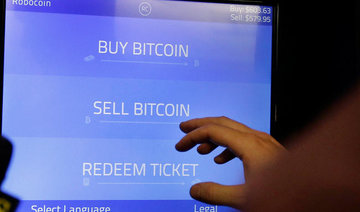
Bitcoin ‘is a fraud’, says JPMorgan chief executive
Bitcoin ‘is a fraud’, says JPMorgan chief executive


Latest updates


© 2026 SAUDI RESEARCH & PUBLISHING COMPANY, All Rights Reserved And subject to Terms of Use Agreement.