Quick trip? How to spend a history-filled 24 hours in Bahrain

1 / 6
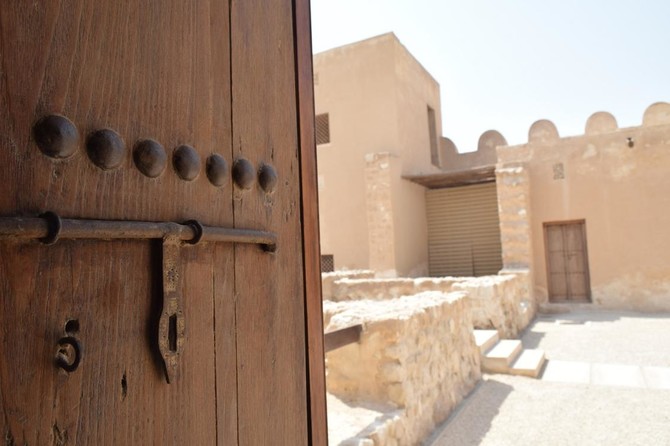
This nation is stuffed full of surprising history and awe-inspiring natural sites. (Photo courtesy: Tharik Hussein)
2 / 6
Bahrain’s oldest Islamic archaeological site, the Khamis Mosque
3 / 6
Bahrain’s oldest Islamic archaeological site, the Khamis Mosque.
4 / 6
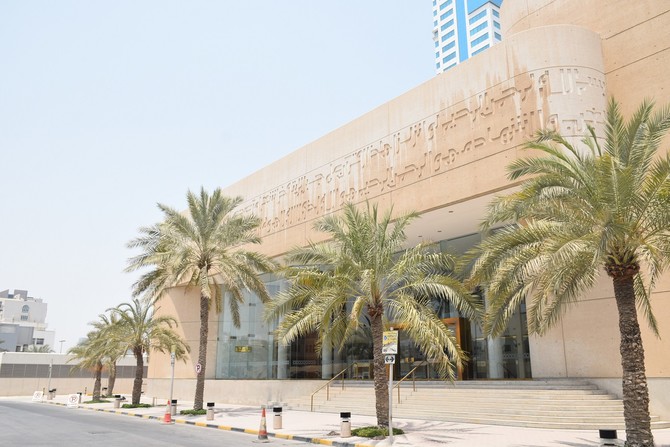
Bahrain’s most famous cultural center is the Beit Al-Qur’an.
5 / 6
Do not be sad if the 32-meter-high lush green mystery leaves you baffled.
6 / 6
Updated 12 September 2017
Follow

Quick trip? How to spend a history-filled 24 hours in Bahrain

MANAMA: The Kingdom of Bahrain is a tiny nation with a big history. This is a country that was once ruled by a 12-year-old and a place where, in antiquity, the social elite spoke Greek and practiced Olympian sports. Bahrain was where traders used to come from far and wide in search of the world’s finest pearls, however, despite this rich and fascinating history, Bahrain has become something of a touristic backwater in recent times.
Most travelers only pass through for business or find themselves here in transit, but what can you do in a day in Bahrain? Here is how to make the most of 24 hours in the Middle East’s smallest country.
Museum morning
The best way to explore this eminently drivable little island is by car, so start off by hiring one at the airport. Not only will this allow you to pack in so much more, but taxis are not cheap and public transport is not reliable.
From the airport, your first stop is a mere 10-minute drive. Bahrain’s most famous cultural center is the Beit Al-Qur’an, or the “House of the Qur’an,” which holds the finest collection of Qur’anic manuscripts on public display anywhere in the Arabian Peninsula. Housed in an uber-modern building that integrates classical Islamic design, the museum is split into three sections, the most impressive of which has to be the Makka Hall, where Qur’an segments on parchment and animal skins date all the way back to the time of the prophet. There are also beautifully-illuminated, unusual Qur’ans from across the globe in the collection. However, nothing quite tops the grain of rice onto which verses of the Qur’an have been inscribed.
All that culture is going to leave you hungry. Fortunately, you only need to venture a few streets west to find Chtaura inside Moda Mall. Chtaura’s motto is “when you’re here, you’re home and if you love simple Middle Eastern food in a cool, quirky space than you will feel very much at home at Chtaura. Order the delicious foul and some zaatar bread — baked in a huge clay oven — and wash it all down with a glass of milky karak tea.
Archaeological afternoon
Start off in the southwest of Manama at a place many believe is Bahrain’s oldest Islamic archaeological site, the Khamis Mosque. Sitting on Sheikh Salman Highway, the mosque is easily spotted due to its twin minarets, which peer over the walled enclosure. The Khamis Mosque’s foundations are believed to date as far back as 692 AD — Islam came to Bahrain in 628 AD — although hard archaeological evidence to support this is yet to surface. The impressive ruins you will visit include the remnants of a prayer hall and the two minarets — all of these structures date from much later periods. Be sure to climb one of them for a great view of the site. Recently renovated, both minarets were built during the Uyunid and Usfurid dynasties, who ruled Bahrain between the 11th and 14th centuries.
From the classical, you will jump to the more traditionally Bahraini as you make your way south to the Riffa region. Here, climb the impressive Riffa Fort, which is strategically positioned on a hillock. From there, you can overlook the Hunayniyah Valley and imagine what it must have felt like to stand there knowing what lay in front of you was yours. Riffa Fort was once the seat of the country’s rulers. Built after the 17th century in a wonderfully-harmonious style, the sand-colored walls of this excellent Bahraini citadel appear to have risen from the very desert that once surrounded it.
Enchanting evening
With the day’s oppressive heat behind you, it is time to venture out to the desert in search of a truly mystical experience. Taking the King Hamad Highway south, look for directions to the “Tree of Life.” There is no proper road leading to this enigmatic monument, such is the remoteness of its location. But you will find it and when you do, you will stand in awe wondering how this miracle of nature has survived more than 400 years in the harshest of deserts, where temperatures regularly exceed 110 degrees fahrenheit, with no obvious water source. Do not be sad if the 32-meter-high lush green mystery leaves you baffled — some of Bahrain’s greatest minds are still scratching their heads too.
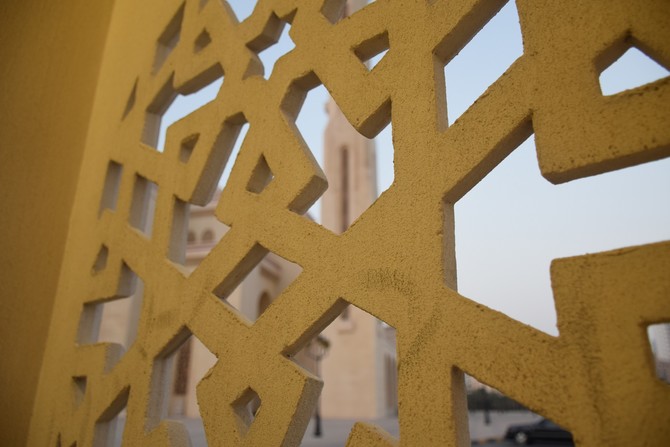
Finally, as you head back to the airport you will pass the only place one should end an evening in Bahrain — the majestic Al-Fateh Grand Mosque. Make sure you arrive before sunset, so you can close your eyes and listen as the air begins to fill with the sound of 100 muezzins and then open them so you can witness the impressive lights on Bahrain’s largest mosque coming on, one by one. Then walk inside to admire the world’s largest fiber-glass dome, which is surrounded by beautiful cuboid Kufic calligraphy. Finally, take a walk out into the cool, Andalusian-inspired inner courtyard, ringed by a forest of slim marble pillars. Sit here and rest your weary feet before looking up to admire the starry desert sky above. This truly is the only place to end 24 hours in Bahrain.


Why Jordanians are flocking to Damascus as Syria reopens roads, skies and rails

Updated 15 February 2026
Follow

Why Jordanians are flocking to Damascus as Syria reopens roads, skies and rails

  • Tour buses, budget flights and reopened crossings signal renewed civilian travel between Jordan and postwar Syria
  • Officials say mobility revival reflects deeper regional reintegration as Damascus sheds isolation and rebuilds tourism sector

DUBAI: Ask nearly any Jordanian over the age of 40 about Damascus and you are likely to be met with a nostalgic tale of days gone by when weekend trips to the old city were as common as those to the Dead Sea.

Such memories were confined to the pits of nostalgia by the onset of the Syrian civil war, which turned the once-famed journey into an ordeal of derelict rest stops, militia checkpoints, sudden closures and the possibility of violence.

However, over the last year, tour buses have reappeared on the centuries-old trade route. Private drivers are booking permits to take the road north and a new generation of Jordanian travelers, eager for regional rediscovery, are getting back on the road to Damascus.

A view of the Jaber-Nassib crossing on the border between Syria and Jordan. (AFP/file photo)

Statistics released by Syria’s Ministry of Tourism show that Jordanians are by far the largest group of tourists represented in Syria, with 394,871 arrivals in 2025 alone — some 93 percent more than the previous year and eclipsing any other nation, including those with substantial Syrian populations like Turkiye and Germany.

These figures represent “not only the reactivation of tourism flows, but a deeper strategic recovery extending beyond the economic domain,” Mazen Al-Salhani, Syria’s minister of tourism, said in a statement.

“It signals a transition to organized, civilian-driven mobility and a restored perception of Syria as a safe, attractive and culturally rich destination.”

FASTFACT

395K

Jordanians who visited Syria in 2025, up 93% on the previous year, making them the country’s largest tourist group.

Jordan and Syria share not only a border, but also centuries of cultural, familial and economic ties. The Nasib-Jaber crossing on the Damascus-Amman highway was one of the busiest gateways in the region before the civil war.

That crossing’s reactivation is symbolic of a wider lifting of barriers. While the border was closed intermittently in late 2024 amid renewed conflict, the crossing has now been revitalized, streamlining the process of getting permissions for vehicles and border patrol checks.

Hamzeh Battieh, executive manager of Sharif House Handcrafted Travel and Events, a tourism operator based in Damascus, told Arab News the crossing had become substantially easier to navigate, transforming from somewhere that was once quite hostile into something quite welcoming.

A group of Jordanian tourists are seen at the ruins of Palmyra, Syria. (Photo courtesy: youngpioneertours.com)

“Following the liberation of Syria, the situation at the crossing changed fundamentally for the better,” he said.

“The time required to complete entry or exit procedures no longer exceeds 10 minutes, whereas under the former regime it used to take many hours and involved widespread bribery and favoritism.

“Visitors are now received with warm hospitality. Many travelers have repeatedly heard officers at the crossing say to passengers: ‘Welcome home, you have illuminated our country’.”

Jordanian tour operators, who for years pivoted travelers to Istanbul, Cairo, or Beirut, now report growing inquiries for tours that include Damascus’ ancient souks, the Umayyad Mosque and day trips to historic sites such as Bosra.

Meanwhile, a growing number of independent travelers are making the Amman-Damascus bus route part of their itineraries, sharing tips online about passports, bus times and border crossing formalities.

Battieh said the fall of the Bashar Assad regime had made Syria a substantially freer and easier country to navigate.“

Ruins the Decumanus Maximus in the ancient City of Bosra, Syria. Once a center of Roman, Byzantine and Muslim civilizations, the site was inscribed by UNESCO on the list of World Heritage Sites in 1980. (Shutterstock photo)

Tourism has indeed begun to return to Syria, but with a new spirit, free of the difficulties and complications that were imposed during the era of the former regime,” he said.

“Starting from border and airport police and extending to public roads, today, procedures for entering Syria have become smoother and far more welcoming.”

Syria’s comparable affordability as a destination is reportedly another appeal that is attracting Jordanians to venture north.

According to Hussein Halaqat, a spokesperson for the Jordan Hotels Association, domestic tourism in Jordan declined during the first three days of the last Eid Al-Adha holiday due in part to the lower-cost travel on offer across the northern border.

The ruins of the Jaabar Citadel (Qalaat Jaabar) in Syria's in Raqqa province. (AFP/file)

“Prices in Syria are lower than in Jordan, particularly compared with Jordan’s five-star seaside hotels in Aqaba and the Dead Sea, which not everyone can afford,” he told Erem News.

He said the queues at coach stops in the capital, Amman, for services heading to Syria, which can cost as little as 15 Jordanian dinars ($21) per passenger, were indicative of the rising competition that regional integration could bring.

Battieh said Jordanians were particularly drawn to Damascus and Aleppo for their historical significance and famed cuisine. Many of Damascus’ most famous restaurants had moved to Amman during the war, creating a local following.

“A visitor can easily spend at least one full week in Damascus alone, exploring landmarks such as the Umayyad Mosque, Al-Azem Palace, and famous traditional markets like Al-Hamidiyah Souq and Al-Buzuriyah,” he said.

An aerial picture shows a view of the Umayyad Mosque in Damascus at dawn. (AFP/file photo)

“They also really love the city’s diverse cuisine, Damascene ice cream, traditional cafes such as Al-Nawfara Cafe and historic public bathhouses like Hammam Al-Malik Al-Zahir.”

As the road to Damascus is reconnected with its southern neighbor, so too are its skies. In early January, a Royal Jordanian commercial flight landed at Damascus International Airport, marking the restoration of the Amman-Damascus air corridor after a 14-year hiatus.

The flight, organized as a technical trial, carried a Jordanian delegation of aviation experts tasked with assessing the airport’s readiness to resume regular operations.

While modest in scale, the flight was heavy with symbolism — a sign that Damascus was once again reentering regional airspace after more than a decade of isolation.

Royal Jordanian now offers four weekly flights between Amman, Jordan, and Damascus, Syria. (AFP/file photo)

Since then, travel has surged, with Royal Jordanian offering four weekly flights between the two capitals. With a flight time of just 25 minutes, the route is intended to close the gap for road-weary travelers, while giving Syrians access to more destinations through an Amman transit.

Moreover, perhaps more ambitiously, the two countries have agreed to restore a historic rail link that once connected Damascus and Amman. The Hijaz Railway project aims to have passengers traveling between the two cities as early as this year.

Although the timeline remains unclear, Zahi Khalil, director-general and deputy chairman of the Jordan Hijaz Railway at the Jordanian Ministry of Transport, told Arab News that plans are well underway.

“Regarding the connection process — the link between Damascus and Amman — it could be ready by the end of 2026.”

Train wagons are stationed at a Jordan-Hijaz Railway station in Amman. (AFP/file photo)

Historically, the Hijaz Railway was part of the Ottoman rail network and served as a major link between Damascus and Makkah, reducing a journey that once took 40 days to just five.

Seen by the sultan at the time as a symbol of Islamic unity and progress, the railway holds deep historical and cultural significance across the region.

Khalil said much of the historic track would be rehabilitated, upgraded for modern trains and reused, with large sections of the original route still intact.

“Once Syria is linked to the Turkish rail lines, Amman will be connected all the way to Istanbul,” he said.

A Syrian whirling dervish dancer from the Aleppo Heritage Ensemble performs during the festival of "Nights of Spiritual Music" at Qasr al-Adhm in Damascus late September 7, 2008. (AFP/file photo)

For Jordanian tourists, these developments reinforce a sense that Syria is no longer a place visited only out of necessity or for nostalgia, but one that is once again accessible by choice.

For Syrians like Battieh, these changes represent something far deeper — a reclaiming of mobility after years of enforced paralysis, and a signal that reintegration into the region is no longer theoretical, but operational.

“Syria has room for all who love her,” Battieh said. “Welcome to the new Syria. As the French archaeologist Andre Parrot once said: ‘Every civilized person has two homelands: Their own, and Syria’.”