HOUSTON: The world’s largest oilfield services company, Schlumberger, is spending billions of dollars buying stakes in its customers’ oil and gas projects — investing in the same ventures it supplies with equipment and expertise.
The new business model gives Schlumberger a say in drilling decisions, oilfield management and even on hiring other Schlumberger units for service contracts, the company has told investors.
The expanded operational authority saves Schlumberger from bidding for each of the many jobs that typically require separate contracts on a large drilling project — effectively locking out the firm’s competitors.
Schlumberger’s gamble could upend the service business model throughout the industry, as rivals including Baker Hughes say they are considering whether to adopt similar strategies.
The model can supercharge profits on a given job but also ramps up risk, giving the firm more exposure to global oil price swings and potentially big losses if individual projects fail. The downsides have some analysts questioning whether the traditionally conservative firm is taking on too many speculative projects too quickly.
Schlumberger already has taken hundreds of millions in write-downs or impairments on some of these joint ventures, according to its financial filings.
Traditionally, oil producers manage the risk and make the financial and operational decisions on projects; they pay service providers a fee to carry out individual jobs. Firms such as Schlumberger typically supply a wide variety of services, such as well design, along with technology and staff to run rigs.
Schlumberger declined to make executives available for interviews and did not respond to written questions about its production business.
Despite early setbacks, Schlumberger has committed cash to growing the division, called Schlumberger Production Management, since its launch in 2011. Last year, it generated $1.4 billion in revenue. It had investment of $2.6 billion as of June 30.
The company’s investments have the firm co-managing about 230,000 barrels a day of oil and gas output at the end of 2016 — about as much as one of the largest US independent producers, Pioneer Natural Resources.
This year, the company stepped up the financing role, opening a standalone investment fund to provide financing for the ventures. The company has not disclosed the size of the fund.
Such ventures require a breadth of skills and a tolerance for risk generally found at large integrated oil companies such as Chevron and Exxon Mobil.
Two of Schlumberger’s newest partnerships — a deepwater liquefied natural gas project off the coast of Equatorial Guinea and an Argentina shale development with YPF — involve decision-making and operational authority similar to that typically held by multinational oil producers.
As Schlumberger’s production business has grown, it has negotiated deals that include equity in oil and gas fields and as well as deals that give the firm payment based on oil and gas output, according to interviews with customers, partners, investors and former Schlumberger executives.
Schlumberger this year agreed to contribute $390 million for a 49 percent stake in a venture with YPF in Argentina’s Vaca Muerta shale field, which has attracted international oil firms including Chevron and Royal Dutch Shell.
Schlumberger Chief Executive Paal Kibsgaard has downplayed the potential for its production business to compete with its own oil company customers.
He described the enterprise as “a new avenue for project investments alongside our customers” in remarks to investors in April.
Executive Vice President Patrick Schorn also insisted this spring that the business is “not significantly changing the risk profile ... the biggest risk remains the cyclical nature” of the oil and gas industry.
Investors say Schlumberger, which held $6.22 billion in cash and short-term investments at June 30, is strong enough to handle any increased risks and the price volatility of its investments in long-term projects.
As both project manager and service provider, Schlumberger also has an enviable level of control over operations, said Mike Breard of Dallas-based wealth management firm Hodges Capital, which invests in oilfield service companies.
“I like the long-term aspect of it — the fact that they are telling frack crews where to work, and using their own equipment more efficiently than might be used by some other operator,” he said.
British-based natural gas explorer Sound Energy PLC was happy to give Schlumberger full rights to the service contracts on drilling projects in Morocco in exchange for a Schlumberger investment amounting to 27 percent of total costs, said the chief of British-based natural gas explorer.
Schlumberger will get 27.5 percent of revenue from the oil produced.
“We’re smaller and entrepreneurial. Schlumberger has the technical capability and cash. That’s the nature of the partnership,” Sound CEO James Parsons said in an interview.
The duo has completed three wells in Morocco and plans to drill three more by year end.
“It’s a $50 or $60 million bet for them so far,” Parsons said.
Schlumberger’s appetite for these ventures is spurring rivals to consider similar financing and services deals. Baker Hughes recently agreed to provide about $10 million in financing to Twinza Oil’s first offshore gas field in Papua New Guinea, supplying the cash to prove the merits of the field.
“It allows Twinza to have success in going out to raise financing,” Baker Hughes CEO Lorenzo Simonelli said.
Baker Hughes will not take a stake in the oilfield, unlike some of Schlumberger’s joint investments with producers.
In 2014 and 2015, Schlumberger took nearly $400 million in combined write-offs on oil production investments, including an Eagle Ford shale field in south Texas that struggled after oil prices crashed.
It also is owed about $900 million by Ecuador. In July, the South American country said it had negotiated a payment plan that includes an expanded contract that has Schlumberger agreeing to invest another $1 billion in the venture.
Schlumberger hasn’t commented on the South American nation’s disclosure. It previously acknowledged taking Ecuadorian bonds in lieu of cash for $150 million in bills. It also previously estimated its investment in the projects at up to $4.9 billion over 20 years.
The write downs have stirred some on Wall Street to question whether Schlumberger should take a more conservative path with its oil production partnerships.
The firm’s production division “used to focus on production management of well understood low-risk oil fields,” said Colin Davies, a Bernstein oilfield services analyst. “Now it has expanded into frankly somewhat more speculative ventures.”


![]()
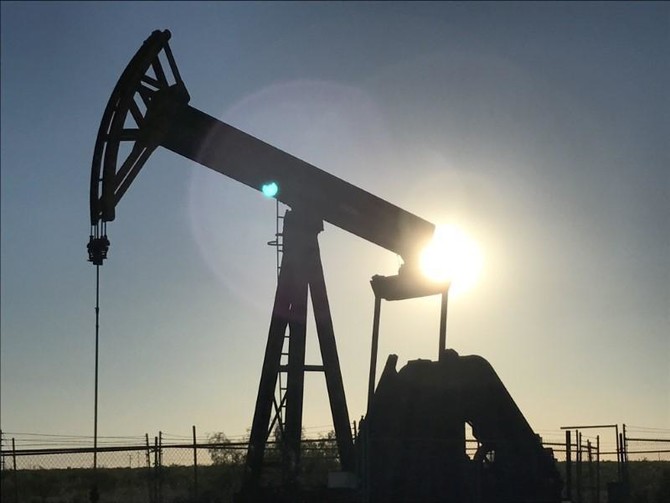
Schlumberger’s new business model bets on huge returns — but at higher risks
Schlumberger’s new business model bets on huge returns — but at higher risks



Latest updates


© 2026 SAUDI RESEARCH & PUBLISHING COMPANY, All Rights Reserved And subject to Terms of Use Agreement.