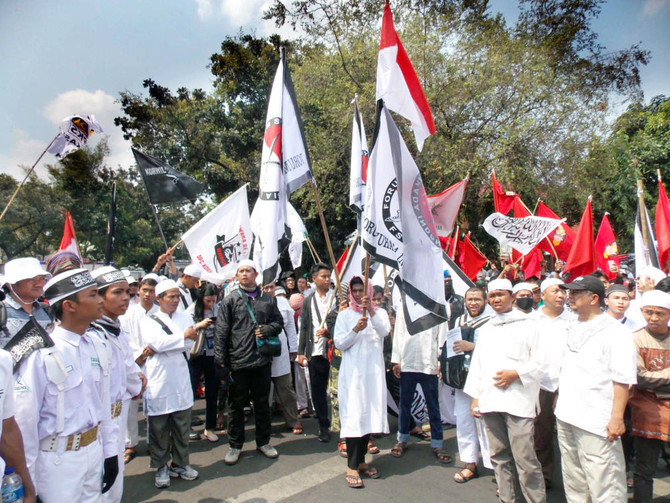
JAKARTA: Nearly 10,000 Indonesian Muslims staged a demonstration outside the Myanmar Embassy in central Jakarta on Wednesday to protest the violent crackdown against Rohingya Muslims.
The protesters also urged Indonesia to sever its bilateral ties with Myanmar.
Police had put up barbed wires around the embassy perimeter to prevent the protesters from getting closer to its building in the upscale Menteng area while traffic was rerouted as a precautionary measure.
Jakarta police spokesman Argo Yuwono told Arab News at the rally that security had been stepped up around the embassy since last week.
Protesters held a moment of prayers for the victims of the ongoing military crackdown. Others were seen smacking on an effigy that donned a mask of Ashin Wirathu, the hard-line Buddhist monk. Some of the protesters demanded the police to take down the Myanmar flag from the embassy compound. They also burned Myanmar flags.
Ade Bhakti, executive director of the Jakarta-based Center for Radicalism and Deradicalization Studies, who was observing the rally, told Arab News that the Rohingya issue “is fluid and touches upon various elements in Indonesia.”
Indonesian Foreign Minister Retno Marsudi, meanwhile, concluded her two-country diplomatic trip in Dhaka to seek solutions to the Rohingya refugee crisis. Marsudi arrived in Dhaka earlier in the day after visiting Myanmar on Monday.
In Myanmar, she held talks with State Counselor Aung San Suu Kyi, National Security Adviser U Thaung Tun, Myanmar Armed Forces Commander-in-Chief Senior Gen. U Min Aung Hlaing and two other ministers. The talks were aimed at easing tension in Rakhine state and boosting humanitarian aid to communities affected by the conflict.
Marsudi also held bilateral talks with her Bangladeshi counterpart Mahmood Ali and representatives of UN refugee agency UNHCR and the International Organization for Migration (IOM) in Dhaka.
During her meeting with Prime Minister Sheikh Hasina, Marsudi said she conveyed Indonesia’s appreciation of Bangladesh for coping with a massive influx of Rohingya refugees into its territory.
“In accordance with President Joko Widodo’s directives, Indonesia is offering support to the Bangladeshi government to ease its burden in handling this humanitarian crisis,” Marsudi said in a video statement from Dhaka, made available to journalists in Indonesia by the Foreign Ministry on late Tuesday.
She said Sheikh Hasina welcomed Indonesia’s gesture to support Bangladesh in tackling the refugee crisis. The Indonesian ambassador in Dhaka will hold a follow-up meeting with Bangladeshi authorities to discuss more details on Indonesia’s role, the minister added.
During her bilateral talks, Marsudi said Ali briefed her about the challenges faced by the refugee camps. She said the representatives of UNHCR and IOM confirmed those challenges during her talks with them.
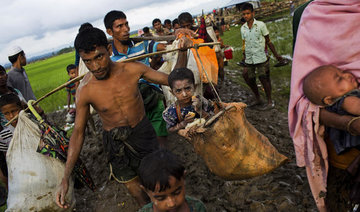
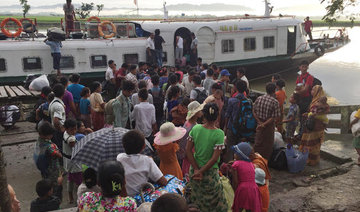
It was Marsudi’s second visit to Bangladesh to address the Rohingya crisis that has caused tension on both sides of the border.
In December 2016, she met Ali to promote communications between Bangladesh and Myanmar. The two foreign ministers then visited the Kutupalong refugee camp in Cox’s Bazar.
During her meeting with Suu Kyi on Monday, Marsudi proposed 4+1 formula to end to the humanitarian crisis in Rakhine state.
Marsudi also described her trip to Myanmar and Bangladesh as “marathon diplomacy for humanity.”
The minister said her Dutch, Iranian, and British counterparts had contacted her during the course of her trip to express their support for Indonesia’s diplomatic efforts to address the Rohingya crisis.

Rohingya crisis: Indonesia offers to ease Bangladesh’s burden
Old Delhi iftars revive Mughal heritage, one course at a time
- Dastarkhwan-e-Jahaanuma iftars have been held in Old Delhi since 2017
- Muslim and non-Muslim participants arrive from across India and abroad
NEW DELHI: On a rooftop in Delhi’s historic walled city, guests from across India sit on cushions around a low table overlooking Jama Masjid, waiting for its sunset call to prayer — the signal to start a special iftar that will take them back four centuries, to the Mughal era, if only for a while.
Mughals ruled the Indian subcontinent between the 16th and 19th centuries. Originally from Central Asia, they carried traditions borrowed from Arabs, Persians and Ottomans, which they merged with the various local Indian styles — a fusion that marked the global revival of Islamic architecture and culture.
Jama Masjid is one of the most iconic examples of the Mughal style — a scenic background to the curated iftars that bring 40 to 50 people from across India to share a meal, knowledge and experience.
“People getting together from different walks of life, different parts of the country, different religions, different cultures coming together — it was absolutely and completely amazing,” said Arvind Sirohi, who took part in the event with his wife.
“Lovely storytelling, amazing food, and end of the day, right next to Jama Masjid in Old Delhi. The ambience, the environment, the atmosphere came together so beautifully.”
The community-led iftar experience is called Dastarkhwan-e-Jahaanuma — from Urdu words meaning a “spread of food” and “showing the world.”
For Veena Sirohi, it did exactly what the name promised by bringing together people from different communities, different parts of India, and abroad.
“I think that’s a great way of synthesizing different cultures, bringing people together, bringing the human aspect of what we all are ... we are actually all one,” she told Arab News.
“And we had some wonderful comperes who told us about … the history of Ramadan, what goes behind it, how the food is curated, and how each and every item has a specific place in the menu.”
Served in gilded bowls and plates from traditional Indian crockery, with rose petals dotting the dastarkhwan cloth, the dishes were some of the festive Ramadan delicacies, offering a taste of Mughal culinary heritage.
Among them was mutanjan, or fragrant rice cooked with ghee, sugar, saffron, cardamom, and studded with nuts, which for many Indian Muslims is traditionally the first dish to break the fast.
It was followed by shabde, a rich, slow-cooked aromatic meat stew or the Delhi biryani — a fragrant, mildly spiced saffron rice and meat dish, where marinated chicken or mutton is layered with basmati rice and cooked slowly.
The hearty feast closed with nihari, a hearty stew simmered overnight with spices and bone marrow, which emerged in the 18th century and was originally eaten by Mughal royals for breakfast.
“These are the traditional dishes which are not usually available in the market, but are specially prepared by the bawarchees (cooks) of Old Delhi. Some of the dishes are occasional dishes,” said Abu Sufiyan Khan, the founder of Tales of City, the cultural experience company that has been curating Dastarkhwan-e-Jahaanuma since 2017.
The special iftars are hosted once a week throughout the fasting month, usually on weekends. There are variations in dishes served as they come from different kitchens, as Tales of City collaborates with various local artisans and cooks.
“We are curating this with different experts and every time the menu changes,” Khan said.
“We bring all these dishes onto a single dastarkhwan, and we share this meal with the people coming from all over India to break bread together in the holy month of Ramadan, know each other, learn about each other’s culture, and create a dialogue space where we can have more meaningful conversations and an opportunity to get to know each other.”
Those who take part, like Ayandrali Dutta, a food critic, appreciate everything about the experience, especially as it takes place in Old Delhi, where the vibe is always “jovial, lively, in all positive ways” during Ramadan.
“You get to meet interesting people, you get to hear interesting stories ... It’s a great initiative to show what Ramadan is, what kind of food is eaten, talk about the cultures between Lucknow and Delhi and other parts of the country. And it just brings a lot of happiness,” she said.
“I loved it. My heart is happy, my belly is full. Nothing else I can ask for.”