UNITED NATIONS: The UN Security Council on Monday opened an emergency meeting to agree to a response to North Korea’s sixth and most powerful nuclear test as calls mounted for a new raft of tough sanctions to be imposed on Pyongyang.
The United States, Britain, France, Japan and South Korea requested the urgent meeting after North Korea on Sunday detonated what it described as a hydrogen bomb designed for a long-range missile.
US Ambassador Nikki Haley urged the council to impose the “strongest possible measures” against North Korea.
“Only the strongest sanctions will enable us to resolve this problem through diplomacy,” she said.
With Seoul warning that Pyongyang could be preparing another missile launch, Japan’s UN representative called for a raft of tough new sanctions.
“We cannot waste any more time,” Japanese Ambassador Koro Bessho told reporters shortly before the Security Council meeting.
“We need North Korea to feel the pressure,” Bessho said. “If they go down this road there will be consequences.”
South Korea’s defense ministry said Pyongyang may be preparing another missile launch after two tests in July of intercontinental ballistic missiles (ICBMs) that apparently brought much of the US mainland into range.
Adding to already sharp tensions, the United States warned Sunday that it could launch a “massive military response” to any threats from North Korea and said it might cut off all trade with any country doing business with North Korea — a step that would keenly affect China, biggest trading partner of both the North and the United States.
Bessho said Monday that as Japan and the United States study next steps with their international partners, China, Russia and South Korea must be “on board as well.”
Meanwhile the UAE has condemned North Korea for the nuclear test, deeming it a “clear violation of the will and decisions of the international community,” state news agency WAM reported.
Every permanent member of the council — including Russia and China — on Sunday strongly condemned the blast, which UN Secretary-General Antonio Guterres decried as “profoundly destabilizing.”
Nor was there much prospect for a lessening of tensions soon.
South Korea’s defense ministry said it was already strengthening its national defenses, in part by deploying, in cooperation with the US military, more Terminal High-Altitude Area Defense (THAAD) missile launchers.
That announcement came after Seoul fired an early-morning volley of ballistic missiles in an exercise simulating an attack on the North’s nuclear test site.
Pictures showed South Korean short-range Hyunmoo missiles roaring into the sky in the pale light of dawn from a launch site on the east coast.
Pyongyang said the device it detonated Sunday was a hydrogen bomb small enough to fit into a missile.
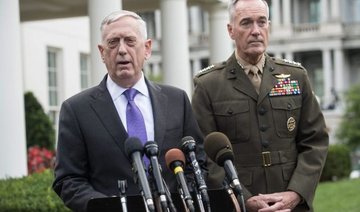
The blast threw down a new gauntlet to US President Donald Trump. He met Sunday with his national security advisers, and Defense Secretary Jim Mattis issued an extraordinarily tough-sounding warning to the North, saying that any new aggression against the US or its allies could lead to its “total annihilation.”
South Korean defense ministry officials estimated the strength of the blast at 50 kilotons but did not confirm whether it was a hydrogen bomb, saying only that “a variety of nuclear material” had been used.
But Defense Minister Song Young-Moo said Seoul believed Pyongyang had succeeded in miniaturising its nuclear weapons to fit into an ICBM.
The South had requested the US deploy strategic assets such as aircraft carriers and bombers to the peninsula, he said, but denied reports Seoul was seeking the return of US tactical nuclear weapons.
Signs that North Korea was “preparing for another ballistic missile launch have consistently been detected since Sunday’s test,” the ministry said.
It did not indicate when a launch might take place, but said it could involve an ICBM being fired into the Pacific Ocean to raise pressure on Washington further.
Trump had his second telephone call of the weekend with Japanese Prime Minister Shinzo Abe, but he did not talk to South Korea’s Moon Jae-In for more than 24 hours — instead accusing Seoul of “appeasement,” raising jitters in Seoul about the two countries’ decades-old alliance.
Moon, who advocates engagement as well as penalties to bring Pyongyang to the negotiating table, called for new United Nations sanctions to “completely isolate North Korea.”
But Trump criticized the US treaty ally on Twitter, saying: “South Korea is finding, as I have told them, that their talk of appeasement with North Korea will not work, they only understand one thing!“
At a summit in China, the North’s key ally, the five-nation BRICS grouping — taking in the host nation as well as Brazil, Russia, India, and South Africa — said Monday it “strongly deplores” the test.
Moon and Abe agreed to work for stronger sanctions against the North, but seven sets of UN measures have so far done nothing to deter Pyongyang.
US Treasury Secretary Steven Mnuchin said Sunday his department was preparing measures to “cut off North Korea economically” and ensure anyone trading with it could not do business with the US.
On Sunday US monitors measured a powerful 6.3-magnitude earthquake near the North’s main testing site, felt in parts of China and Russia, with an aftershock possibly caused by a rock cave-in.
According to the South’s Yonhap news agency, Seoul’s National Intelligence Service said it was the fifth blast the North had conducted in the same No 2 tunnel at the Punggye-ri test site, and it was “likely to have collapsed.”
But it said the North had already completed construction of a third tunnel, so that it could carry out another test at any time it chose, and work was underway on a fourth.
The North hailed the test as “a perfect success.”
Hours before the test, the North released images of leader Kim Jong-Un inspecting a device it called a “thermonuclear weapon with super explosive power” entirely made “by our own efforts and technology.”
The respected 38 North website urged caution, saying it was likely the item pictured was “only a model mock-up.”
The North says it needs nuclear weapons to defend itself against the threat of invasion, and analysts say it is seeking to strengthen its hand for any future negotiations with Washington.


![]()

UN Security Council convenes emergency meeting on North Korea
UN Security Council convenes emergency meeting on North Korea

Latest updates


© 2026 SAUDI RESEARCH & PUBLISHING COMPANY, All Rights Reserved And subject to Terms of Use Agreement.