MINA: The 911 Unified Security Operations Center covering Makkah has been receiving more than 64,000 daily reports from the region and holy sites, mostly related to humanitarian services.
The center oversees more than 5,000 cameras to monitor the security situation in the region. Its staff of 720 people receive reports around the clock, and speak six languages: Arabic, English, French, Farsi, Indonesian and Urdu.
Security official Abdulrahman Al-Saleh confirmed that the center works with agencies concerned with emergency situations, including security patrols, traffic and road security departments and the Civil Defense.
The project involves “key partners such as the Saudi Red Crescent Authority (SRCA), ministries of health, environment, water, agriculture and transport, along with others, such as the secretariats,” Al-Saleh said.
Al-Saleh also announced that work is underway to implement such centers across all regions of Saudi Arabia.
The center in Makkah is divided into several sections, and includes a female-staffed group to receive reports from women.
It also includes support agencies for security work of the likes of the Ministry of Health and secretariats in Makkah, Jeddah and Taif, and the water and electricity companies.
“The mechanism of work of the center is based on receiving the reports and collecting all the information delivered by the reporter. The report is passed to all the concerned parties in 30 seconds,” Al-Saleh said.


![]()
![]()
![]()
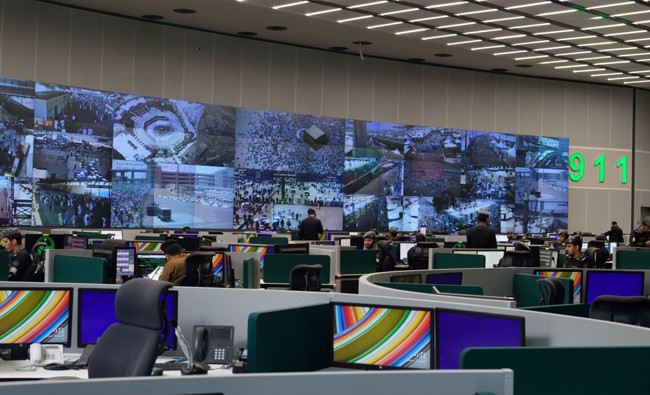
Makkah security center receives 64,000 reports a day
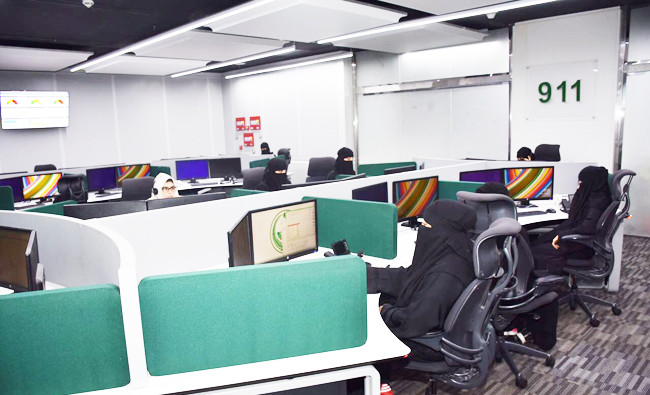
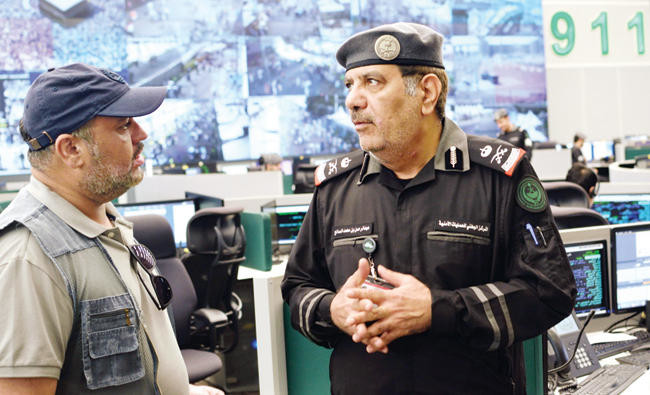
Makkah security center receives 64,000 reports a day
Latest updates


© 2026 SAUDI RESEARCH & PUBLISHING COMPANY, All Rights Reserved And subject to Terms of Use Agreement.