ÇANAKKALE: Turkey’s main opposition leader Kemal Kilicdaroglu vowed to press on with an intensifying campaign for justice in defiance of “threats” by President Recep Tayyip Erdogan, accusing him of ruling as a dictator.
Kilicdaroglu, head of the secular Republican People’s Party (CHP), told AFP in an interview he believed that Erdogan feared his movement and consequently was attacking him in nearly every public speech.
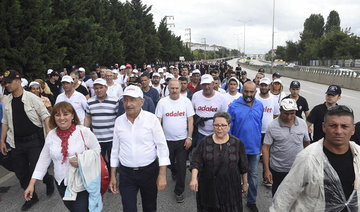
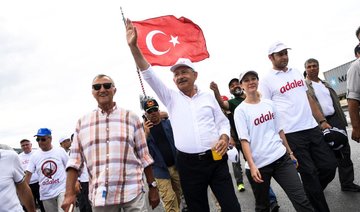
The CHP leader, who analysts until now rarely saw as posing a major challenge to Erdogan, threw down a new gauntlet to the president this summer with a nearly month-long march complaining of injustice in Turkey in the wake of the July 15, 2016, failed coup bid.
This weekend, he kicked off a four-day “justice congress” highlighting violations in the unprecedented crackdown that followed the failed coup, in a bid to build on the momentum of that march.
“Let him (Erdogan) threaten as much as he wants, we are right. We will defend justice, democracy, judicial independence and media freedom to the end because we are right,” said Kilicdaroglu.
“He sees me as a threat. He is from time to time delivering speeches that contain threats but we will not be frightened off by their threats,” the CHP leader said in front of his trailer at the outdoor event in the western Canakkale region.
Erdogan has lambasted Kilicdaroglu in speeches and even hinted that the CHP chief could himself face judicial proceedings. But Kilicdaroglu said this showed that “Erdogan is definitely shying away and scared of me.”
He accused the Turkish president, who has dominated Turkey for almost one and a half decades as premier and head of state, of suffering from “Kilicdaroglu illness” due to nearly daily tirades targeting him.
Kilicdaroglu is hoping the appeal of his justice movement will go well beyond the CHP and help create a united front against the president ahead of 2019 elections.
The stakes will be particularly high in the polls — Erdogan this April won a referendum on enhancing the powers of the presidency which critics fear give the head of state near authoritarian powers.
“Turkey is currently in a coup process. Parliament has been de-activated,” Kilicdaroglu said.
“They can seize assets or dismiss from the public sector whoever they want under a single decree. Can you call this democracy?”
More than 50,000 people have been arrested under Turkey’s over year-long state of emergency imposed after the failed coup, and almost three times that number have lost their jobs, including teachers, judges, soldiers and police officers.
Kilicdaroglu, however, said: “We are coming together in spite of all impossibilities and all barriers... We are all together speaking up for democracy and human rights. That is, of course, scaring him.”
The government insists the crackdown is essential to deal with the national security threat posed by the coup bid, blamed on the US-based preacher Fethullah Gulen who denies the charges.
Kilicdaroglu did not comment on if he would run in the presidential polls but he said the CHP’s candidate would “oppose the one-man regime and advocate a democratic parliamentary system.”


![]()

Turkey opposition chief vows to intensify drive for ‘justice’
Turkey opposition chief vows to intensify drive for ‘justice’

Latest updates


© 2026 SAUDI RESEARCH & PUBLISHING COMPANY, All Rights Reserved And subject to Terms of Use Agreement.