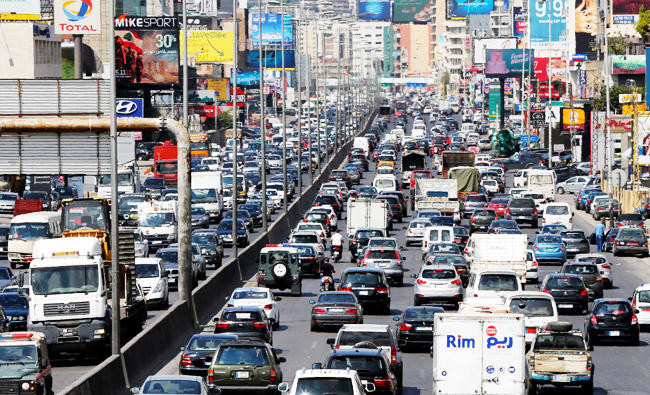
BEIRUT: Lebanese President Michel Aoun signed off on public sector wage increases and related tax hikes on Monday, the national news agency NNA said.
Aoun had held off ratifying the two laws since parliament approved them last month, amid concerns from businesses about the impact of more taxes on Lebanon's fragile economy.
The public sector pay scale law has been under discussion for years. The government had estimated that it would cost around $800 million, or $1.2 billion if it included certain pension increases.
The tax law raises value-added tax (VAT) by one percentage point to 11 percent and hikes corporation tax to 17 percent from 15 percent.
Several protests have broken out this year over the proposed tax hikes, which are intended to fund public sector pay rises.
In recent weeks, some public sector workers have also gathered in the streets calling for Aoun to finally sign the laws.

Lebanon hikes corporation tax and VAT
Saudi Arabia’s cultural sector is a new economic engine between Riyadh and Paris, says ambassador
RIYADH: Culture has become a fundamental pillar in bilateral relations between France and Saudi Arabia, according to the French Ambassador to the Kingdom, Patrick Maisonnave.
Maisonnave noted its connection to the entertainment and tourism sectors, which makes it a new engine for economic cooperation between Riyadh and Paris.
He told Al-Eqtisadiah during the opening ceremony of La Fabrique in the Jax district of Diriyah that cultural cooperation with Saudi Arabia is an important element for its attractiveness in the coming decades.
La Fabrique is a space dedicated to artistic creativity and cultural exchange, launched as part of a partnership between the Riyadh Art program and the French Institute in Riyadh.
Running from Jan. 22 until Feb 14, the initiative will provide an open workspace that allows artists to develop and work on their ideas within a collaborative framework.
Launching La Fabrique as a space dedicated to artistic creativity
The ambassador highlighted that the transformation journey in the Kingdom under Vision 2030 has contributed to the emergence of a new generation of young artists and creators, alongside a growing desire in Saudi society to connect with culture and to embrace what is happening globally.
He affirmed that the relationship between the two countries is “profound, even cultural par excellence,” with interest from the Saudi side in French culture, matched by increasing interest from the French public and cultural institutions unfolding in the Kingdom.
Latest estimates indicate that the culture-based economy represents about 2.3 percent of France’s gross domestic product, equivalent to more than 90 billion euros ($106.4 billion) in annual revenues, according to government data. The sector directly employs more than 600,000 people, making it one of the largest job-creating sectors in the fields of creativity, publishing, cinema, and visual arts.
Saudi Arabia benefiting from French experience in the cultural field
Maisonnave explained that France possesses established cultural institutions, while Saudi Arabia is building a strong cultural sector, which opens the door for cooperation opportunities.
This comes as an extension of the signing of 10 major cultural agreements a year ago between French and Saudi institutions, aiming to enhance cooperation and transfer French expertise and knowledge to contribute to the development of the cultural system in the Kingdom.
He added that experiences like La Fabrique provide an opportunity to meet the new generation of Saudi creators, who have expressed interest in connecting with French institutions and artists in Paris and France.
La Fabrique encompasses a space for multiple contemporary artistic practices, including performance arts, digital and interactive arts, photography, music, and cinema, while providing the public with an opportunity to witness the stages of producing artistic works and interact with the creative process.