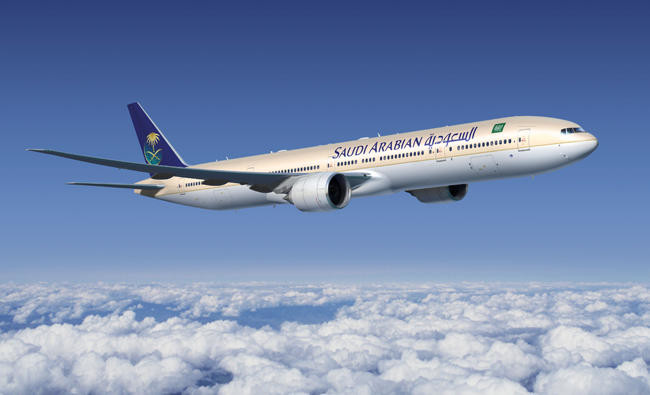
JEDDAH: Saudi Arabian Airlines had been unable to transport Qatari Hajj pilgrims from Doha as promised because Qatari authorities have failed to authorize its aircraft to land at the Hamad International Airport, the Kingdom’s national carrier said on Sunday.
Saudia Director General Saleh Al-Jasser said that several days have passed since the airline submitted its request for landing permission, but Doha authorities have not acted on it so far. The statement was carried by the Saudi Press Agency (SPA).
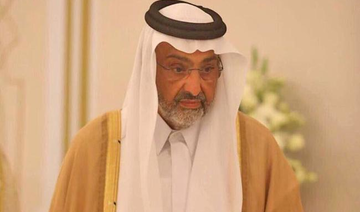
Al-Jasser said Saudia sent the request after King Salman ordered the airline to dispatch flights to Doha to transport Qatari pilgrims, in response to the mediation of Qatari Sheikh Abdullah Bin Ali Al Thani, who met with Crown Prince Mohammed bin Salman on August 17 and with the King the next day.
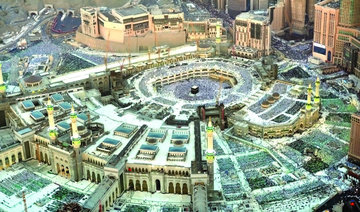
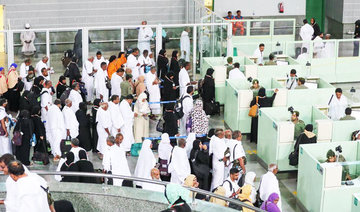
King Salman has also ordered the Saudi land border with Qatar opened for Qatari pilgrims to enter the Kingdom to perform Hajj in Makkah.
His directive includes providing vehicles to transport the pilgrims and accommodation, as special guests of the King.
King Salman’s opening of the Salwa border crossing and directive to send flights to transport Qatari pilgrims has been widely welcomed, but played down by Qatari authorities and media.
In a tweet on Sunday, Sheikh Abdullah Bin Ali Al Thani expressed his regrets over his government’s inaction on Saudia's request for landing permission.
“Brothers and sons: I regret the blocking of Saudi aircraft from Doha (to transport pilgrims) to perform Hajj, and I hope that the brothers in Qatar cooperate to facilitate Hajj for (Qatari) citizens,” he tweeted.
إخواني وأبنائي:
يؤسفني منع نقلكم عبر الطائرات السعودية من الدوحة لأداء الحج، وآمل من الإخوة في قطر التعاون لتسهيل شعائر الحج للمواطنين.— عبدالله علي آل ثاني (@abdullahthanii) August 20, 2017
Nonetheless, Sheikh Abdullah urged Qataris who wish to perform Hajj to avail themselves of the land transport option since the Salwa border crossing is now open to all pilgrims.
“With Allah’s permission, the wish of all those who want to perform Hajj will come true and opportunities to enter the Kingdom are available via land ports (Salwa border crossing) and Al-Ahsa and Dammam Airports,” he said.
He said pilgrims can call 00966122367999, the hotline number of the operations center created by the Saudi government specifically for Qatari pilgrims, visitors and businesspeople.
In an earlier tweet, Sheikh Abdullah said he requested that center during his meetings with King Salman and Crown Prince Mohammed bin Salman last week.
“The king, as usual, approved my request and ordered the allocation of a special operations room to handle Qatari affairs run by a Saudi crew under my supervision, in the light of the severed ties (between the two countries),” he said.
Rogue brother
Saudi Arabia, Bahrain, the United Arab Emirates and Egypt closed their air spaces to Qatari flights after cutting diplomatic ties with Doha, whom they accused of continuously harboring and supporting extremist ideologues and terrorists. They also accused Qatar of maintaining close ties with Iran despite being a member of the Gulf Cooperation Council (GCC). The six-member council, which includes Bahrain, Kuwait, Qatar, Oman, Saudi Arabia and the UAE, had repeatedly accused Iran of fomenting strife and sedition and arming militias in Arab countries.
Aside from closing their air spaces, sea and land routes to Qatar, the four countries — called the Anti-Terror Quartet or ATQ — also said foreign airlines would have to seek permission for overflights to and from Qatar.
Qatar has denied the charges and has refused to compromise, even though the ATQ has reduced its 13-point demand to six principles.
The revised demand include commitments to combat extremism and terrorism, prevent financing and safe havens for such groups, and suspend all acts of provocation and speeches inciting hatred or violence.