MOSCOW: Russia said Sunday that a stabbing which injured seven people and was claimed by the Daesh group is being probed by top investigators in Moscow, as new details emerged.
Daesh claimed responsibility for the attack in the remote city of Surgut along with the attacks in Spain that killed 14 through its Amaq propaganda agency, calling the attacker “a soldier of the Islamic State (Daesh).”
A black-clad attacker in a balaclava ranged through central streets of the city around 2,100 kilometers (1,330 miles) northeast of Moscow on Saturday morning, stabbing people apparently at random before being shot by police.
Russia, which initially said the theory of terrorism was “not the main one” being considered, has opened a criminal probe into attempted murder and has not reacted officially to the Daesh claim.
The Investigative Committee, which probes major crimes, said in a statement on Sunday that “due to the wide public reaction,” its chief Alexander Bastrykin has put the case directly under control of its central apparatus in Moscow.
Investigators said they had carried out searches of the attacker’s home and were establishing the circumstances and the “motive for the attacker’s actions.”
The attacker was born in 1998, the Investigative Committee said, while previously it had said he was born in 1994.
Unconfirmed media reports on Saturday had described the attacker as a 19-year-old whose father originates from Dagestan in Russia’s mainly-Muslim North Caucasus region.
Video posted by Izvestia newspaper on its website on Sunday showed the attacker, a slim young man, lying on the ground dressed all in black with a red object taped round his waist.
NTV television aired witness video of a policeman chasing the attacker through streets and firing apparently at his head, after which the attacker falls to the ground.
Earlier investigators said that they were looking into the attacker’s “possible psychiatric disorders.”
One of the stabbing victims remained in a serious condition while the others were stable, investigators said.
Late Saturday, the governor of the region Natalya Komarova visited the wounded in hospital. She said one victim was fighting for his life.


![]()
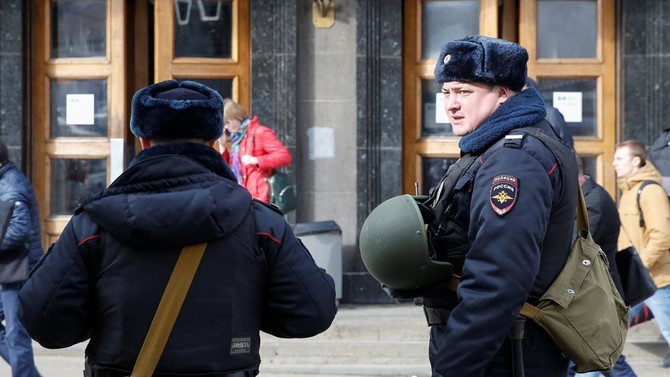
Russia steps up probe into attack claimed by Daesh
Russia steps up probe into attack claimed by Daesh


Latest updates


© 2026 SAUDI RESEARCH & PUBLISHING COMPANY, All Rights Reserved And subject to Terms of Use Agreement.