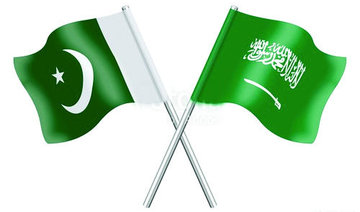
Ever since its establishment in 1947, Pakistan has enjoyed close relations with Saudi Arabia. The two sides have established time-tested strategic ties.
Saudi Arabia has always extended economic cooperation to Pakistan in the hour of need. Workers remittances from this brotherly Islamic country play a substantial role in strengthening the balance of payment of Pakistan. When seen in the backdrop of this overall picture, one aspect of the ties i.e. bilateral trade seems relatively less pronounced and depicts a story of unrealized potential.
Pakistan mainly imports oil and oil products from Saudi Arabia, which accounts for 90 percent of our total import bill for the Kingdom. In turn, Pakistan supplies rice, meat, meat products, spices and fruit, home textile products, chemicals, footwear and leather goods. The total value of the merchandise being traded between the two countries is around $2.5 billion. Pakistan’s exports to Saudi Arabia are worth about $0.5 billion whereas the rest comprises the value of items imported by Pakistan.
Pakistan’s exports to Saudi Arabia have seen consistent growth and have tripled in value during 2001 and 2014. There has been a slight downward trend since 2014, which may be partly attributed to somewhat slowing down of economic activities in Saudi Arabia due to falling oil prices.
However, even if one disregards the phenomenon of temporary slow growth in Saudi Arabia, it is still palpable that the magnitude of trade relations between the two countries is not in sync with their long-established close-knit ties.
The fact of the matter is that Pakistan caters to a merely 0.3 percent of the import market of Saudi Arabia. Considering the manufacturing base of Pakistan and our thriving services sector, Pakistan has much more to offer to Saudi Arabia and actually, there is a huge potential of bilateral trade lying unrealized between the two countries.
Due to Pakistan’s geographical location, bilateral trade is comparatively feasible both through air and sea routes. Moreover, Saudi Arabia hosts the largest expatriate community of Pakistan in the world. Pakistani citizens are employed in almost all the large business groups and companies where they are offering valuable services and are ultimately contributing to the strengthening of the local economy. The presence of this large expatriate community can play a significant role in furthering the bilateral trade relations.
There are a number of areas in which the trade volume can be possibly enhanced. Pakistan specializes in textiles products, which account for more than half of our total global exports. But in the case of Saudi Arabia, textiles comprise merely 20 percent of our export mix. The share of textiles especially value-added garments can see a big jump if circumstances are aligned. Similarly, Pakistan manufactures state-of-the-art surgical instruments and world-class sports goods, which can easily find their place in the Saudi market. There is also a great scope for food products. Pakistan can easily cater to the rapidly growing sector of organic foods in Saudi Arabia. Similar potentials exist in the services sector be it financial services, insurance sector, facilities management, IT services, entertainment industry etc.
A free-trade agreement between Pakistan and the Gulf Cooperation Council (GCC) is already on the cards. The agreement will help boost trade between Pakistan and the entire Gulf region. The signing of a bilateral investment treaty between Pakistan and Saudi Arabia is also a possibility in near future. This agreement will liberalize, promote and reciprocally protect investments made by companies of the two countries and will help them capitalize on the opportunities arising on both sides i.e. the Vision 2030-related investments opportunities in Saudi Arabia and projects related to China-Pakistan Economic Corridor (CPEC) in Pakistan.
Apart from this, bilateral business bodies are warranted to play an active role. Frequent exchange of business delegations and enhanced business-to-business interactions are guaranteed to accelerate the commercial relations. Liberalized business visa regimes on both sides will greatly facilitate such interactions.
Pakistan and Saudi Arabia both understand the significance of enhanced economic and trade relations and the two sides are already making progress in various areas. Pak-Saudi Joint Ministerial Commission exists since 1970, which serves as the apex body to discuss all bilateral matters relating to trade and commerce. The commission is slated to meet this year.
It is sincerely hoped that coming days shall see Pakistan emerging as a major trading partner of Saudi Arabia.
• The writer is Commercial Secretary at the Pakistan Consulate in Jeddah.