ATHENS: New York property developer Mike Angeliades has wanted to create a golf resort in his native Greece for quarter of a century. But just when the plan seemed within reach, the past caught up with him.
Three years ago Angeliades won a state-sanctioned competition to develop a beachfront property on Rhodes, the Aegean island he left as a teenager. Then last year the authorities dropped a bombshell.
“The then culture minister ... declared the whole area an archaeological site,” he told Reuters. Now the project to invest up to €400 million is stalled. “We are still waiting for an answer from the ministry on what they plan to do.”
Angeliades, who emigrated to the United States in 1960, is among a number of foreign investors ready to plow large sums into a country just emerging from economic depression, only to wonder if they’re really welcome.
Conflicts between development and conservation affect many countries. But in Greece concerns for the environment and antiquities are combining with labyrinthine laws, zealous officialdom and hostile political ideology to create hurdles that even investors familiar with the country cannot understand.
Greece’s recovery depends largely on foreign investment. Seven years ago it embarked on a privatization program to raise €50 billion for the near-bankrupt state. To date it has brought in just €4.4 billion, and government critics say excessive red tape is a major reason for the dismal performance.
For frustrated developers, the suspicion is that Greece is biting the hand that feeds it. But many Greeks feel bound to protect their country’s 3,500 year-old cultural heritage and some of Europe’s most beautiful coastline from excess development, however pressing the need to raise cash.
“There are some people who think that antiquities are a pile of rocks and they say ‘oh well, we already have enough of them’,” said Thodoris Dritsas, a member of parliament for the ruling leftist Syriza party. “Syriza lawmakers don’t share that view,” he told Reuters.
Publicly, the Greek state says it is actively pursuing investments. But the track record seems to tell a different story sometimes, especially in the case of a waterfront property that was once the site of Athens airport.
For the past 16 years the old Hellenikon terminals have stood abandoned on a sprawling wasteland three times the size of Monaco, along with derelict water sport venues used for the Athens 2004 Olympics.
Backed by Chinese and Gulf investors, Greek developer Lamda came up with an €8 billion plan to build one of Europe’s biggest coastal resorts, covering 620 hectares.
The project was to be a game-changer for Greece, bringing in hundreds of thousands of tourists and creating 75,000 jobs in a country where unemployment is still over 20 percent.
Syriza strongly objected to granting a 99-year lease on the state-owned site while it was in opposition, keen to turn the area into a public park. Then after winning power in 2015, it was forced to relent on its ideological rejection of privatization and accepted the development under a third international bailout deal for Greece.
But the problems were not over. Greek authorities delayed decisions on whether part of the old airport buildings should be classified as historic, and on the course of action should antiquities be found. Then the forestry department declared 3.7 hectares of eucalyptus, cypress and olive trees on the estate as protected woodland.
The Lamda consortium, which includes Chinese conglomerate Fosun and Abu Dhabi-based developer Eagle Hills, had hoped to start work by June.
However, the archaeological and forestry issues have delayed the submission of the plan and the start of a licensing process, a spokesman for Lamda told Reuters. The process is estimated to take about nine months, Lamda CEO Odisseas Athanassiou said, so now the firm cannot set foot on the plot before April next year.
The trees stand in an awkward spot.
“It’s the tourist and entertainment heart of Hellenikon,” Athanassiou told shareholders in June. “Millions of euros have been spent to determine where to put what and it’s like a puzzle. You can’t take one piece of the puzzle from one place and place it elsewhere.”
The consortium spent three months last year trying to persuade authorities the airport runway used for 60 years was not a listed monument. It also plans to plant a park covering about a third of the site, but still the project is languishing.
Lamda unveiled a detailed plan for Hellenikon last month, setting off the start of a public consultation and other actions which are supposed to wrap up with the decree.
Athanassiou says progress is vital in encouraging more investors to join his project and others. “Every day there is a delay, the country misses an opportunity to become not only a tourist attraction but also an investment and cultural one,” he said.


![]()
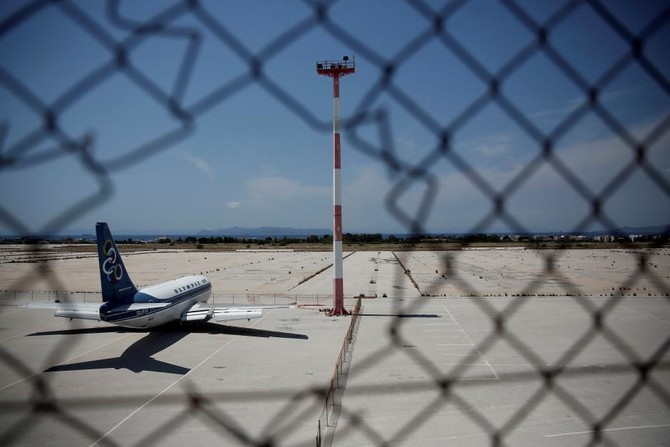
Cash versus culture: tourism projects hit trouble in Greece
Cash versus culture: tourism projects hit trouble in Greece

Latest updates



© 2026 SAUDI RESEARCH & PUBLISHING COMPANY, All Rights Reserved And subject to Terms of Use Agreement.