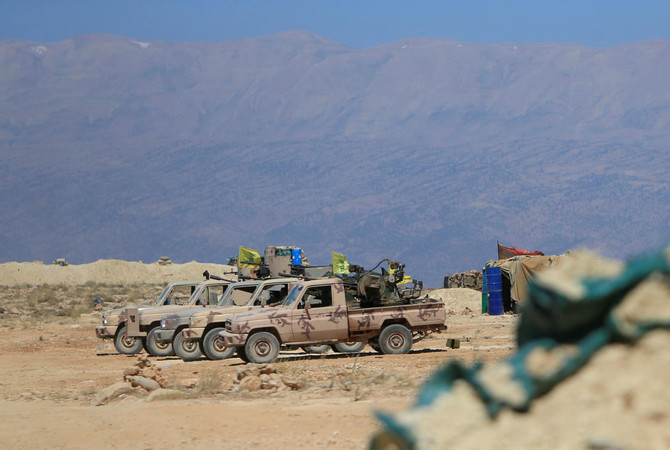
BEIRUT: The second phase of a cease-fire agreement between Hezbollah and Jabhat Fateh Al-Sham (JFS) militants near the Lebanon-Syria border was delayed for a second day as talks reached a “critical phase.”
The negotiations “include some demands to release detainees in Lebanese prisons,” said Maj. Gen. Abbas Ibrahim, Lebanon’s security chief, who is leading the talks.
“The most critical phase of negotiations has begun,” he said.
“We would better work more and talk less now, as all that is being circulated negatively affects the process.”
In the first phase of the deal, the bodies of 14 fighters were exchanged in northeast Lebanon, nine from JFS and five from Hezbollah.
The second phase is expected to involve moving militants and displaced people from camps in the Lebanese border town of Arsal to Idlib in Syria.
While negotiations described as “exhaustive” and “intricate” continue, JFS militants and their families, as well as the displaced Syrians who wish to leave, have been waiting in the barren and mountainous area for their departure to Idlib.
Sheikh Mustafa Al-Hujairi, a local leader in Arsal who is in charge of negotiating with JFS, has made several visits to Wadi Hmeid and Al-Zimrani crossing, where the militants have been gathering since the implementation of the cease-fire last week.
The demands of JFS include the release of nine prisoners, seven Syrians and two Lebanese. The nine men have all been arrested on charges of terrorism and belonging to JFS.
Four have been convicted, including one who shot dead a Lebanese soldier abducted from Arsal three years ago, and the others are being tried by a Lebanese military court.
“The JFS-Hezbollah deal includes the withdrawal of all militants from Western Qalamoun and displaced Syrians wishing to leave. It also includes the release of 10 Syrian prisoners from Roumieh prison,” JFS leader Abu Malek Al-Talli said in an interview published on the Facebook page of the Nors Studies Center.
“The failure to accomplish the deal is due to a disagreement between Hezbollah and the Lebanese government regarding the release of prisoners from Roumieh.”
In a separate interview with Al-Rai Media, Talli blamed the delay on “Hezbollah’s lack of credibility regarding the details of the deal.”
The prisoner exchange deal was criticized by the Lebanese MP Sami Gemayel, head of the Kataeb Party.
“Who decided that coward criminals who committed crimes against the Lebanese army and executed soldiers that we are proud of should be released from prison?” he said.
“Who allowed them to escape and return to their country? Did the Lebanese government decide to send them back without trial and without paying for their crimes? Did the Lebanese judiciary give its consent to stop prosecuting those who are known to have killed our army? Can anyone tell us who approved the deal? The government did not hold a meeting regarding this matter and the judiciary did not make any decision. Can we know who decides the fate of Lebanon today?”


![]()
Demand to free militants delays Lebanon cease-fire deal
Demand to free militants delays Lebanon cease-fire deal


Latest updates


Recommended


© 2026 SAUDI RESEARCH & PUBLISHING COMPANY, All Rights Reserved And subject to Terms of Use Agreement.