RIYADH: The Saudi National Campaign to support Syrian refugees has continued distributing bread to displaced Syrians in Lebanon and northern Syria through its mobile bakeries, the Saudi Press Agency (SPA) said.
In the 196th week of operations inside Syria, the mobile bakeries produced 1.272 million pieces of bread to feed 556,500 Syrians, the regional director of the Saudi National Campaign, Dr. Badr bin Abdulrahman Al-Samhan, said.
In Lebanon, mobile bakeries produced 136,920 pieces of bread in the 33rd week of operations to feed 41,067 Syrians. The number of Syrian families benefiting from the bread program exceeded 86,000 in a week in Lebanon and Syria, he said.
The bread program is primarily aimed at displaced Syrians from Idlib and Aleppo provinces and nearby rural areas, as well as Syrian refugees in Lebanon’s Akkar governorate, the SPA said.
Meanwhile, the Saudi Specialized Clinics, which are part of the Saudi National Campaign to support Syrian refugees, provided vaccines to 74 children at the Zaatari camp in Jordan in their 238th week of operation.
The medical director of the clinics, Dr. Hamid Al-Mifalany, said the vaccination campaign is in collaboration with the Jordanian Ministry of Health.


![]()
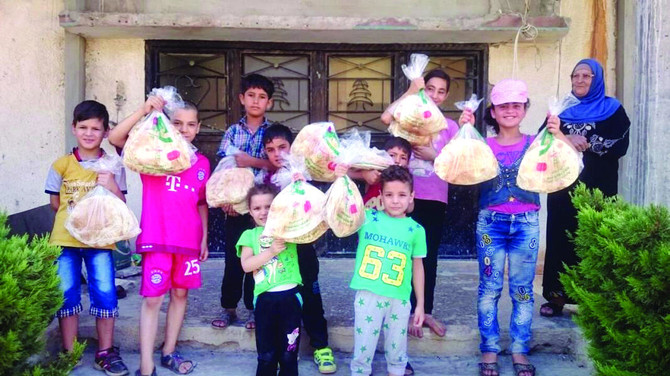
Saudi Arabia distributes bread to 86,000 Syrian families in Lebanon, Syria
Saudi Arabia distributes bread to 86,000 Syrian families in Lebanon, Syria
Latest updates


© 2026 SAUDI RESEARCH & PUBLISHING COMPANY, All Rights Reserved And subject to Terms of Use Agreement.