Saudi Arabia’s Vision 2030 has been compared to a road map for the Kingdom’s future. It is intended to be a far-reaching, ambitious and transformational strategy that 13 years from now will have fundamentally changed the country’s economy, culture and society. But how will policymakers know, in the course of their journey, that they have not mistakenly taken a lengthy detour or strayed off the route altogether?
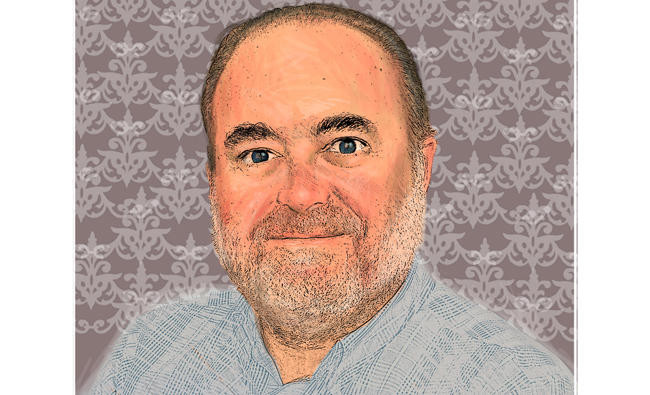
They will look to Esteban Gomez Nadal, the Dubai-based managing director of global consulting firm Palladium Group, for directions. The 54-year-old Spaniard is responsible for the performance management systems installed in the Kingdom’s government infrastructure to tell the leadership if it needs to go faster or slow down, or if it has got the pace of change just about right.
After a career as a top executive in the telecommunications and media sectors, which took him from his native country to New York, he joined Palladium in 2002. “I’m one of these strange consultants who had executive managerial experience before I became a consultant. Usually, it’s the other way round,” he said. That experience gives him an expert eye for strategy development and implementation.
He is in no doubt that the Saudi experiment deserves to succeed. “The transformation strategy, in my view, is the only way for Saudi Arabia to go. There are challenges, of course. The involvement of the private sector in the diversification strategy is crucial. You have to get alignment between priorities and the available skill set, which raises issues of education and gender,” he said.
Having worked on women’s empowerment projects worldwide, he believes this aspect of the strategy is crucial. “The incorporation of women into the strategy is a big opportunity. Saudi women are among the most talented, intelligent and hardworking I’ve come across anywhere in the world,” he said.
We met in Palladium’s offices in Dubai, located on Happiness Street in the Business Bay district. The address is appropriate because Palladium’s aim is to maximize happiness in societies and economies. The 50-year-old organization is a management consulting firm owing much to the influence of two top executive theorists, Robert Kaplan and David Norton — but with a difference, as Nadal explained.
“We focus on designing and managing complex multi-actor products with a view to implementation and execution. That’s key. It’s easy to sit down and think up a plan, but implementing it is the challenge. Execution should be an integral part of the management process,” he said.
Palladium’s guiding principle is “positive impact.” Nadal said: “We define this as ‘the intentional creation of enduring economic and social value,’ and each of those words is very carefully chosen. It’s not only about making money. You have to create the right conditions to be able to share that value with the communities you’re dealing with. There has to be a connection between competitive commercial advantage in the business world and corporate social responsibility.”
Palladium’s Saudi office in Riyadh has 48 permanent staff, of whom 70 percent are nationals. Saudi policymakers have hired an army of consultants and advisers such as McKinsey, the Boston Consulting Group and others to help work out the strategy, but it has to be implemented at a local level.
It is essential, Nadal believes, to get buy-in from the national community and from the ranks of middle executives, who are generally responsible for implementation of a strategy that has been decided by senior management.
“The other key is that the plan has a better chance of success if it’s coming from inside the company, rather than being imposed on it from outside. So you have to try to enable the executives of the company to do it for themselves, to make them responsible and to take charge of it. We have to persuade people in Saudi Arabia to take responsibility for the transformation process. In my experience, they’re more and more willing to do that,” he said.
Nadal’s involvement in Saudi Arabia came via the Labor Ministry when Palladium was hired by then-Minister Adel Fakeih in 2008. When Fakeih later moved to the Ministry of Economy and Planning, he remembered the work Nadal had done on youth employment projects, and when the time came for work to begin on the National Transformation Program (NTP) 2020 and Vision 2030, Palladium was well-placed to help deliver the strategy.
A stream of consulting projects followed. “We also worked on the Affordable Housing Plan and the Sustainable Agriculture Initiative, as well as the Municipal Management System for Jeddah. We did some work for the Riyadh Chamber of Commerce on the role of the private sector in the Vision 2030 strategy, and for the Saudi Arabian Monetary Authority (SAMA) a couple of years ago on financial strategy and implementation,” said Nadal.
He is not, so far, involved in the Vision’s flagship initiative: The planned initial public offering (IPO) of Saudi Aramco. “I’d love to get involved in that. It’s so crucial,” he said.
Palladium’s main project regarding the transformation strategy is being done via Adaa (Arabic for “performance”), the National Center for Performance Management. “It’s designed to measure progress in implementation and achieving set milestones over monthly, quarterly and yearly timeframes. If there are, for example, 15 measurement criteria, Adaa will measure each one to see how much progress has been achieved toward reaching those targets,” Nadal explained.
Vision 2030 is not the first time Palladium has been called in to help with a national strategic plan. In 2006, Nadal was part of the team that worked for Abu Dhabi’s government to produce the Vision 2020 Plan, which also aimed to reduce the emirate’s economic dependence on oil. That led to other projects in the UAE, notably the implementation of the Emirates ID system of registering residents’ details on a central computer.
Now everybody living and working in the UAE has to have an ID card, which Palladium was instrumental in introducing. “We created the strategy from A to Z, and had such buy-in from the whole team that they were convinced they did it themselves,” said Nadal.
That led to Palladium’s involvement with Dubai’s plan for “smart city” status, an ongoing project designed to integrate communications and information technology into the emirate’s urban infrastructure. Launched in 2016, the plan will affect all aspects of life, from government services to transport and education.
“Dubai is actually pretty efficient compared to some other places in the region. It has managed the execution process better than some others,” he said
He related a story about Shiekh Mohammed bin Rashid Al-Maktoum, ruler of Dubai, receiving reports from experts all recommending the introduction of an income tax, but he dismissed them all.
“He thought that if his officials came to rely on tax for their income, they’d cease to care about money and be less efficient. Smart Dubai is a typical multi-sector product that cuts across all groups and interests. It has a big database that allows the Dubai government to run the city efficiently,” added Nadal.
The end product of the “smart city” initiative is to increase happiness in Dubai. Last year, the UAE government launched its “happiness” initiative, which involved setting up a ministry to promote happiness as a goal of government strategy, complete with its own happiness minister. Skeptics worldwide derided the idea as a meaningless concept, but Nadal insists it is a practical strategy for organizing a political entity.
“It’s a customer-centric approach to running a country or a city. Traditionally, government and politicians tend to forget about their citizens and residents, but we’re taking that aim to the frontline of government action. It’s a bit like the sentiments behind the Gettysburg address (the famous speech by US President Abraham Lincoln during the civil war in the 19th century) — government of the people, by the people, for the people,” Nadal said.
On the cynical reaction to the happiness strategy, he added: “I don’t think the West really understands the Middle East. It’s impossible to measure what happens here with the same practices that take place in the West. I think we’ve already seen a change for the better. Dubai will survive and thrive if it can keep its citizens happy and attract permanent residents. It could be a bit like Miami.” But Nadal said the issues of retirement and residence would have to be resolved first.
Palladium’s role in the happiness project is to measure and evaluate the impact of government initiatives in six key areas: Information technology, the environment, productivity, social inclusion, quality of life and physical infrastructure. It will coordinate and collate data with reference to key performance indicators (KPIs) that will enable the project’s strategy head, Noora Al-Suwaidi, to assess progress toward its achievement.
While the idea of a “happiness meter” will be greeted with skepticism in some areas, it is becoming an increasingly important yardstick for policymakers and strategists worldwide. “Organizations, public or private, that make conscious, data-driven decisions to create positive impacts for their customers, employees, suppliers and communities are setting themselves up for sustainable economic prosperity and urban living,” said Nadal.
Sustainable economic prosperity is also the aim of Saudi Arabia’s Vision 2030. “This is all part of the transformation that Mohammed bin Salman, the crown prince, wants to promote. Can the Saudis achieve it all despite the challenges? Yes, I think they can do it because they have one key advantage: Leadership. They have all the elements for success, and now it’s in their hands. We’re pleased to be helping them,” Nadal said.


![]()
Meet the consultant helping with KSA’s transformation strategy — and quest for happiness
Meet the consultant helping with KSA’s transformation strategy — and quest for happiness

Latest updates







© 2026 SAUDI RESEARCH & PUBLISHING COMPANY, All Rights Reserved And subject to Terms of Use Agreement.