LONDON: Proposed changes to Britain’s listing regime are likely to attract a series of state-backed companies to London’s stock markets as governments in oil-rich states prepare for a wave of asset sales.
However, some investors and corporate governance groups say Britain’s move to make its capital markets attractive to state-controlled firms by loosening some of the rules may lower the quality of companies on its stock exchange and leave shareholders with less protection when things go wrong.
The UK financial regulator proposed a new “premium” listing category for state-owned companies on Thursday, intended to make the market more attractive for oil giant Saudi Aramco as it plans what is expected to be the world’s largest ever initial public offering (IPO).
The move was applauded by Britain’s financial lobby groups as helping to make sure the country’s capital markets remain attractive once it leaves the EU.
Capital markets lawyers say that as well as Saudi Arabia, the changes will appeal to a number of countries that are also in the midst of asset privatization plans.
“This broadens the appeal of London for companies in countries like Saudi Arabia, Kazakhstan, Russia, and southern Europe,” Raj Karia, a partner at law firm Norton Rose, told Reuters. “There are a lot of companies globally which are state-owned and will be privatized and in the run up to Brexit, London is appealing to the world outside of Europe.”
Falling oil prices have spurred privatizations across the Middle East, with Saudi Arabia, Oman and Abu Dhabi all announcing plans in the past year to float some of their oil assets. Government asset sales are also expected from Romania and Greece.
Nicholas Holmes, a partner at law firm Ashurst, said it was clear the proposed rules were aimed at attracting further sovereign business in London beyond Aramco.
However, he cautioned that the changes risked undoing some reforms made to Britain’s listing rules in 2014 following a number of scandals.
London-listed mining companies Eurasian Natural Resources Corporation (ENRC) from Kazakhstan and Bumi from Indonesia both left minority investors nursing heavy losses, which were both blamed on dealings involving company insiders and controlling shareholders.
That led to the rule changes, with such companies forced to ensure that all transactions between a controlling shareholder or their associates and the company are conducted on an arm’s length basis and on normal commercial terms.
These rules will not apply to sovereign-controlled companies under the new proposed listing structure when dealing with the parent state, provided it holds at least 30 percent of the shares.
“The fear is that we are rolling back a portion of sensible reforms, which came as a result of past scandals such as ENRC. The risk is a dilution of the premium listing brand,” Ashurst’s Holmes said.
Shareholder groups and investors agreed.
“Our initial reaction is that investors and savers should be nervous about any dilution of existing protections which were specifically introduced to avoid a repetition of the governance issues associated with Bumi and ENRC,” said Catherine Howarth, chief executive of ShareAction.
Euan Stirling, head of Stewardship and ESG (environmental, social and governance) Investment at Standard Life, one of the biggest investors in the British stock market, said the move sent the wrong signal.
“We would prefer to see listing rules tightened rather than loosened,” he said.
Sources said Kazakh energy company KazMunaiGas is one of the most likely state-backed companies aside from Aramco to take advantage of Britain’s proposed new listing rules. It is currently selecting advisers for its planned 2019 IPO and is expected to consider London.
Kazakhstan is listed as number 131 out of 176 on the Transparency International corruption perception index. The company was not immediately available to comment.
Reeling from the collapse of its merger with Deutsche Bourse and a slowdown in large domestic listings, the London Stock Exchange (LSE) is targeting emerging markets, and the Middle East in particular, as a source of new IPOs.
Including Saudi Aramco, Riyadh aims to raise around $200 billion in the next several years through privatization programs in 16 sectors. Fighting a budget deficit, Kuwait is also considering privatizing some assets.
The UAE could raise $1.5 to $2 billion for Abu Dhabi’s national oil company. That is initially expected to be a local listing, which does not rule out the company tapping the London market in future.
With smaller deal sizes, Egypt plans to list shares in a state-owned bank and companies including Banque du Caire and Arab African International Bank.
Some of the large Middle East companies will be suitable for a listing in London, though some could opt for their local exchange.
Russian state-owned companies such as Gazprom and Rosneft are already on the LSE using the less popular standard listing structure, but will now find it easier to achieve the conditions for a premium listing.
For investors, the next step to watch will be whether any companies listed under the new rules will be eligible for including in any stock market indices, meaning they can raise funds from passive index-tracking funds.


![]()
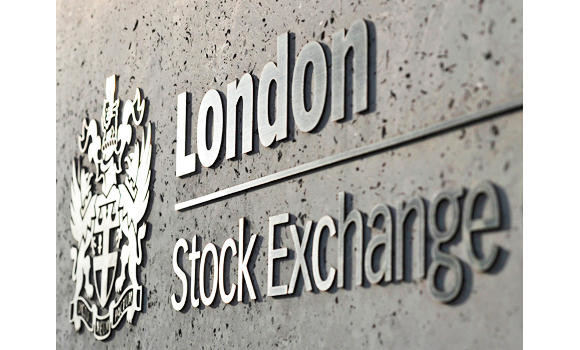
New UK listing rules set to attract more state companies
New UK listing rules set to attract more state companies
Latest updates


© 2026 SAUDI RESEARCH & PUBLISHING COMPANY, All Rights Reserved And subject to Terms of Use Agreement.