

Dubai carriers Emirates and flydubai to integrate operations

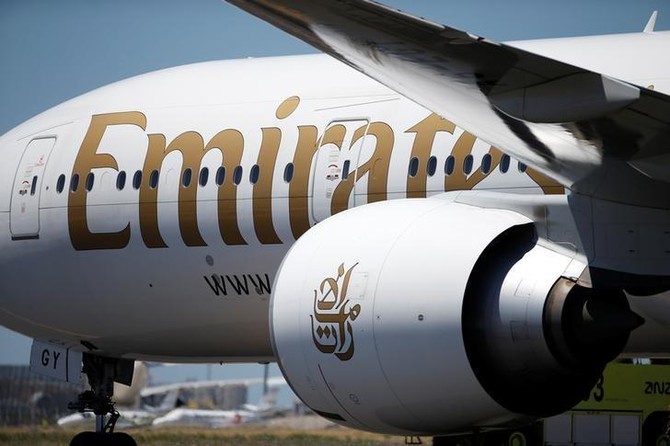
Emirates operates a wide-body fleet of 259 aircraft, flying to 157 destinations including 16 cargo-only points. (Reuters)
Updated 18 July 2017
Follow

Dubai carriers Emirates and flydubai to integrate operations

LONDON: Emirates and flydubai have confirmed plans to integrate their operations as they respond to tough competition among global airlines.
The tie up means that the pair can mop up excess capacity on both of their networks as a global glut of planes forces fares lower.
Both airlines will continue to be managed independently, but will leverage each other’s network to scale up their operations and accelerate growth, Emirates said.
The partnership goes beyond code sharing and will include network integration as well as the coordination of scheduling.
“Both airlines have grown independently and successfully over the years, and this new partnership will unlock the immense value that the complementary models of both companies can bring to consumers, each airline, and to Dubai,” said Sheikh Ahmed bin Saeed Al Maktoum, chairman and chief executive of Emirates Group and chairman of flydubai.
The two airlines also plan to develop their hub at Dubai International, aligning their systems and operations.
Emirates operates a wide-body fleet of 259 aircraft, flying to 157 destinations (including 16 cargo-only points) while flydubai has 58 new-generation Boeing 737 aircraft flying to 95 destinations. The current combined network comprises 216 unique destination points.


By 2022, the combined network of Emirates and flydubai is expected to reach 240 destinations, served by a combined fleet of 380 aircraft.
They said they were also working on a number of initiatives spanning commercial, network planning, airport operations, customer journey, and frequent flyer programs alignment.
The first enhanced code-sharing arrangements are set to be rolled out in the last quarter of 2017. Further details will be communicated as they become available.
The price of global air travel was about 10 percent cheaper in the first quarter of 2017 than a year ago after adjusting for inflation, according to data from the International Air Transport Association (IATA).
That has hurt airlines based in countries with dollar pegs because of the continued strength of the greenback, which has helped many rival European carriers offer more competitive fares.
IATA says that in seasonally adjusted terms, international traffic through the Middle East has been tracking sideways since the start of the year.
As the competitive environment heats up, Gulf carriers are being forced to take a closer look at their cost structures to fend off fare-slashing by rivals.Aggressive fare discounting by competitors, a slowing economy at home and regional instability have hit both airlines.

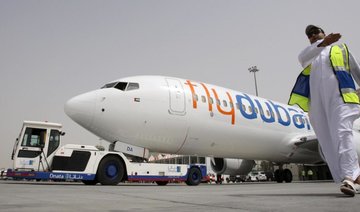
The tie up between Emirates and Flydubai means they can make better use of idle planes while also improving the connectivity they can offer clients.
But it also improves its competitive position alongside Etihad Airways and Qatar Airways by adding narrow-body planes to deploy on some routes.
“Etihad, Qatar and Turkish operate narrow-body aircraft. For a nearly direct comparison, Etihad and Qatar have been able to reach destinations Emirates cannot because it does not have smaller aircraft,” added Horton.


Closing Bell: Saudi main index closes in red at 10,947 

Updated 19 February 2026
Follow

Closing Bell: Saudi main index closes in red at 10,947 

RIYADH: Saudi Arabia’s Tadawul All Share Index dipped on Thursday, losing 208.20 points, or 1.87 percent, to close at 10,947.25. 

The total trading turnover of the benchmark index was SR4.80 billion ($1.28 billion), as 14 of the listed stocks advanced, while 253 retreated. 

The MSCI Tadawul Index decreased, down 25.35 points, or 1.69 percent, to close at 1,477.71. 

The Kingdom’s parallel market Nomu lost 217.90 points, or 0.92 percent, to close at 23,404.75. This came as 24 of the listed stocks advanced, while 43 retreated. 

The best-performing stock was Musharaka REIT Fund, with its share price up 2.12 percent to SR4.34. 

Other top performers included Al Hassan Ghazi Ibrahim Shaker Co., which saw its share price rise by 1.18 percent to SR17.20, and Saudi Industrial Export Co., which saw a 0.8 percent increase to SR2.51. 

On the downside, Abdullah Saad Mohammed Abo Moati for Bookstores Co. was among the day’s biggest decliners, with its share price falling 9.3 percent to SR39. 

National Medical Care Co. fell 8.98 percent to SR128.80, while National Co. for Learning and Education declined 6.35 percent to SR116.50. 

On the announcements front, Red Sea International said its subsidiary, the Fundamental Installation for Electric Work Co., has entered into a framework agreement with King Salman International Airport Development Co. 

In a Tadawul statement, the company noted that the agreement establishes the general terms and conditions for the execution of enabling works at the King Salman International Airport project in Riyadh.  

Under the 48-month contract, the scope of work includes the supply, installation, testing, and commissioning of all mechanical, electrical, and plumbing systems.  

Utilizing a re-measurement model, specific work orders will be issued on a call-off basis, with the final contract value to be determined upon the completion and measurement of actual quantities executed.  

The financial impact of this collaboration is expected to begin reflecting on the company’s statements starting in the first quarter of 2026, the statement said. 

The company’s share price reached SR23.05, marking a 2.45 percent decrease on the main market.