NEW YORK: US energy firms added oil rigs for a 24th week in the past 25 as the year-long drilling recovery continues but the pace of additions has slowed in recent months as crude prices declined despite efforts led by the Organization of the Petroleum Exporting Countries (OPEC) to end a global supply glut.
Drillers added seven oil rigs in the week to July 7, bringing the total count up to 763, the most since April 2015, Baker Hughes energy services company said in its closely followed report on Friday.
That compares with 351 active oil rigs during the same week a year ago. Drillers have added rigs in 54 of the past 58 weeks since the start of June 2016. The pace of those additions, however, has slowed over the past few months with the decline in crude prices with the total added over the past four weeks holding at six the lowest since January.
US crude futures were trading around $44 per barrel on Friday, putting the contract on track to fall for a sixth week in the past seven, on data showing US output continues to rise, frustrating efforts by OPEC and other producers to curb global oversupply.
After agreeing in December to cut production by around 1.8 million barrels per day (bpd) for six months from January-June 2017, OPEC and other producers in late May agreed to extend those cuts for another nine months through the end of March 2018. US oil production rose 1 percent to 9.3 million bpd last week, correcting a drop in the previous week that was due to one-off maintenance work and hurricane shutdowns.
Analysts said US shale companies would continue to drill for more oil so long as crude prices are expected to rise in future months. Futures for the balance of 2017 were trading at about $44.50 a barrel, while calendar 2018 was fetching over $46 a barrel. Analysts at Simmons & Co., energy specialists at US investment bank Piper Jaffray, forecast the total oil and gas rig count would average 887 in 2017, 1,108 in 2018 and 1,219 in 2019. Most wells produce both oil and gas. That compares with an average of 824 so far in 2017, 509 in 2016 and 978 in 2015. If correct, Simmons’ 2019 forecast would be the most since 2014 when there were 1,862 active rigs. The rig count peaked in 2012 at 1,919, according to Baker Hughes.


US drillers add oil rigs, pace remains slow: Report
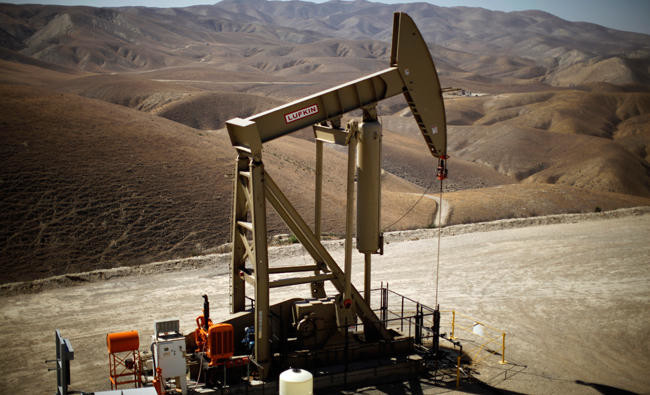
US drillers add oil rigs, pace remains slow: Report

Lebanese social entrepreneur Omar Itani recognized by Schwab Foundation
- FabricAID co-founder among 21 global recipients recognized for social innovation
DAVOS: Lebanon’s Omar Itani is one of 21 recipients of the Social Entrepreneurs and Innovators of the Year Award by the Schwab Foundation for Social Entrepreneurship.
Itani is the co-founder of social enterprise FabricAID, which aims to “eradicate symptoms of poverty” by collecting and sanitizing secondhand clothing before placing items in stores in “extremely marginalized areas,” he told Arab News on the sidelines of the World Economic Forum in Davos, Switzerland.
With prices ranging from $0.25 to $4, the goal is for people to have a “dignified shopping experience” at affordable prices, he added.
FabricAID operates a network of clothing collection bins across key locations in Lebanon and Jordan, allowing people to donate pre-loved items. The garments are cleaned and sorted before being sold through the organization’s stores, while items that cannot be resold due to damage or heavy wear are repurposed for other uses, including corporate merchandise.
Since its launch, FabricAID has sold more than 1 million items, reached 200,000 beneficiaries and is preparing to expand into the Egyptian market.
Amid uncertainty in the Middle East, Itani advised young entrepreneurs to reframe challenges as opportunities.
“In Lebanon and the Arab world, we complain a lot,” he said. Understandably so, as “there are a lot of issues” in the region, resulting in people feeling frustrated and wanting to move away. But, he added, “a good portion of the challenges” facing the Middle East are “great economic and commercial opportunities.”
Over the past year, social innovators raised a combined $970 million in funding and secured a further $89 million in non-cash contributions, according to the Schwab Foundation’s recent report, “Built to Last: Social Innovation in Transition.”
This is particularly significant in an environment of geopolitical uncertainty and at a time when 82 percent report being affected by shrinking resources, triggering delays in program rollout (70 percent) and disruptions to scaling plans (72 percent).
Francois Bonnici, director of the Schwab Foundation for Social Entrepreneurship and a member of the World Economic Forum’s Executive Committee, said: “The next decade must move the models of social innovation decisively from the margins to the mainstream, transforming not only markets but mindsets.”
Award recipients take part in a structured three-year engagement with the Schwab Foundation, after which they join its global network as lifelong members. The program connects social entrepreneurs with international peers, collaborative initiatives, and capacity-building support aimed at strengthening and scaling their work.


