BEIRUT: Turkey says it may launch a cross-border operation into the Kurdish-controlled enclave of Afrin in northern Syria if it constitutes a “constant security threat.”
Defense Minister Fikri Isik told state-run television TRT on Tuesday that Turkey’s military will continue to respond to the “slightest fire” into Turkish territory from Afrin. He spoke hours after reports that Turkey’s military retaliated overnight to fire from areas controlled by Syrian Kurdish groups.
Turkey considers the main Syrian Kurdish militia, which is supported by the United States, to be an extension of Kurdish rebels fighting in Turkey. The US views the Syrian Kurds as the most effective ground force battling the Daesh group in Syria.
Last year, Turkey sent troops into Syria to help Syrian opposition forces battling to oust Daesh militants from another border region and to curb the territorial advances of the Syrian Kurdish militia.
Isik said: “We would not abstain from doing what is necessary if Afrin becomes a constant security threat.”
The US military says allied Syrian forces have breached the wall around Raqqa’s Old City, where they are fighting to drive Daesh militants from the extremists’ self-declared capital.
Central Command said in a statement Monday that by punching through two “small portions” of the Rafiqah Wall they were able to enter the Old City while avoiding booby traps and IS snipers. It says the strikes left most of the 2,500-meter (yard) wall intact.
The Syrian Democratic Forces, a Kurdish-led militia, is battling IS in Raqqa with the help of US-led airstrikes and US special operations forces.
Several IS leaders were once based in Raqqa, where the group is believed to have plotted attacks in Europe. The loss of the northern Syrian city would deal a major blow to IS.


![]()
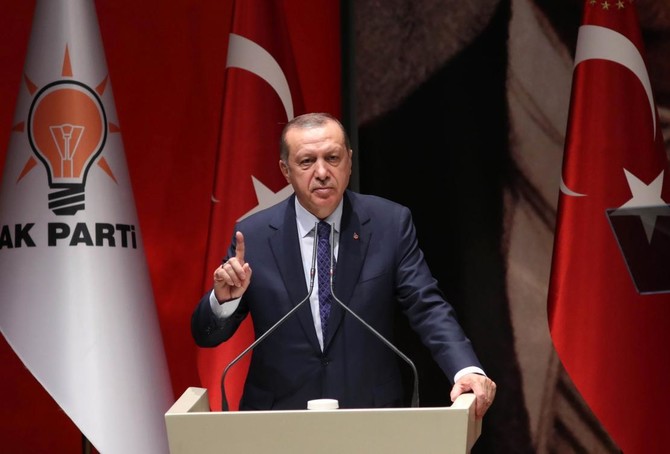

Turkey says it may strike Syrian Kurds
Turkey says it may strike Syrian Kurds
UN says 3.3 million war-displaced Sudanese return home
- International Organization for Migration reports that three-quarters of those returning came from internal displacement sites
- At its peak, the war has displaced around 14 million people both internally and across borders
KHARTOUM: More than three million Sudanese people displaced by nearly three years of war have returned home, the United Nations migration agency said on Monday, even as heavy fighting continues to tear through parts of the country.
Since April 2023, Sudan has been locked in a devastating war pitting the regular army against the paramilitary Rapid Support Forces (RSF).
The conflict has killed tens of thousands of people and created what the UN describes as the world’s largest displacement and hunger crisis. At its peak, the war had displaced around 14 million people both internally and across borders.
In a report released on Monday, the International Organization for Migration (IOM) said an estimated 3.3 million displaced Sudanese had made their way back home by November of last year.
The rise in returns follows a sweeping offensive launched by the Sudanese army in late 2024 to retake central regions seized earlier in the conflict by the RSF.
The campaign culminated in the recapture of Khartoum in March 2025, prompting many displaced families to try to go back.
According to the IOM, more than three-quarters of those returning came from internal displacement sites, while 17 percent traveled back from abroad.
Khartoum saw the largest number of returns — around 1.4 million people — followed by the central state of Al-Jazira, where roughly 1.1 million have gone back.
Earlier this month, the army-backed government announced plans to return to the capital after nearly three years of operating from the Red Sea city of Port Sudan in the country’s east.
Reconstruction work in Khartoum has been underway since the army retook the city.
Although Khartoum and several army-held cities in central and eastern Sudan have seen a relative lull in fighting, the RSF has continued to launch occasional drone strikes, particularly targeting infrastructure.
Elsewhere, violence remains intense.
In the country’s south, RSF forces have pushed deeper into the Kordofan region after seizing the army’s final stronghold in Darfur last October.
Reports of mass killings, rape, abductions and looting emerged after El-Fasher’s paramilitary takeover, and the International Criminal Court launched a formal investigation into “war crimes” by both sides.
Since April 2023, Sudan has been locked in a devastating war pitting the regular army against the paramilitary Rapid Support Forces (RSF).
The conflict has killed tens of thousands of people and created what the UN describes as the world’s largest displacement and hunger crisis. At its peak, the war had displaced around 14 million people both internally and across borders.
In a report released on Monday, the International Organization for Migration (IOM) said an estimated 3.3 million displaced Sudanese had made their way back home by November of last year.
The rise in returns follows a sweeping offensive launched by the Sudanese army in late 2024 to retake central regions seized earlier in the conflict by the RSF.
The campaign culminated in the recapture of Khartoum in March 2025, prompting many displaced families to try to go back.
According to the IOM, more than three-quarters of those returning came from internal displacement sites, while 17 percent traveled back from abroad.
Khartoum saw the largest number of returns — around 1.4 million people — followed by the central state of Al-Jazira, where roughly 1.1 million have gone back.
Earlier this month, the army-backed government announced plans to return to the capital after nearly three years of operating from the Red Sea city of Port Sudan in the country’s east.
Reconstruction work in Khartoum has been underway since the army retook the city.
Although Khartoum and several army-held cities in central and eastern Sudan have seen a relative lull in fighting, the RSF has continued to launch occasional drone strikes, particularly targeting infrastructure.
Elsewhere, violence remains intense.
In the country’s south, RSF forces have pushed deeper into the Kordofan region after seizing the army’s final stronghold in Darfur last October.
Reports of mass killings, rape, abductions and looting emerged after El-Fasher’s paramilitary takeover, and the International Criminal Court launched a formal investigation into “war crimes” by both sides.
Latest updates




© 2026 SAUDI RESEARCH & PUBLISHING COMPANY, All Rights Reserved And subject to Terms of Use Agreement.