JEDDAH: As the week-long Qatari crisis drags on without a clear commitment from Doha to renounce terrorism, three Gulf states announced on Sunday a humanitarian gesture to help families with Qatari members.
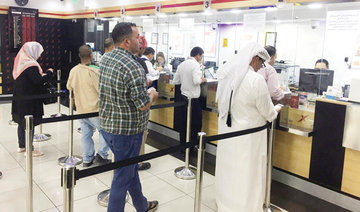
Saudi Arabia, Bahrain and the UAE announced hotlines to help affected families, as Saudi Deputy Crown Prince Mohammed bin Salman discussed efforts to “counterterrorism and extremism” in a phone call with US Secretary of State Rex Tillerson, the Saudi Press Agency (SPA) reported.
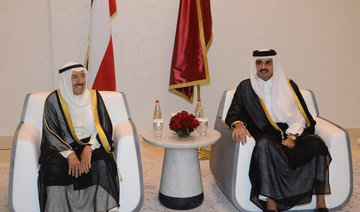
Kuwait, which is trying to mediate a solution to the regional crisis, on Sunday said Qatar is ready to listen to the concerns of Gulf states that have cut diplomatic and economic ties.
Kuwait “affirms the readiness of the brothers in Qatar to understand the reality of the qualms and concerns of their brothers and to heed the noble endeavors to enhance security and stability,” Kuwait’s state news agency KUNA quoted Foreign Minister Sheikh Sabah Al-Khalid Al-Sabah as saying.
Kuwait, which has retained ties with Qatar and has often acted as a mediator in regional disputes, said it wanted to resolve the dispute “within the unified Gulf house.”
In another development Sunday, Iran sent four cargo planes of food to Doha. Five aircraft carrying around 90 tons of vegetables each had been sent to Qatar in recent days, said Iran Air spokesman Shahrokh Noushabadi, adding: “We will continue deliveries as long as there is demand.”
In addition, African Union (AU) Chairman Alpha Conde on Sunday put himself forward as a mediator in the crisis, and urged dialogue after several African nations recalled their ambassadors to Qatar.
Conde, who is president of Guinea, which has close ties to Saudi Arabia, said in a letter to King Salman that he had observed with “sadness” the feud between Qatar and its Gulf neighbors, which he described as “brother countries” of Muslim-majority Guinea.
“Only dialogue will allow us to reach a real compromise,” Conde added in the letter, praising King Salman’s “wisdom” and “know-how” in battling extremism.
In another setback for Doha, the world soccer body FIFA removed a Qatari referee from a 2018 World Cup qualifier following a request from the UAE.
The Zurich-based organization said it agreed with the UAE that the Qataris due to officiate the game against Thailand in Bangkok on Tuesday should be replaced.
Instead, a referee from Singapore will take charge of the qualifier for next year’s tournament in Russia. He will be assisted by a fellow Singaporean and two officials from Malaysia.
— With input from Reuters, AFP, AP

Gulf states announce humanitarian gesture to help families with Qatari members
Iran government stages mass rallies as alarm grows over protest toll
PARIS: Iranian authorities on Monday sought to regain control of the streets with mass nationwide rallies in the wake of protests on a scale unprecedented in recent years, as alarm grew over a deadly crackdown.
The foreign minister said Iran was ready for both war and talks after repeated threats from Washington to intervene militarily over the crackdown on protests, which activists fear has left at least hundreds dead.
Over two weeks of demonstrations initially sparked by economic grievances have turned into one of the biggest challenges yet to the theocratic system that has ruled Iran since the 1979 Islamic revolution ousted the shah.
In a sign of the severity of the crisis, the authorities have imposed an Internet blackout lasting more than three-and-a-half days that activists say is aimed at masking the extent of the crackdown.
Seeking to regain the initiative, the government called for rallies nationwide backing the Islamic republic on Monday.
Thousands of people filled the capital’s Enghelab (Revolution) Square brandishing the national flag as prayers were read for victims of what the government has termed “riots,” state TV showed.
Addressing the crowds, parliament speaker Mohammad Bagher Ghalibaf said Iran is fighting a “four-front war,” listing economic war, psychological war, “military war” with the United States and Israel and “today a war against terrorists,” referring to the protests.
Flanked by the slogans “Death to Israel, Death to America” in Persian, he vowed the Iranian military would teach US President Donald Trump “an unforgettable lesson” if Iran were attacked.
Trump said Sunday that Iran’s leadership under Ayatollah Ali Khamenei, in power since 1989 and now 86, had called him seeking “to negotiate” after he repeatedly threatened to intervene militarily if Tehran killed protesters.
“The Islamic Republic of Iran is not seeking war but is fully prepared for war,” Foreign Minister Abbas Araghchi told a conference of foreign ambassadors in Tehran broadcast by state television.
“We are also ready for negotiations but these negotiations should be fair, with equal rights and based on mutual respect.”
Foreign ministry spokesman Esmaeil Baghaei said a channel of communication is open between Araghchi and Trump’s special envoy for the Middle East Steve Witkoff despite the lack of diplomatic relations.
Meanwhile, the foreign minister of Oman, which has on occasion acted as a mediator, met Araghchi in Tehran on Saturday.
Soaring toll
The European Union has voiced support for the protesters and on Monday said it was “looking into” imposing additional sanctions on Iran over the repression of demonstrations.
Iran’s shutdown of the Internet has now lasted more than 84 hours, said monitor Netblocks. The blackout has severely affected the ability of Iranians to post videos of the protests that have rocked big cities since Thursday.
A video circulating on Sunday showed dozens of bodies outside a morgue south of Tehran.
The footage, geolocated by AFP to the district of Kahrizak, showed bodies wrapped in black bags, with what appeared to be grieving relatives searching for loved ones.
The Norway-based NGO Iran Human Rights (IHR) said it confirmed the killing of at least 192 protesters but that the actual toll could be much higher.
“Unverified reports indicate that at least several hundreds, and according to some sources, more than 2,000 people, may have been killed,” said IHR.
More than 2,600 protesters have been arrested, IHR estimated.
The US-based Human Rights Activists News Agency said it had confirmed the deaths of 544 people.
Iranian state media has said dozens of members of the security forces have been killed, with their funerals turning into large pro-government rallies. The government has declared three days of national mourning for those killed.
State outlets were at pains to present a picture of calm returning, broadcasting images of smooth-flowing traffic.
Tehran Governor Mohammad-Sadegh Motamedian insisted in televised comments that “the number of protests is decreasing.”
’Stand with the people’
Reza Pahlavi, the US-based son of Iran’s ousted shah, urged Iran’s security forces and government workers to join the protests against the authorities.
“Employees of state institutions, as well as members of the armed and security forces, have a choice: stand with the people and become allies of the nation, or choose complicity with the murderers of the people,” he said in a social media post.
He also urged protesters to replace the flags outside Iranian embassies.
“The time has come for them to be adorned with Iran’s national flag,” he said.
The ceremonial, pre-revolution flag has become an emblem of the global rallies that have mushroomed in support of Iran’s demonstrators.
The foreign minister said Iran was ready for both war and talks after repeated threats from Washington to intervene militarily over the crackdown on protests, which activists fear has left at least hundreds dead.
Over two weeks of demonstrations initially sparked by economic grievances have turned into one of the biggest challenges yet to the theocratic system that has ruled Iran since the 1979 Islamic revolution ousted the shah.
In a sign of the severity of the crisis, the authorities have imposed an Internet blackout lasting more than three-and-a-half days that activists say is aimed at masking the extent of the crackdown.
Seeking to regain the initiative, the government called for rallies nationwide backing the Islamic republic on Monday.
Thousands of people filled the capital’s Enghelab (Revolution) Square brandishing the national flag as prayers were read for victims of what the government has termed “riots,” state TV showed.
Addressing the crowds, parliament speaker Mohammad Bagher Ghalibaf said Iran is fighting a “four-front war,” listing economic war, psychological war, “military war” with the United States and Israel and “today a war against terrorists,” referring to the protests.
Flanked by the slogans “Death to Israel, Death to America” in Persian, he vowed the Iranian military would teach US President Donald Trump “an unforgettable lesson” if Iran were attacked.
Trump said Sunday that Iran’s leadership under Ayatollah Ali Khamenei, in power since 1989 and now 86, had called him seeking “to negotiate” after he repeatedly threatened to intervene militarily if Tehran killed protesters.
“The Islamic Republic of Iran is not seeking war but is fully prepared for war,” Foreign Minister Abbas Araghchi told a conference of foreign ambassadors in Tehran broadcast by state television.
“We are also ready for negotiations but these negotiations should be fair, with equal rights and based on mutual respect.”
Foreign ministry spokesman Esmaeil Baghaei said a channel of communication is open between Araghchi and Trump’s special envoy for the Middle East Steve Witkoff despite the lack of diplomatic relations.
Meanwhile, the foreign minister of Oman, which has on occasion acted as a mediator, met Araghchi in Tehran on Saturday.
Soaring toll
The European Union has voiced support for the protesters and on Monday said it was “looking into” imposing additional sanctions on Iran over the repression of demonstrations.
Iran’s shutdown of the Internet has now lasted more than 84 hours, said monitor Netblocks. The blackout has severely affected the ability of Iranians to post videos of the protests that have rocked big cities since Thursday.
A video circulating on Sunday showed dozens of bodies outside a morgue south of Tehran.
The footage, geolocated by AFP to the district of Kahrizak, showed bodies wrapped in black bags, with what appeared to be grieving relatives searching for loved ones.
The Norway-based NGO Iran Human Rights (IHR) said it confirmed the killing of at least 192 protesters but that the actual toll could be much higher.
“Unverified reports indicate that at least several hundreds, and according to some sources, more than 2,000 people, may have been killed,” said IHR.
More than 2,600 protesters have been arrested, IHR estimated.
The US-based Human Rights Activists News Agency said it had confirmed the deaths of 544 people.
Iranian state media has said dozens of members of the security forces have been killed, with their funerals turning into large pro-government rallies. The government has declared three days of national mourning for those killed.
State outlets were at pains to present a picture of calm returning, broadcasting images of smooth-flowing traffic.
Tehran Governor Mohammad-Sadegh Motamedian insisted in televised comments that “the number of protests is decreasing.”
’Stand with the people’
Reza Pahlavi, the US-based son of Iran’s ousted shah, urged Iran’s security forces and government workers to join the protests against the authorities.
“Employees of state institutions, as well as members of the armed and security forces, have a choice: stand with the people and become allies of the nation, or choose complicity with the murderers of the people,” he said in a social media post.
He also urged protesters to replace the flags outside Iranian embassies.
“The time has come for them to be adorned with Iran’s national flag,” he said.
The ceremonial, pre-revolution flag has become an emblem of the global rallies that have mushroomed in support of Iran’s demonstrators.
© 2026 SAUDI RESEARCH & PUBLISHING COMPANY, All Rights Reserved And subject to Terms of Use Agreement.