MEXICO CITY: German Chancellor Angela Merkel said on Friday she was concerned about the situation in Qatar, adding that all Gulf nations, and also Iran and Turkey, should work together to resolve the regional dispute.
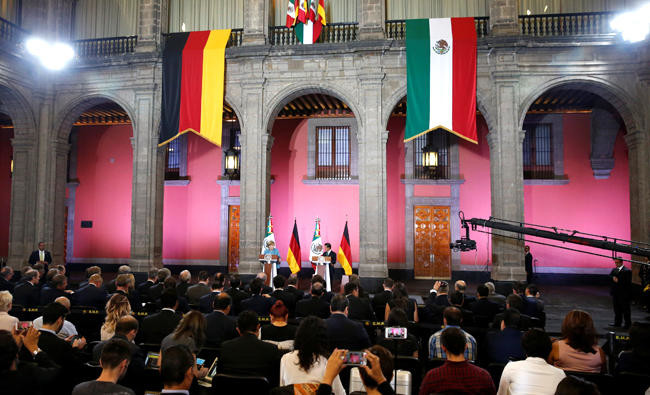
Merkel, who was speaking in Mexico City alongside Mexican President Enrique Pena Nieto, said it would be impossible to sort out the “very unsettling” situation unless all regional actors were involved. She added that it was vital the states of the Gulf Cooperation Council (GCC) worked together to end the crisis.
“We have to see that the political solution of conflicts... such as the situation in Syria, such as the situation in Libya or the situation in Iraq, won’t happen if certain players are no longer even included in the conversation, and that includes Qatar, it includes Turkey, it includes Iran,” she said.
Merkel said she wanted the balance of power to be maintained “sensibly” in the region, and that combating terrorism would be on the agenda when G-20 leaders meet next month in Hamburg.
Arab states tightened their squeeze on Qatar by putting dozens of figures with links to the country on terrorism blacklists, while its ally, Turkey, rushed to its side with plans to send troops.
The Pentagon said the blockade was hindering US ability to plan for long-term operations in the region.
US Secretary of State Rex Tillerson said he expected all parties to find a resolution.
Meanwhile, Egypt President Abdel-Fattah El-Sisi praised US President Donald Trump for his role in “the formation of a united front to combat terrorism” after he called on Qatar to stop its financial support of extremist groups.
El-Sisi’s praise-filled phone call Saturday came after Trump echoed accusations made against Qatar by a Saudi-led group that cut diplomatic ties with the small country earlier this week.
El-Sisi thanked Trump for his participation in a counter-terrorism summit in Riyadh last May, in which he abandoned some of the harsh anti-Muslim rhetoric of his presidential campaign and vowed to fight terrorism in partnership with Middle East leaders.
The escalating crisis in the Arabian Gulf erupted this week when Saudi Arabia, the UAE, Egypt and Bahrain cut diplomatic ties with Qatar.
Niger said Saturday it had recalled its ambassador to Qatar in solidarity with the countries that have cut ties with Doha.
Some African countries have cautiously come out in support of attempts to isolate Qatar.
Mauritania, an Arab League member, cut ties on Tuesday and central African oil producer Gabon condemned Qatar for failing “on counter-terrorism.”
Senegal has said it would recall its ambassador in Qatar and expressed its “active solidarity.”


![]()
All Gulf nations, Iran, Turkey must work to ease Doha standoff: Merkel
All Gulf nations, Iran, Turkey must work to ease Doha standoff: Merkel
Latest updates


Recommended


© 2026 SAUDI RESEARCH & PUBLISHING COMPANY, All Rights Reserved And subject to Terms of Use Agreement.