With recovery still very slow for Egypt’s tourism industry — the coastal resorts among the hardest hit — most travelers coming to Egypt these days arrive in the capital, Cairo.
Usually this is for business or transit, which often means they have little more than a couple of days to explore one of the world’s most exciting cities. In a city with a population of over 20 million this can feel a tad overwhelming, so to make it easier to get the most out of Al-Madinah Al-Qahir — The City Victorious – here is a guide on how to spend 48 hours in Cairo.
DAY ONE
Cairo is home to one of the world’s most ancient Christian cultures and it is what makes this city like no other in the Arab world. A trip to Coptic Cairo isn’t just fascinating for the window into an ancient Christian culture it offers, but also because of just how much of the art and architecture of that culture mirrors classical Muslim ones.
Start at the seventh century Hanging Church, which is said to “hang” over the original water gate of Roman Babylon. Here, the art history lesson begins outside the courtyard; where to the left of the entrance is a beautiful ornamental balcony that seems to have been designed for a classical Moorish palace. Then there are the intricate stone carvings and geometric patterns on the heavy wooden door that could also have been borrowed from that palace.
Once inside, the courtyard’s mosaics of religious scenes also have a familiar echo. In one, a group of young men stand outside a church wearing white skull caps and thobe-like outfits holding crosses — replace the church with a mosque and the crosses with Qur’ans and it could be a scene outside a mosque from anywhere in the Muslim world.
The church itself is entered through a door carved with geometric star patterns that also seem classically Moorish. Inside, the ornate hanging lanterns, ivory-inlaid screens and floral-topped pillars are features seen in mosques all over Cairo. Admiring these wonderful commonalities will take a good few hours and should be followed by a visit to the equally fascinating Coptic museum next door.
In the late afternoon head downtown to Cafe Riche on Sharia Talaat Harb. This is one of Cairo’s oldest restaurants, and an excellent place to grab a late lunch or early dinner as you admire the greats of Egyptian culture. Once the favored drinking spot of the capital’s intelligentsia, the cultural tour at Cafe Riche starts outside its wooden, old-worldly facade. Here, behind glass frames, beautiful black and white photography offer a window into a Cairo from the same bygone eras Cafe Riche belongs to. After tucking into the delightful sambosa (meat-filled mini pastries) and fish fingers — made from fresh chunks of delicately spiced white fish — be sure to stick your head into the back room where huge black and white portraits of Egypt’s cultural who’s who hang beside intriguing cartoon caricatures.
In the afternoon, explore the quirky streets of downtown Cairo before heading to Dina’s Hostel on Sharia Abdel Khalek Sarwat for your bed for the night. Tucked away in a quiet, cool alleyway, Dina’s has entered modern Cairo history after becoming a hub for journalists during the 2011 revolution. The hostel continues to host weekly cultural lectures and exhibitions that are worth inquiring about. Rooms here are spacious, with beautiful oak flooring and solid wood furniture. Dina’s is on the fifth floor of a beautiful 250-year-old building with the most delightful little wooden elevator to take you there.
However, the best thing about Dina’s has to be the guests. Popular with eclectic, international and boho types, this is the only place in Cairo where you are likely to find yourself in conversation with an English researcher, a Japanese spiritual hippie and an American couch surfer all in one night.
DAY TWO
Get up bright and early to do the pyramids. That way you will avoid the intensity of the sun as it climbs to its midday zenith during your visit to the world’s only remaining ancient wonder — shade is scarce here. Arrive armed with plenty of water and a sun hat, before heading into one of the neighborhoods of Giza that directly border the pyramid complex. There, grab yourself a local guide with a camel and negotiate a decent price — not only will you avoid the queues but you also get to see the site much quicker than you will by foot, leaving you more time to explore the rest of Cairo. Of course, the main reason you should experience the pyramids atop your very own “ship of the desert” is because it is the way man has done so since the enigmatic monuments were first built — gently swaying atop a dromedary as the Sphinx comes into view is exactly how Antipater of Sidon and Philo of Byzantium would have first set eyes upon this magical Pharaonic graveyard, before instantly putting it on their list of the Seven Wonders of the World. No trip to Cairo can possibly be complete without seeing the pyramids of Giza.
After a well-earned rest, make the afternoon and evening all about Cairo’s 14th century medieval bazaar, the Khan Al-Khalili. Once the location of the tomb of the Fatimids — Cairo’s founders — the Khan has been a caravanserai for the past seven centuries. Like most traditional great markets, it used to be divided into distinct specialist districts. But these days only the spice dealers, coppersmiths and gold sellers have their own areas. Among the landmarks to visit is Midaq Alley, where Cairene Nobel Laureate, Naguib Mahfouz, set one of his best-known works. The alley is so famous now that to see its street sign you’ll have to pay a little baksheesh at the nearby coffeehouse. The other reason to come to the Khan is the historic ahwa, El-Fishawi’s, where you can enjoy a coffee and bubbling sheesha the way Cairenes have been doing since 1773.
Squeezed into a narrow alley off Midan Al-Hussein, sit back and enjoy the bazaar as it continues to come at you with hawkers seemingly appearing from nowhere to offer you everything from fake Ray-Ban sunglasses to an oud serenade. Fishawi’s also serves the most delicious version of sahlab, a traditional Egyptian winter drink made from creamy milk and topped with peanuts and a hint of coconut.
• [email protected]


![]()
![]()
![]()
![]()
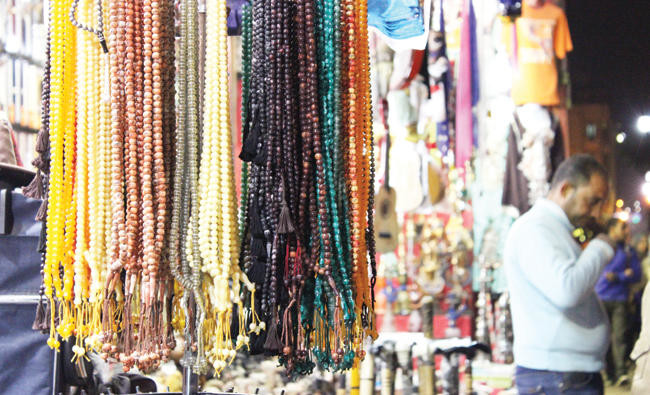
48 hours in Cairo: To experience the Egyptian city’s old-world vibe or simply to see the pyramids requires just two days

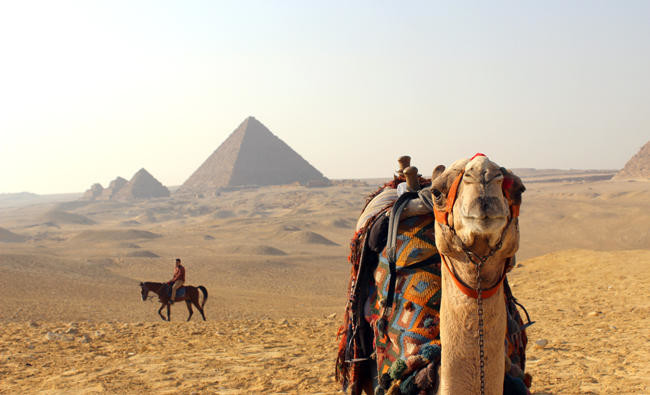

48 hours in Cairo: To experience the Egyptian city’s old-world vibe or simply to see the pyramids requires just two days
Latest updates




© 2026 SAUDI RESEARCH & PUBLISHING COMPANY, All Rights Reserved And subject to Terms of Use Agreement.