JEDDAH: A diplomatic crisis of unprecedented scale erupted in the Gulf and wider region Monday, as eight governments dramatically cut ties with Qatar over its alleged support for extremist groups.
Residents of Qatar were seen “panic buying” and some supermarket shelves stood empty after Saudi Arabia, Bahrain, Egypt, the UAE and other countries announced they would withdraw diplomatic staff from Qatar.
The move saw Qatar’s only land border closed and air and sea links cut by the four Arab countries. As well as closing all transport links with Qatar, Saudi Arabia, the UAE and Bahrain also gave Qatari visitors and residents two weeks to leave.
In a statement carried by the Saudi Press Agency (SPA), Saudi Arabia said Qatari troops would be pulled from the ongoing war in Yemen. Qatar is part of the Arab Coalition backing the UN-recognized government of President Abed Rabbo Mansour Hadi in its war with Iran-backed Houthis and their allies.
SPA said Saudi Arabia has taken this “crucial action as a result of serious violations by the authorities in Doha, privately and publicly, over the past years to encourage dissent and sectarianism in the Kingdom.”
Riyadh accused Qatar of “backing terrorist groups in the province of Qatif, Saudi Arabia, and in the Kingdom of Bahrain and the financing and the adoption of harboring extremists who seek to strike the stability and unity of the nation at home and abroad.”
It specifically mentioned Qatar’s alleged support of the Muslim Brotherhood and Daesh extremists. Riyadh also accused Qatari media of trying to undermine the Saudi-led coalition in its fight against Iran-backed Houthis in Yemen.
Egypt accused Qatar of supporting “terrorist” organizations, including the Muslim Brotherhood, Egypt’s state news agency reported.
The UAE gave diplomats 48 hours to leave the country, citing Qatari “support, funding and embrace of terrorist, extremist and sectarian organizations,” according to the state news agency WAM.
Four other governments also moved to sever ties with Qatar, namely Yemen’s internationally recognized government, Libya’s eastern-based government, the Maldives and Mauritius. 
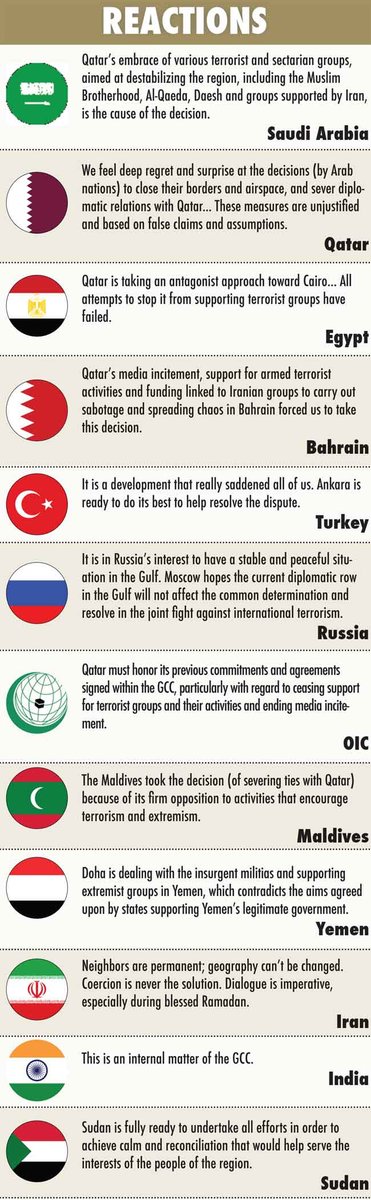
Qatar on Monday criticized the decisions of its neighbors to cut ties, saying the move was “unjustified” and aimed to put Doha under political “guardianship.”
“The measures are unjustified and are based on false and baseless claims,” the Qatari foreign ministry said in a statement, referring to the unprecedented steps taken by Saudi Arabia, Bahrain, the United Arab Emirates and Egypt.
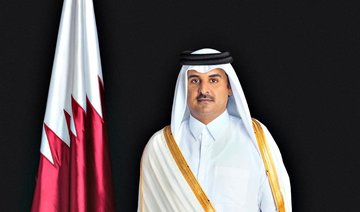
But the move had an immediate impact on Qatar, with a plunge in its stock market and several airlines declaring suspension of all Qatar-bound flights. These include Saudi Arabian Airlines, locally known as Saudia, and the UAE carriers Emirates, Etihad, Flydubai and Air Arabia.
Qatar Airways, too, said on its official website that it had suspended all flights to Saudi Arabia.
Diplomatic tensions were already at a high after Qatar alleged in late May that hackers took over the site of its state-run news agency and published what it called fake comments made by the ruling emir about Iran and other sensitive topics.
Its Gulf Arab neighbors responded by blocking Qatari-based media, including the Doha-based satellite news network Al-Jazeera.
— With input from AP, Reuters

Doha in distress: how the crisis unfolded
France, allies preparing bid to ‘gradually’ reopen Strait of Hormuz: Macron
ABOARD FRENCH AIRCRAFT CARRIER CHARLES DE GAULLE: France and its allies are preparing a “defensive” mission to reopen the strategically vital Strait of Hormuz, President Emmanuel Macron said Monday as the Middle East war entered its second week.
The French leader landed by helicopter on the Charles de Gaulle aircraft carrier, dispatched to the Mediterranean after US-Israeli strikes on Iran on February 28 triggered a war that has sown regional chaos and which threatens to spill into other parts of the world.
Macron said during a visit to Cyprus earlier in the day that the Hormuz mission would be aimed at escorting container ships and tankers in order to gradually reopen the strait “after the end of the hottest phase of the conflict.”
“This is essential for international trade, but also for the flow of gas and oil, which must be able to leave this (Gulf) region once again,” Macron said during a visit to the island to discuss regional security.
Speaking alongside Cypriot President Nikos Christodoulides and Greek Prime Minister Kyriakos Mitsotakis, Macron said a “purely defensive, purely support mission” will be put together by European and non-European states.
The European Union on Monday said it was ready to “enhance” its operations to protect maritime traffic in the Middle East.
The EU has been discussing reinforcing its naval mission in the Red Sea after the US-Israeli attacks on Iran triggered a broader regional war.
Maritime traffic in the Strait of Hormuz, a key Gulf waterway through which a fifth of global crude passes, has all but halted since the war broke out.
Macron visited Cyprus after the EU member was targeted by Iranian-made drones last week.
The French leader said an attack on Cyprus was an attack on all of Europe.
“When Cyprus is attacked, it is Europe that is attacked,” he said.
The drone attack in Cyprus led to France’s deployment of the Charles de Gaulle carrier to the Mediterranean, as well as a frigate and air defense units to the island.
Paris has insisted its stance in the region is “strictly defensive.”
- Bombing won’t bring change -
The initial US-Israeli strikes on Iran killed supreme leader Ali Khamenei, and the Islamic republic on Monday named his son, Mojtaba Khamanei, as his successor — an appointment US President Donald Trump said he was “not happy” with.
Aboard the Charles de Gaulle, Macron said the conflict’s duration depended on what US-Israeli objectives were, warning that “profound” changes to the Iranian leadership could not occur “through American-Israeli bombings alone.”
“We are putting ourselves in a position to last,” he said, adding that the war, “in this intense phase,” could last “several days, perhaps several weeks.”
The flagship Charles de Gaulle may eventually be deployed to the Strait of Hormuz as part of the announced mission, Macron said.
A French frigate was already taking part in the EU’s Operation Aspides, which was launched in the Red Sea in 2024 to prevent attacks on trade vessels by Iran-backed Houthi rebel forces.
Macron earlier said that France would contribute “in the long term” with two frigates to Operation Aspides.
“What we want to do is to ensure freedom of navigation and maritime security,” he said.
Separately, the French president on Monday morning spoke to Israeli Prime Minister Benjamin Netanyahu about the situation in the Middle East and Lebanon, the Elysee said.
The French leader landed by helicopter on the Charles de Gaulle aircraft carrier, dispatched to the Mediterranean after US-Israeli strikes on Iran on February 28 triggered a war that has sown regional chaos and which threatens to spill into other parts of the world.
Macron said during a visit to Cyprus earlier in the day that the Hormuz mission would be aimed at escorting container ships and tankers in order to gradually reopen the strait “after the end of the hottest phase of the conflict.”
“This is essential for international trade, but also for the flow of gas and oil, which must be able to leave this (Gulf) region once again,” Macron said during a visit to the island to discuss regional security.
Speaking alongside Cypriot President Nikos Christodoulides and Greek Prime Minister Kyriakos Mitsotakis, Macron said a “purely defensive, purely support mission” will be put together by European and non-European states.
The European Union on Monday said it was ready to “enhance” its operations to protect maritime traffic in the Middle East.
The EU has been discussing reinforcing its naval mission in the Red Sea after the US-Israeli attacks on Iran triggered a broader regional war.
Maritime traffic in the Strait of Hormuz, a key Gulf waterway through which a fifth of global crude passes, has all but halted since the war broke out.
Macron visited Cyprus after the EU member was targeted by Iranian-made drones last week.
The French leader said an attack on Cyprus was an attack on all of Europe.
“When Cyprus is attacked, it is Europe that is attacked,” he said.
The drone attack in Cyprus led to France’s deployment of the Charles de Gaulle carrier to the Mediterranean, as well as a frigate and air defense units to the island.
Paris has insisted its stance in the region is “strictly defensive.”
- Bombing won’t bring change -
The initial US-Israeli strikes on Iran killed supreme leader Ali Khamenei, and the Islamic republic on Monday named his son, Mojtaba Khamanei, as his successor — an appointment US President Donald Trump said he was “not happy” with.
Aboard the Charles de Gaulle, Macron said the conflict’s duration depended on what US-Israeli objectives were, warning that “profound” changes to the Iranian leadership could not occur “through American-Israeli bombings alone.”
“We are putting ourselves in a position to last,” he said, adding that the war, “in this intense phase,” could last “several days, perhaps several weeks.”
The flagship Charles de Gaulle may eventually be deployed to the Strait of Hormuz as part of the announced mission, Macron said.
A French frigate was already taking part in the EU’s Operation Aspides, which was launched in the Red Sea in 2024 to prevent attacks on trade vessels by Iran-backed Houthi rebel forces.
Macron earlier said that France would contribute “in the long term” with two frigates to Operation Aspides.
“What we want to do is to ensure freedom of navigation and maritime security,” he said.
Separately, the French president on Monday morning spoke to Israeli Prime Minister Benjamin Netanyahu about the situation in the Middle East and Lebanon, the Elysee said.
© 2026 SAUDI RESEARCH & PUBLISHING COMPANY, All Rights Reserved And subject to Terms of Use Agreement.


