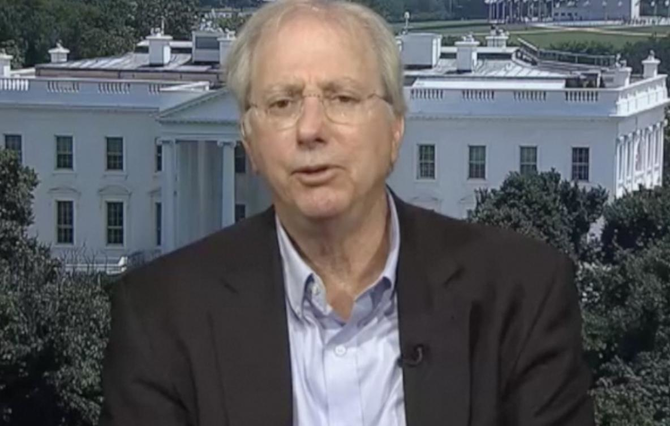
JEDDAH: The Trump administration may be prepared to leave Al-Udeid air base in Qatar if Doha does not change certain policies, US diplomat Dennis Ross told Sky News Arabia on Wednesday.
“I wouldn’t be surprised at all if there’s some discussion internally in the Trump administration to make it clear to Qatar that if need be, we’re prepared even to move (from) the base,” said Ross, who served under former presidents George H.W. Bush, Bill Clinton and Barack Obama.
Al-Udeid serves as a logistics, command and basing hub for US operations in Afghanistan and Iraq. Qatar spent more than $1 billion to construct the air base in the 1990s.
“When I was in the Obama administration… I wanted us to make it clear that just because we have a big base there doesn’t mean… we’re going to turn a blind eye to what they (Qatar) are doing,” said Ross, who was special adviser for the Gulf and Southwest Asia to former Secretary of State Hillary Clinton.
Ross cited Qatar’s involvement in Libya, and its support for the Muslim Brotherhood, the Palestinian Hamas movement and other Islamist groups.
“My guess is they (the Trump administration) will deal directly with Qatar and give Qatar a chance to correct its approach and to realize you really can’t have it both ways. You can’t on the one hand be fighting terror and trying to choke off the money for it, and at the same time be promoting these very groups that contribute to it,” he said.
“So something, I think, will have to give, and I hope the Trump administration will be very clear with the Qataris and that the Qataris will make a choice.”
Doha has tried to be a “bridge” between the Brotherhood on the one hand, and the US and some of the Gulf states on the other, said Ross.
“If you’re going to be a bridge, there has to be some demonstration that… that role is actually producing some outcome… (that) it’s changing the behavior (of) the Muslim Brotherhood, but we don’t see any evidence of that,” said Ross, adding that the group’s behavior “hasn’t changed one iota.”
He added: “There has to be an unmistakable change… Doha can’t be a place where the Muslim Brotherhood knows they can always count on financial support… and have a kind of sanctuary.”