DAKAR: Spiraling violence in central Democratic Republic of Congo has disrupted farming and shut down health centers, leaving hundreds of thousands of children vulnerable to life-threatening malnutrition, UNICEF said on Wednesday.
An insurrection against the government in the central Greater Kasai region has left hundreds dead and uprooted more than 1 million people since last July, with the UN warning of a “dramatically deteriorating” humanitarian situation.
In Central Kasai — one of the region’s five provinces — more than a third of health centers have been forced to close due to insecurity, while food supplies are dwindling, and hygiene and sanitation conditions are worsening, according to UNICEF.
The conflict has left an estimated 400,000 children in the region facing severe acute malnutrition, the UN agency said.
“These children are among the most vulnerable in the country, and now they face a looming crisis if access to basic services is not restored quickly,” UNICEF’s Regional Director Marie-Pierre Poirier said in a statement.
Reaching these children in Greater Kasai’s remote areas, identifying those who are malnourished and providing therapeutic food is challenging given the insecurity, UNICEF said.
Even before the recent surge in violence, the region was one of the poorest in Congo.
More than one in 10 children in the region die before the age of five due to a lack of adequate health care, and half suffer from chronic malnutrition or stunting, UNICEF said.
Ethnic violence in Congo, Africa’s second-largest country, has spread and worsened since December when President Joseph Kabila refused to step down at the end of his mandate.
Analysts fear growing violence could spark a repeat of the conflicts between 1996 and 2003, mostly in the east, in which millions died, mainly from hunger and disease.
The conflict has forced at least 1.5 million people to flee their homes within Congo so far this year — more than triple the number uprooted within Syria and five times the number within Iraq, the Norwegian Refugee Council said this week.
The total number of displaced throughout Congo has more than doubled to 3.7 million since August 2016, with 1.3 million of them uprooted within the Kasai region, according to the UN Office for Humanitarian Affairs (OCHA).
The UN has received just 19 percent of the $812.5 million sought in the humanitarian appeal for Congo this year, the UN’s Financial Tracking Service shows.


![]()
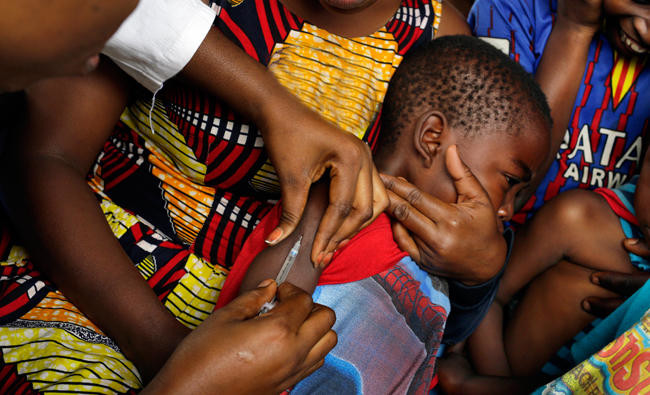
Violence in central Congo leaves 400,000 children prey to deadly malnutrition — UN
Violence in central Congo leaves 400,000 children prey to deadly malnutrition — UN
Latest updates


© 2026 SAUDI RESEARCH & PUBLISHING COMPANY, All Rights Reserved And subject to Terms of Use Agreement.