Madinah governor congratulates king on Riyadh summit success

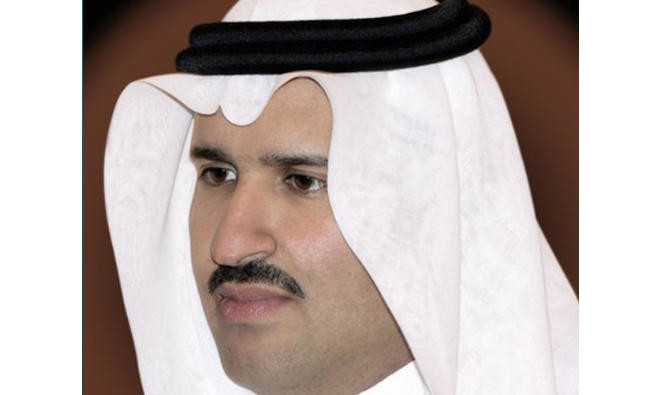
Prince Faisal bin Salman
Updated 23 May 2017
Follow

Madinah governor congratulates king on Riyadh summit success

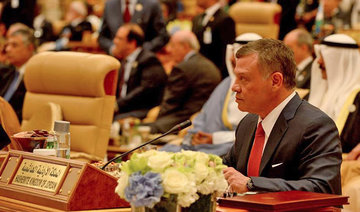
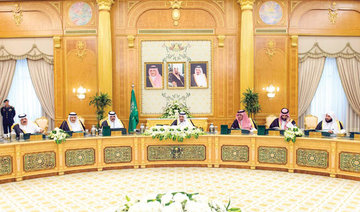
JEDDAH: Madinah Gov. Prince Faisal bin Salman has congratulated King Salman on the success of the Arab-Islamic-American Summit that was concluded Monday in Riyadh.
“From the first capital of Islam, the city of the Prophet, peace be upon him, the founder of the principle of co-existence, tolerance and moderation, I extend to Your Highness the highest congratulations,” he said in a statement.
The summit strengthens regional security and stability, and enhances the wellbeing of all Arab and Islamic peoples, he added.
The summit “sought unity and the steering of united efforts toward a practical vision that aims to augment mutual respect, and solid cooperation in all that benefit the region and its peoples,” the prince said.
“It is an honor for me to congratulate you on your role in the success of this summit embodied in boosting Saudi-US relations and leading it forward to wider horizons and deeper roots.”
Expanded, stronger Saudi-US relations “would reflect positively on the region and the position of the forces of moderation,” he said.
The summit’s success “is another proof of the status of the Kingdom of Saudi Arabia and your wise leadership,” he added.
“We are all soldiers at your service, to fulfill your supreme objectives (that are) identical to those of the noble people of Saudi Arabia.”


Saudi language academy launches Arabic Language Month in Mexico

Updated 22 January 2026
Follow

Saudi language academy launches Arabic Language Month in Mexico

RIYADH: The King Salman Global Academy for Arabic Language has launched the Arabic Language Month program in Mexico, featuring a scientific program implemented as part of the academy’s international initiatives to teach Arabic to non-native speakers, the Saudi Press Agency reported. 

The initiative also aims to promote the language’s cultural and intellectual standing within international academic institutions.

KSGAAL Secretary-General Abdullah bin Saleh Al-Washmi stated that the Arabic Language Month program in Mexico reflects the academy’s ongoing commitment to introduce Arabic to diverse academic and cultural environments as a language of knowledge and communication.

He noted that the Arabic language plays a key role in enhancing cultural dialogue and building bridges of understanding between nations. Al-Washmi praised the support provided to the academy by Saudi Minister of Culture Prince Bader bin Farhan, and highlighted the fruitful cooperation with the Saudi Arabian Embassy in Mexico City, which helped facilitate the implementation of the program as part of the Kingdom’s efforts to serve the Arabic language globally.

Al-Washmi explained that the program focuses on teaching Arabic to non-native speakers at international academic institutions through scientific training initiatives based on partnership. These initiatives take into account the diversity of educational contexts and the needs of learners and researchers, thus strengthening the presence of the Arabic language in education and scientific research. This approach aligns with the objectives of the Human Capability Development Program under Saudi Vision 2030.

The opening ceremony was attended by the Saudi Ambassador to Mexico Fahad bin Ali Al-Manawer, along with a number of academic leaders and representatives of educational and cultural institutions. The ceremony also marked the launch of the first training courses and related activities.

The program will run throughout January, and features a series of scientific and educational events, including intensive training courses for teachers and learners, specialized programs for Arabic teachers to non-native speakers, and a seminar addressing the current state of Arabic language education in Mexico and the related challenges. The program also includes the Hamza Academic Test to assess Arabic language proficiency among learners, along with scientific and cultural visits.

The program is implemented in cooperation with several Mexican institutions, most notably Tecnologico de Monterrey, represented by the School of International Relations.