TOKYO: The Japanese government on Friday approved a one-off bill allowing aging Emperor Akihito to step down from the Chrysanthemum Throne, in the first such abdication in two centuries.
The bill will now be sent to parliament for debate and likely receive swift final approval, Chief Cabinet Secretary Yoshihide Suga said after Prime Minister Shinzo Abe’s cabinet signed off on the legislation.
Abdication must take place within three years of the bill becoming law.
Earlier this year reports suggested that 83-year-old Akihito could step down at the end of December 2018 and be replaced by Crown Prince Naruhito on January 1, 2019.
Reports of his desire to retire surprised Japan when they emerged last July.
In August he publicly cited age and declining health, which was interpreted as his wish to hand the crown to his eldest son.
But current Japanese law has no provision for abdication, thus requiring politicians to craft legislation to make it possible.
The status of the emperor is highly sensitive in Japan given its 20th century history of war waged in the name of Akihito’s father Hirohito, who died in 1989.
Revered as a demigod before and during the conflict, Hirohito was reduced to a mere figurehead as part of postwar reforms.
Akihito has won plaudits for seizing upon the constitutionally-prescribed role of national symbol and there is wide sympathy for his wish to retire.
He has been treated for prostate cancer and also had heart surgery. And though he has cut back on some of his duties, he still maintains a busy official schedule, including occasional overseas visits.
While a majority of the Japanese public supports a permanent law on abdication, they have also expressed support for the current bill to help enable Akihito’s smooth transition from the throne.
While abdications are far from unknown in Japanese history, the last one was in 1817.
The leading opposition Democratic Party has argued the law should be permanently changed to ensure stable future successions, but has reportedly agreed to the current one-off bill after talks with the ruling bloc.
Some scholars and politicians have argued that changing the law to allow any emperor to abdicate would risk Japan’s monarchs becoming subject to political manipulation.
The issue has also highlighted concerns over a potential succession crisis in one of the world’s oldest monarchies.
A government panel in April issued a warning over the dwindling number of male heirs.
Only men are allowed to become emperor under current law, though Japan has been ruled by empresses in past centuries.
Female members of the imperial family must give up their royal status when marrying a commoner, a convention highlighted by news this week that one of Akihito’s granddaughters plans to marry her college sweetheart.
When Naruhito, who has a daughter but no sons, ascends the throne, his younger brother Akishino will be next in line, followed by Hisahito, Akishino’s 10-year-old son.
But after that there are no more eligible males, meaning the centuries-old succession would be broken if Hisahito fails to have a son in the future.
Attention is now likely to shift to a possible parliamentary resolution to accompany the law. Though legally nonbinding, it is expected to emphasize the need to ensure stable imperial succession, news reports said Friday.
Many Japanese believe the issue can be solved by allowing for female succession, but traditionalists vehemently oppose the idea.
Other ideas floated include allowing female members to retain royal status upon marriage, meaning their male children would be eligible.
Another possibility is returning royal status to families stripped of it under a reform to reduce costs during the US occupation of Japan after World War II.
Underscoring the urgency of the situation, a government panel tasked with making recommendations on the abdication issue said late last month in its final report that the succession crisis needed to be addressed soon.
“The sustainability of the imperial system is in real danger,” Takashi Mikuriya, head of the panel, told the Mainichi Shimbun daily in an interview.


![]()
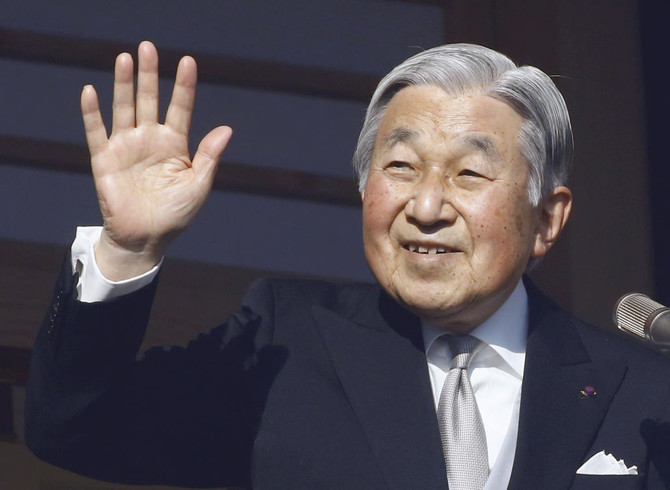
Japan cabinet approves bill allowing emperor’s abdication
Japan cabinet approves bill allowing emperor’s abdication
Latest updates


Recommended


© 2026 SAUDI RESEARCH & PUBLISHING COMPANY, All Rights Reserved And subject to Terms of Use Agreement.